Ambulance Crashes on U.S. 29, No Injuries Reported
An ambulance from Rockingham County collided with another vehicle on U.S. 29 near Joe Brown Drive in Greensboro on December 3, 2025 while transporting a patient, but no one was injured. The crash highlights the importance of cautious driving near emergency vehicles even when lights and siren are not active, and it could temporarily affect patient transport logistics to nearby trauma care.

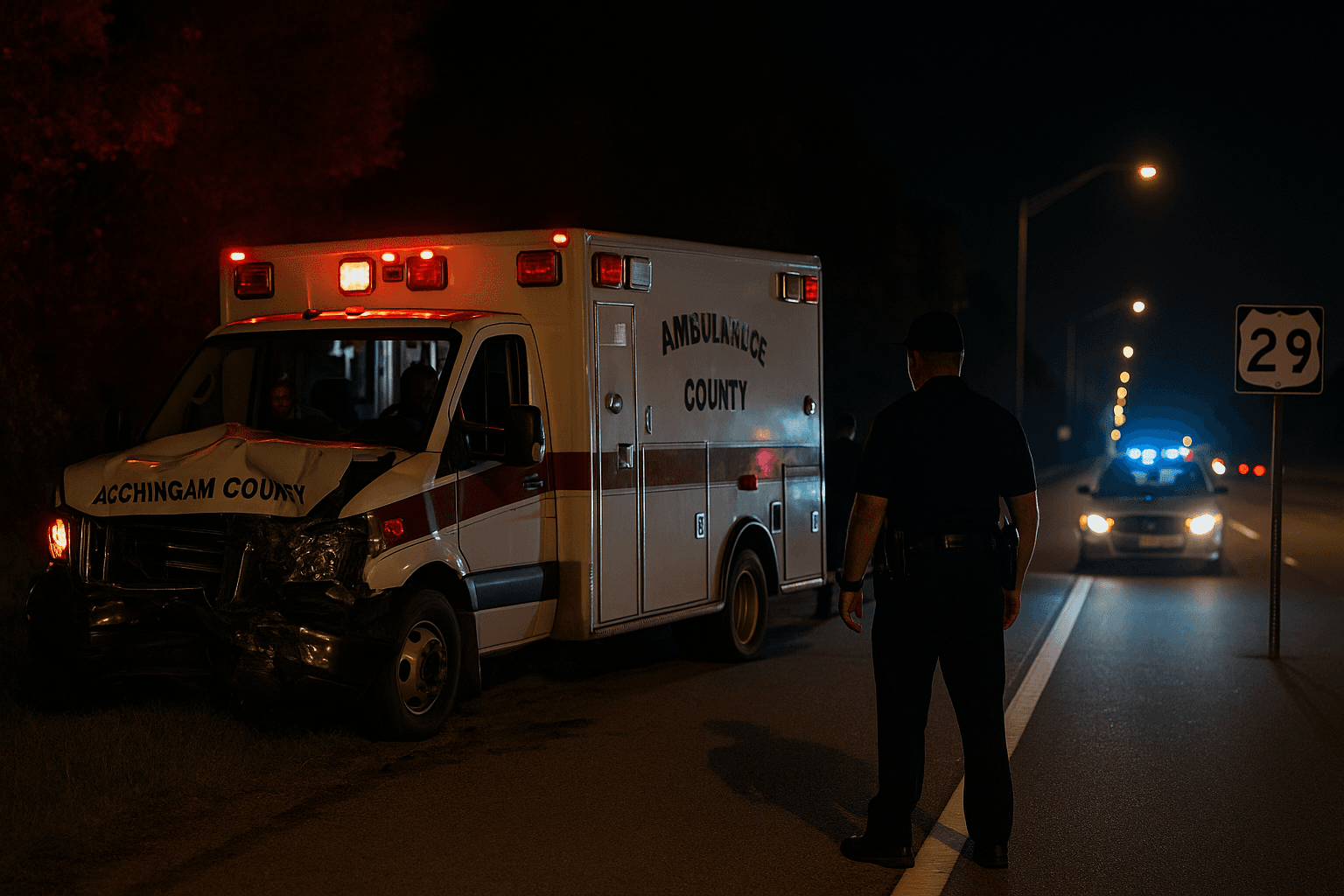
An ambulance transporting a patient was involved in a crash on U.S. 29 near Joe Brown Drive in Greensboro on December 3, 2025. The Rockingham County EMS crew was not using lights or siren because the call was not considered an emergency. Investigators say a vehicle entered the highway and drove into the path of the ambulance, which struck the vehicle and came to rest against the guardrail.
Airbags deployed in the collision. Two Rockingham County EMS employees and two others aboard the ambulance were not hurt. The driver of the other vehicle was also not injured. After an investigation, authorities determined the ambulance was not at fault.
Rockingham EMS moved the involved crew to another unit while crews assess damage to the ambulance. Officials noted that Rockingham EMS commonly transports patients to Moses Cone Hospital in Greensboro, the nearest trauma center. That routine means collisions involving EMS vehicles have potential ripple effects on patient transfer schedules and ambulance availability for the region.
For Guilford County residents the incident is a reminder that ambulances may be on the road without visual or audible signals when patient condition does not warrant emergency response. Exercise caution when merging onto highways and when driving near emergency vehicles to reduce the risk of similar collisions. Local traffic on U.S. 29 near Joe Brown Drive may have experienced delays during response and investigation, and transportation schedules to area hospitals can be affected when units are temporarily taken out of service for inspection and repair.
Emergency services capacity depends on a fleet that is safe and operational. Officials will continue damage assessment and any needed maintenance before returning the ambulance to service, while crews maintain patient transport operations using alternate units.


