Appeals Court Allows National Guard In Washington To Remain
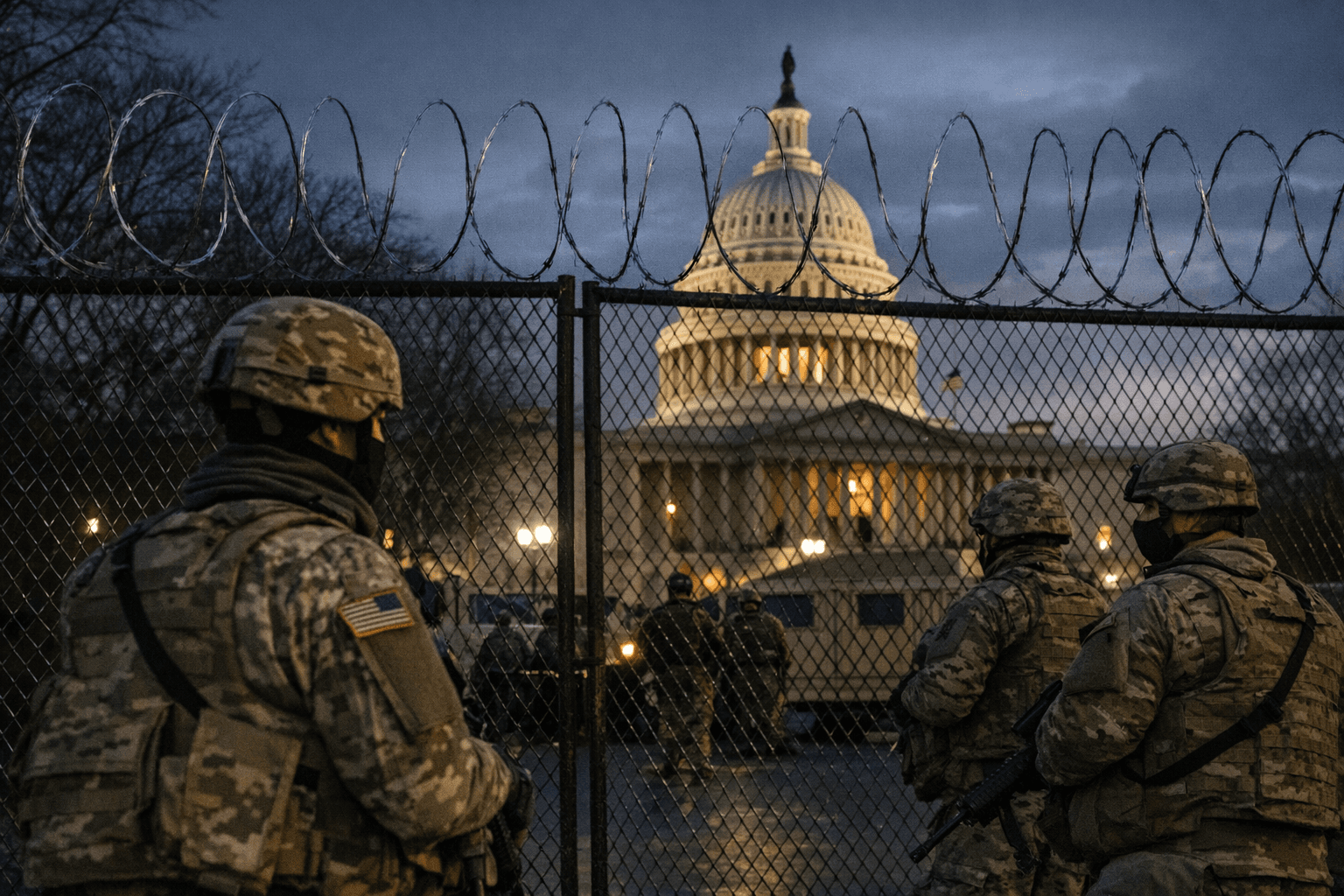
A three judge panel of the U.S. Court of Appeals for the District of Columbia Circuit on Wednesday stayed a lower court order and permitted the Trump administration to keep National Guard forces in Washington while litigation continues, citing a likelihood that the president will prevail on legal claims. The ruling leaves core questions unresolved and creates a patchwork of appellate decisions on domestic troop deployments with implications for federal authority, state control, and the fiscal and political costs of prolonged mobilizations.

The D.C. Circuit on Dec. 17 granted temporary relief to the administration, staying a district court injunction that had ordered National Guard units withdrawn from the nation’s capital. The panel said the administration has a substantial chance of prevailing on the argument that the president “possesses a unique power” to mobilize the Guard in Washington because the capital is a federal district. The court described its decision as “limited in several respects,” and it expressly declined to resolve whether Guard activities in the city constitute prohibited law enforcement under federal statutes.
The interim ruling does not decide the core legal questions that prompted the suit. The appellate panel left open whether statutory or constitutional constraints restrict presidential authority over Guard mobilization in the District, whether deployed units are performing duties that federal law treats as law enforcement, and how state and local authorities interface with federal decisions in other jurisdictions. The stay allows the capital deployment to continue as the D.C. Circuit takes additional briefs and prepares to hear the merits of the challenge.
The decision comes amid divergent outcomes in other federal courts. In California, a separate appeals panel recently enforced a district judge’s order requiring the withdrawal of Guard units from Los Angeles after a June mobilization that involved more than 4,000 troops. That contrast illustrates how different appellate circuits are reaching opposing conclusions about the scope of presidential power over domestic troop use, increasing the likelihood that the Supreme Court may be asked to resolve a split among circuits.
Administration officials have also sought new forces for the capital, requesting an additional 500 Guard members in response to a recent shooting. Those requests underline how episodic incidents can broaden deployments and extend periods of federal expense and logistical commitment. Large scale mobilizations impose costs on federal and state budgets through pay, transport, equipment and sustainment, and prolonged uncertainty complicates budgeting for defense readiness and state level National Guard responsibilities.
Markets typically treat heightened political and legal uncertainty as a risk factor that can influence investor sentiment. While this legal dispute is primarily constitutional and operational, persistent conflict over domestic security authority could add to geopolitical and policy risk premiums that shape fixed income and foreign exchange markets, especially if litigation intersects with politically salient events early next year. Firms that rely on predictable access to the District for lobbying, legal proceedings and financial services may also face operational frictions.
Longer term, the case is part of a broader trend toward recurring litigation over the balance between federal authority and state control in domestic security matters. If appellate rulings remain split, resolution at the Supreme Court level would create a definitive nationwide rule, but until then the legal landscape will be uneven and contingent. The D.C. Circuit’s stay buys the administration breathing room, but it leaves open the larger institutional and fiscal questions that will shape how the federal government uses reserve forces on domestic soil.
Know something we missed? Have a correction or additional information?
Submit a Tip