Arizona Minimum Wage Rises to $15.15; Local Impact Expected
Arizona’s statewide minimum wage increased to $15.15 per hour effective January 1, 2026, the result of an automatic, inflation-linked adjustment replacing the previous $14.70 rate. The change affects workers and employers across La Paz County - especially in agriculture, food service and retail - and requires immediate payroll updates and tip-credit reviews.

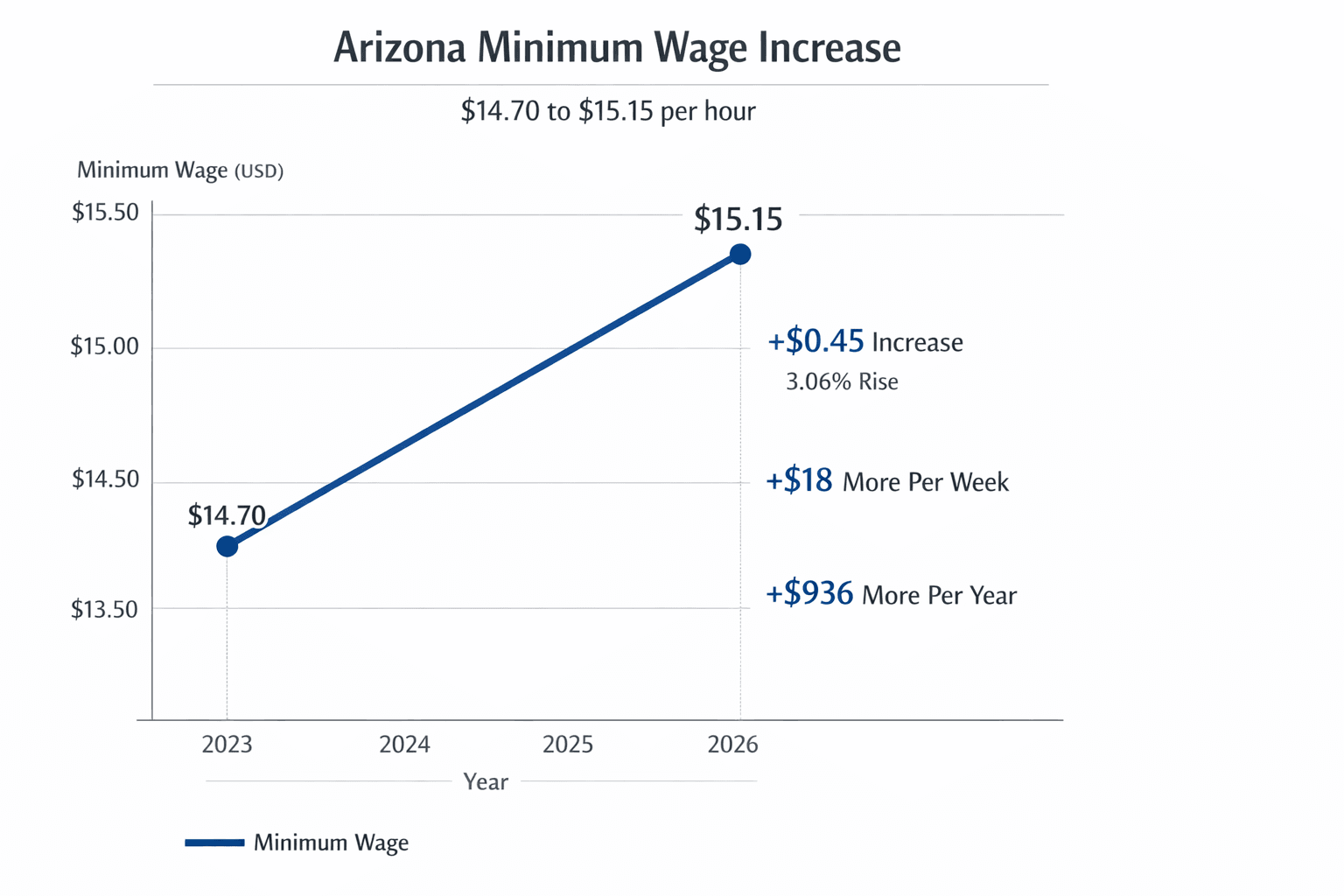
Arizona’s minimum wage rose to $15.15 per hour on January 1, 2026, an automatic increase tied to year-over-year consumer price movement that replaces the $14.70 rate in effect last year. The $0.45 raise equals a 3.06 percent increase; for a full-time worker working 40 hours a week the change translates to about $18 more per week and roughly $936 more annually before taxes. The adjustment is part of a policy design that links the wage floor to inflation so future increases will occur without separate legislative action.
The change matters locally because La Paz County’s economy relies heavily on sectors that typically pay near the minimum wage. Agriculture, food service and retail employers in western Arizona will face the most immediate payroll impact. Small businesses that operate on thin margins are likely to see a measurable rise in labor costs, prompting some to consider modest price adjustments, reduced hours, or other cost-management measures. Conversely, higher pay can lower turnover and reduce hiring and training costs over time, a benefit cited by some local business leaders.
Practical steps are already on the agenda. Employers should update payroll systems immediately to reflect the new $15.15 hourly rate, review tip-credit and tiering policies where applicable, and confirm overtime calculations remain compliant. Workers should verify January paychecks to ensure the new base rate has been applied and follow up with payroll or the state labor office if discrepancies appear. Accurate payroll updates are essential to avoid retroactive corrections that can be administratively and financially disruptive.
From a market standpoint, the indexed increase creates predictable upward pressure on labor costs when inflation rises, which can feed into consumer prices over time but also supports household spending among low-wage workers. For La Paz County this means small but tangible shifts in local purchasing power and business costs. The immediate impact will be concentrated in low-wage service roles, while broader effects will depend on how quickly firms adjust pricing, staffing, or investment in labor-saving technologies.
Longer term, automatic indexing aligns Arizona with a growing number of states that tie minimum wages to inflation, reducing political uncertainty but imposing steady cost growth on employers. For residents and employers in La Paz County the near-term priorities are verification and compliance: workers should check paystubs, and employers must update payroll and review tip-credit practices to ensure a smooth transition.
Sources:
Know something we missed? Have a correction or additional information?
Submit a Tip