Artemis II SLS and Orion begin slow rollout to Pad 39B today
NASA will roll the Artemis II SLS and Orion to pad 39B on Jan. 17; an 8–12 hour transfer sets up fueling tests and a wet dress rehearsal.
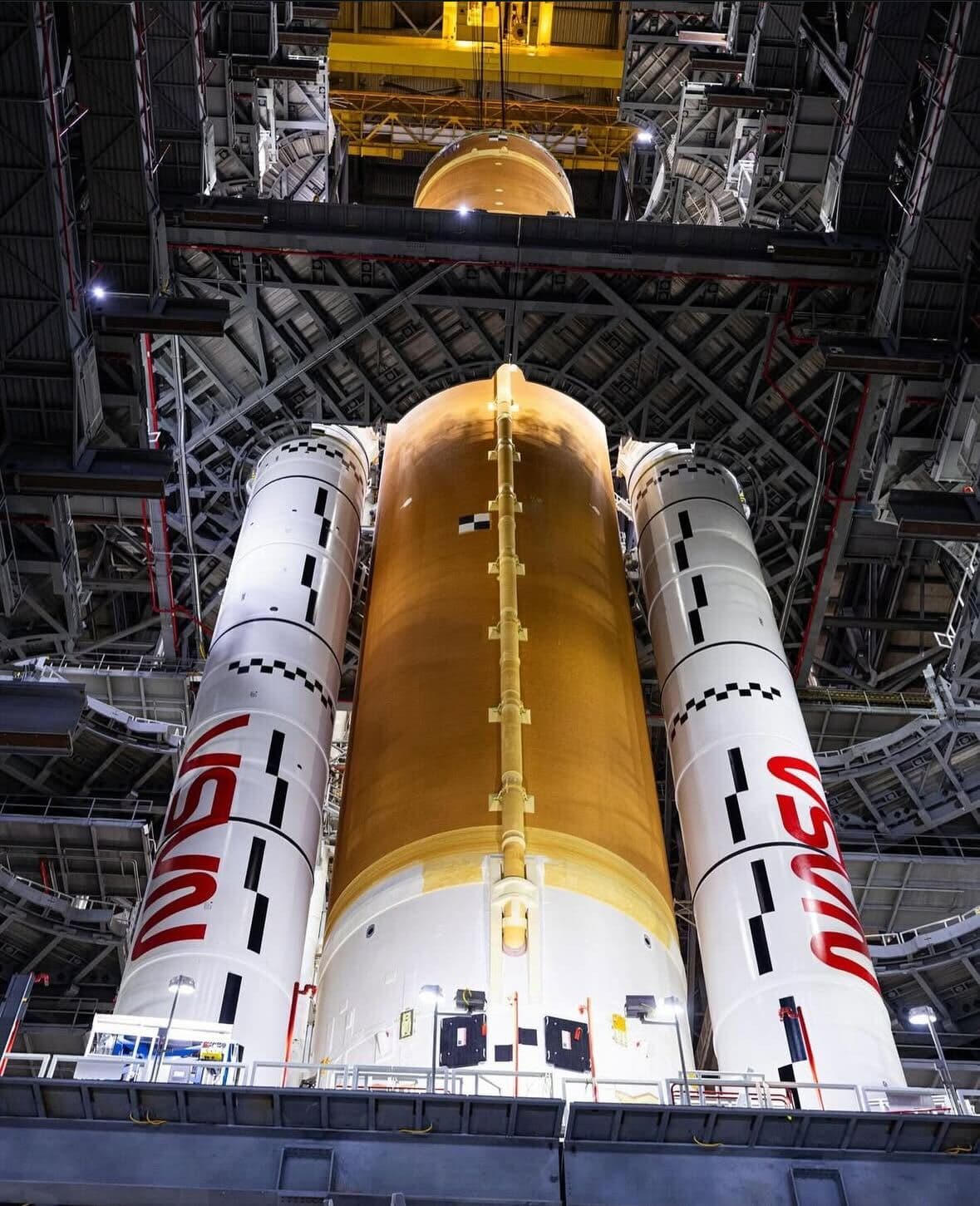
NASA has prepared the Artemis II Space Launch System and Orion crew capsule for a deliberate, multi-hour transfer from the Vehicle Assembly Building to Launch Complex 39B at Kennedy Space Center, with first motion set no earlier than 7:00 a.m. Eastern on Jan. 17. Teams working a third shift completed final checks overnight and will spend the first hour after initial motion guiding the vehicle across the VAB threshold and retracting the crew access arm, an evolution expected to take roughly 45 minutes.
Crawler Transporter‑2 will carry the rocket and mobile launch platform along the crawlerway at less than one mile per hour. The transfer follows a route spanning roughly 4 miles (6 kilometers), sometimes described as nearly 7 kilometers, and is expected to take between 8 and 12 hours to reach LC‑39B. Mission managers described the progression as slow and careful, paced to protect vehicle systems and personnel and to allow immediate troubleshooting if needed.
Upon arrival, teams will begin the complex process of leveling the mobile launcher as it climbs the pad slope and flame trench, jacking the platform and vehicle down onto the pad and connecting the launch stack to pad infrastructure. Those hookups will enable a sequence of propellant and facility connections needed for fueling tests and a wet dress rehearsal — full propellant loading and countdown procedures that are prerequisites before a launch date can be confirmed.
Standing roughly 322 feet (98.1 meters) tall with the Orion capsule atop the stack, the Artemis II vehicle combines a core stage measuring about 212 feet (65 meters) with very large solid rocket boosters derived from Shuttle-era technology. This flight marks the second SLS mission and the first flight with astronauts aboard. The Orion spacecraft designated for Artemis II is known as Integrity.
The mission will carry a four-person crew — Reid Wiseman, Victor Glover, Christina Koch and Canada’s Jeremy Hansen — on a roughly 10-day excursion that will loop the Moon and return to Earth. The flight will not enter lunar orbit but will carry humans farther into deep space than any have flown in decades; estimates of the maximum distance beyond the Moon vary, with figures cited near 7,500 kilometers and as high as about 9,260 kilometers past the lunar far side.

NASA managers cautioned that several important steps remain before a launch can be set. Officials have said launch opportunities could open as early as Feb. 6, but emphasized flexibility in scheduling, with potential windows available monthly and durations ranging from a few days up to a week. Lori Glaze, acting associate administrator for NASA’s Exploration Systems Development Mission Directorate, reiterated the agency’s risk posture: "crew safety will remain our top priority at every turn."
Leaders who briefed the public on Jan. 16 include John Honeycutt, chair of the Artemis II mission management team; Charlie Blackwell‑Thompson, Artemis launch director; Jeff Radigan, lead flight director; Lili Villarreal, landing and recovery director; and Jacob Bleacher, chief exploration scientist. The rollout reuses Apollo-era infrastructure at Kennedy — the VAB, crawlerway and LC‑39 facilities — and represents the first human-bound lunar rollout since Apollo 17 in 1972.
After the vehicle is secured at LC‑39B, engineers will conduct fueling tests and the wet dress rehearsal; the outcomes of those checks, along with weather and technical factors, will determine when NASA names a formal launch date. NASA is expected to provide live streams and additional briefings as the operation unfolds.
Sources:
Know something we missed? Have a correction or additional information?
Submit a Tip