Australia Imposes Sanctions, Travel Bans on Four Taliban Officials
Australia announced on December 6 targeted financial sanctions and travel bans against four senior officials in Afghanistan’s Taliban government, citing an accelerating collapse of rights for women and girls. The measures form part of a new unilateral sanctions framework intended to signal Canberra’s stance while trying to limit harm to the Afghan people.
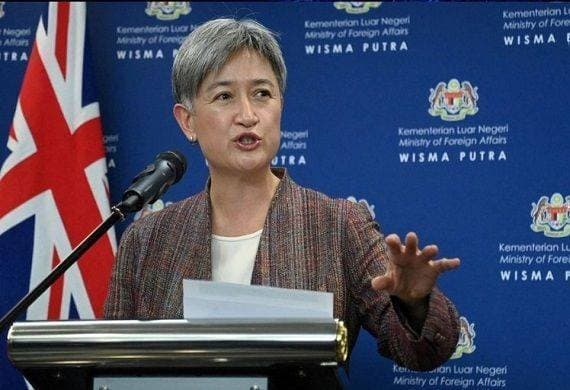
Australia on December 6 imposed targeted financial sanctions and travel bans on four senior figures in Afghanistan’s Taliban government, the foreign minister said, escalating Canberra’s diplomatic response to what it described as a continuing deterioration in human rights. The designations target three Taliban ministers and the group’s chief justice, and they form part of a newly created Australian framework that enables unilateral sanctions and travel bans to increase pressure over human rights abuses.
Canberra framed the action around concerted restrictions on women and girls, citing the Taliban’s measures that have curtailed access to education, work and public life since the group returned to power in 2021. The Australian government said the targeted steps are intended to hold individual officeholders to account, restrict their ability to access assets or travel through Australian jurisdictions, and make clear that such policies have financial and diplomatic consequences.
Practically, targeted financial sanctions typically freeze assets within a country’s jurisdiction and prohibit transactions with designated individuals. Travel bans prevent entry to Australia and may complicate officials’ movement through allied countries with linked restrictions. The Australian announcement did not list the officials by name in the government statement released on December 6, but it emphasized that the measures are focused on senior decision makers rather than broader economic or humanitarian channels.
The move aligns with international criticism from the United Nations and human rights organizations that say the Taliban’s restrictions have reversed hard won gains for Afghan women and girls. Since 2021 the imposition of limits on secondary schooling for girls, constraints on women working in many sectors, and restrictions on women’s presence in public institutions have drawn sustained condemnation and prompted similar punitive steps by other Western governments.
Policy analysts said targeted sanctions carry symbolic weight while seeking to avoid exacerbating the humanitarian crisis. By singling out individuals, Canberra aims to pressure the Taliban leadership without interrupting aid flows or penalizing the Afghan population. Aid groups and diplomatic officials have repeatedly warned that broad financial measures can hinder humanitarian operations that rely on local staff and financial networks to deliver food, health care and shelter to millions of vulnerable people.
Economic implications for global markets are likely to be limited because the sanctions focus on persons rather than sectors. Still, unilateral designations can complicate banking relationships and remittances, raising compliance costs for firms and non governmental organizations operating in and around Afghanistan. For an economy already battered by years of conflict and a freeze in many forms of development assistance, any tightening of financial lanes risks amplifying existing hardships for ordinary Afghans.
The Australian action also signals a broader trend toward more assertive unilateral measures by middle powers in response to human rights violations. Canberra’s new framework gives it a domestic legal tool to act independently of broader multilateral sanction regimes, a posture that could be replicated by other countries weighing how to combine moral pressure with humanitarian protections. For Afghan women and girls the enduring consequence will be determined less by individual sanctions and more by whether international pressure can translate into concrete changes in access to education, work and public life.