Baltimore Collegiate School Faces Possible Charter Nonrenewal, Community Responds
Baltimore Collegiate School for Boys is facing possible nonrenewal of its charter after a School Board review cited weaknesses in financial management and governance, putting a program that serves grades 4 through 8 at risk. The school reports nearly 90 percent high school graduation outcomes among alumni, and parents, alumni and elected officials are mobilizing to argue that student success and the school mission should weigh heavily in the renewal decision.

The School Board's recent review rated Baltimore Collegiate School for Boys poorly in multiple oversight categories, including financial management, grant administration, governance and data entry and administrative processes. The findings, released on Dec. 9, 2025, have set in motion a charter renewal process that could end the operation of the charter when the Board votes on Jan. 14, 2026.
Baltimore Collegiate serves predominantly Black boys in grades 4 through 8 with an explicit focus on mentoring, discipline and supports designed to improve academic and life outcomes. School leaders and supporters point to alumni outcomes, noting nearly 90 percent high school graduation rates among former students, a result the school says is well above city averages. Those outcomes are central to a community campaign to save the school, and operators have appealed broadly for public support.
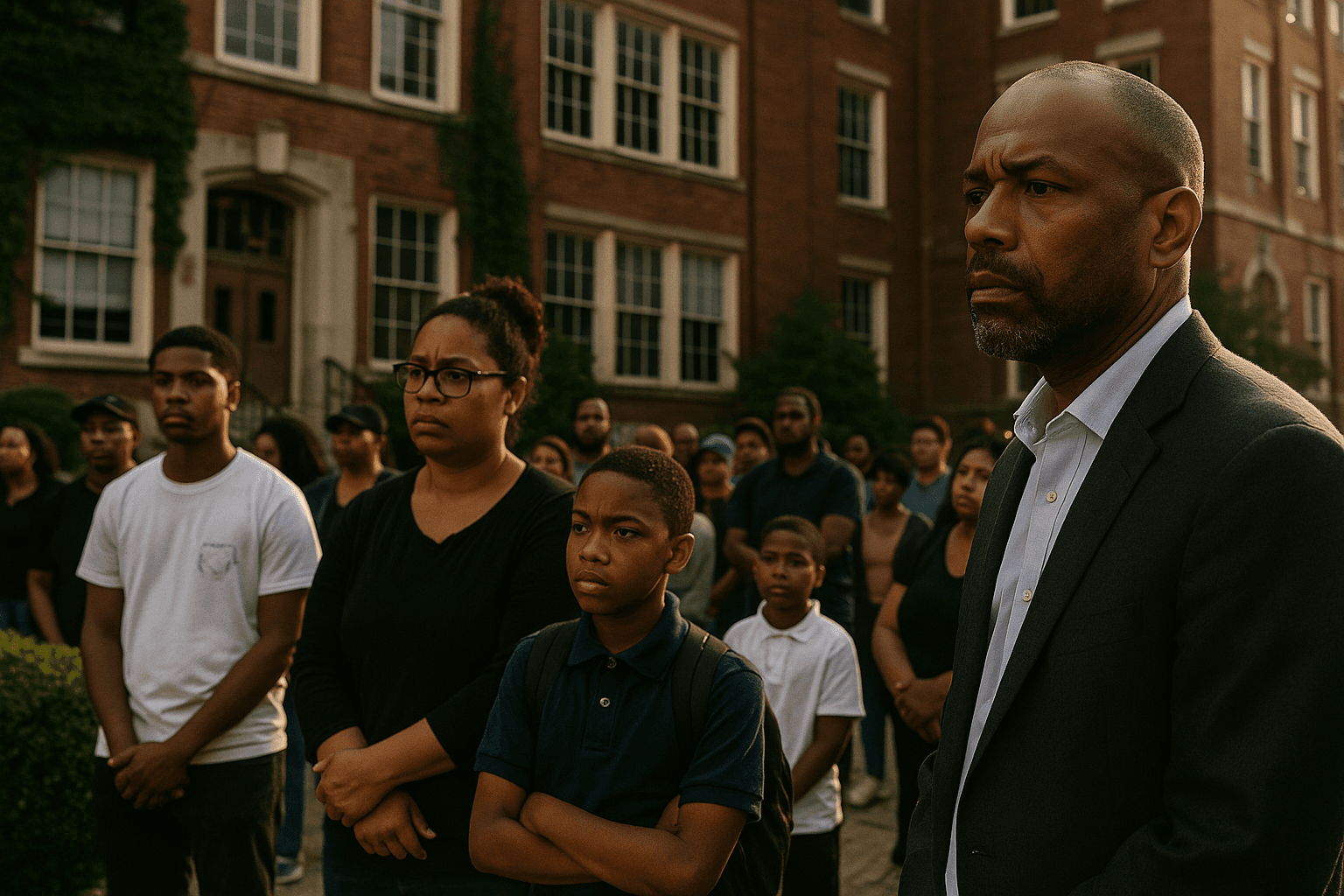
Parents, alumni and delegates have pushed back against the district's findings, arguing that programmatic impact and the school's mission should be part of any renewal calculus. Supporters have organized petitions, planned testimony at public hearings and engaged in outreach to board members. Public hearings were scheduled for Dec. 11 and Jan. 8 to collect community testimony ahead of the Jan. 14 vote.
The conflict highlights broader policy and equity questions about how charter oversight balances compliance and outcomes. Administrative and grant management lapses, if accurate, raise valid concerns about stewardship of public funds and accountability. At the same time, the possible closure of a program focused on Black boys carries implications for public health and community stability, because schools provide social supports, mental health connections and trusted relationships that affect long term wellbeing.
For families and neighborhood networks, the stakes are concrete. Closure would force students to change schools mid pathway, disrupt mentoring relationships and potentially widen disparities in academic and health outcomes. The School Board must weigh documented governance issues against demonstrated student achievements and the community role the school occupies as it moves toward its January decision.
Sources:
Know something we missed? Have a correction or additional information?
Submit a Tip