Barn fire near Storm Lake draws multiple departments, rescues animals
A large barn fire south of Storm Lake drew firefighters from Storm Lake, Early, Schaller and Alta on Sunday afternoon, with a passerby reporting the blaze and crews extinguishing the flames after animal rescues. The response highlighted winter access challenges for rural emergency services and raised questions about resources for volunteer departments in Buena Vista County.

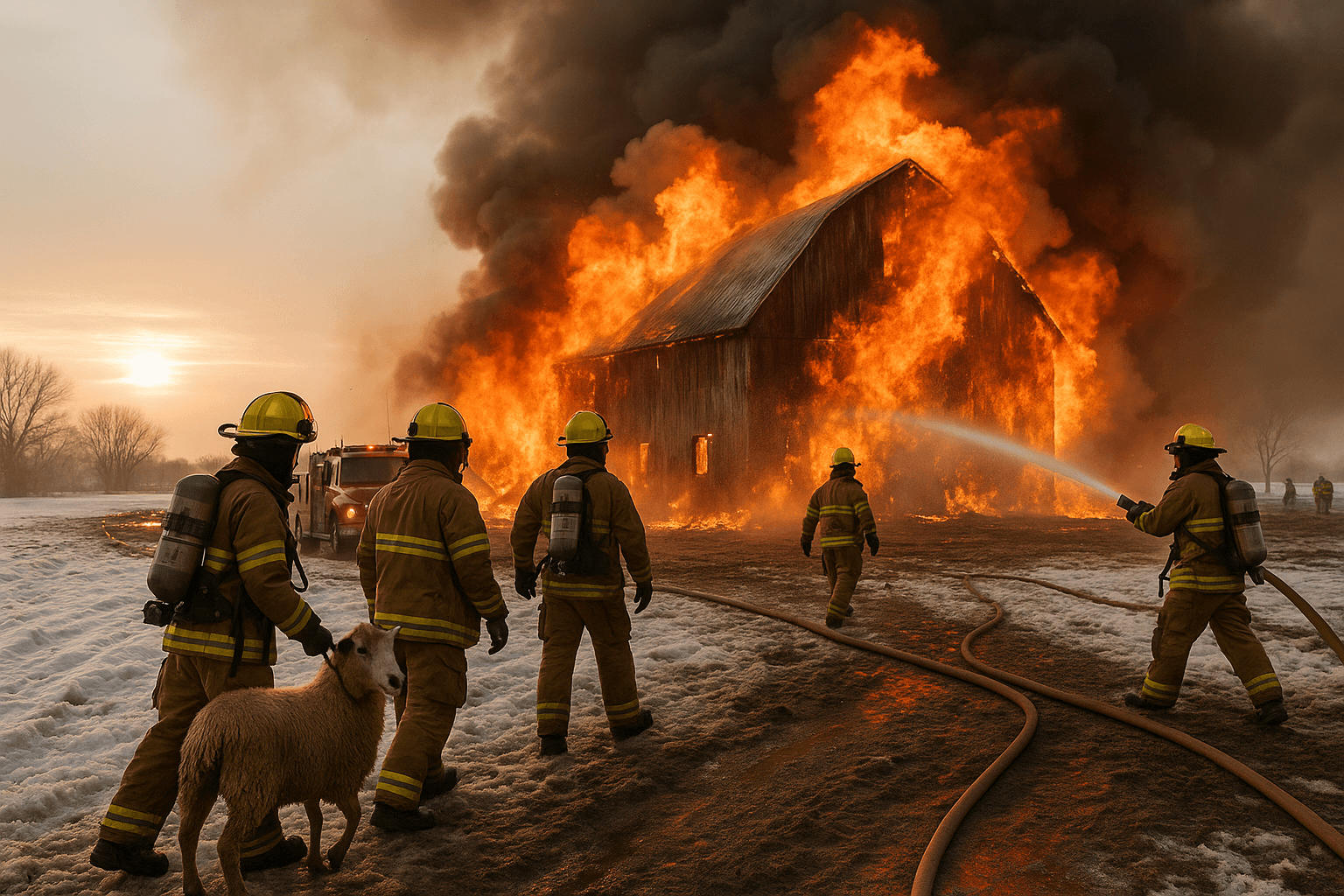
Just before 1 p.m. on Sunday, crews responded to heavy smoke coming from a large barn at 6463 90th Avenue south of Storm Lake. The Storm Lake Fire Department led the response and called in mutual aid from Early, Schaller and Alta. MidAmerican Energy shut down power to the barn while crews worked to contain the fire, and the incident was eventually brought under control. Authorities say the cause remains under investigation.
A passerby was the first to report the fire to authorities, and rescuers removed a goat and several cats from the structure before extinguishing the flames. Snowy conditions complicated access to the remote property. “Due to the recent snowfalls, a request was made to Buena Vista County Communications Center for a road grader to gain better access to where the barn was located,” stated the Storm Lake Fire Department in a press release. Storm Lake Towing also assisted after several vehicles became stuck while attempting to reach the scene.
The incident underscores public health and safety challenges in rural Buena Vista County during winter weather. Smoke exposure presents immediate respiratory risks to neighbors and responders, and downed or live electrical lines can extend danger beyond the structure itself. Timely utility coordination, road clearing and equipment availability were key to the response, but the event also exposed vulnerabilities that frequently affect agricultural and outlying properties.
For the local community the fire is a reminder of the dependence on volunteer and small department staffing for emergency response. Mutual aid from neighboring towns and cooperation with utility crews and towing services helped limit harm, yet the logistical burden of winter access highlights a need for sustained investment in rural emergency infrastructure. County policy makers and emergency planners may need to consider funding for winter road maintenance near isolated properties, training and equipment for volunteer departments, and programs to support residents with animal rescue planning.
Investigators continue to examine the barn fire, and officials have not released a cause. For now neighbors and first responders are left to grapple with the material losses and the emotional toll of a close call that endangered animals and challenged the county safety network.