Begin Playing Dungeons and Dragons Today, A Practical Starter Guide
This practical primer distills the essentials from the official Dungeons and Dragons Basic Rules into a compact, usable starter plan for new players and prospective Dungeon Masters. It explains core mechanics, a quick character creation checklist, a one session starter flow for DMs, and tools to get a table playing immediately.
Dungeons and Dragons is best learned by playing, and this guide gives direct, usable steps to get a first session on the table. Start by grasping core concepts. Players and the Dungeon Master share responsibility for story and rules. Combat runs in rounds, tracked by initiative, and actions are chosen each turn. Ability checks, saving throws, and skills describe how characters interact with the world and resolve risks.
Build a first level character quickly by following a simple checklist. Pick an ancestry or heritage and a class. Assign ability scores using the standard array or point buy, or roll if the table prefers randomness. Select a background, choose two or three signature skills, equip basic gear, pick a signature spell or cantrip if your class uses magic, and fill out the character sheet with a clear character goal.
Run a focused one session starter that balances roleplay, exploration, and combat. Hold a session zero to decide game tone, safety tools, table expectations, and scheduling. Cover content boundaries and how to handle in game conflict. Start the one shot with a clear objective, include one social encounter, one exploration scene, and one combat. Keep scenes timeboxed and end on a cliffhanger or resolution. Reward players with experience or treasure that matters to the story, and decide whether to use milestone leveling or tracked XP.
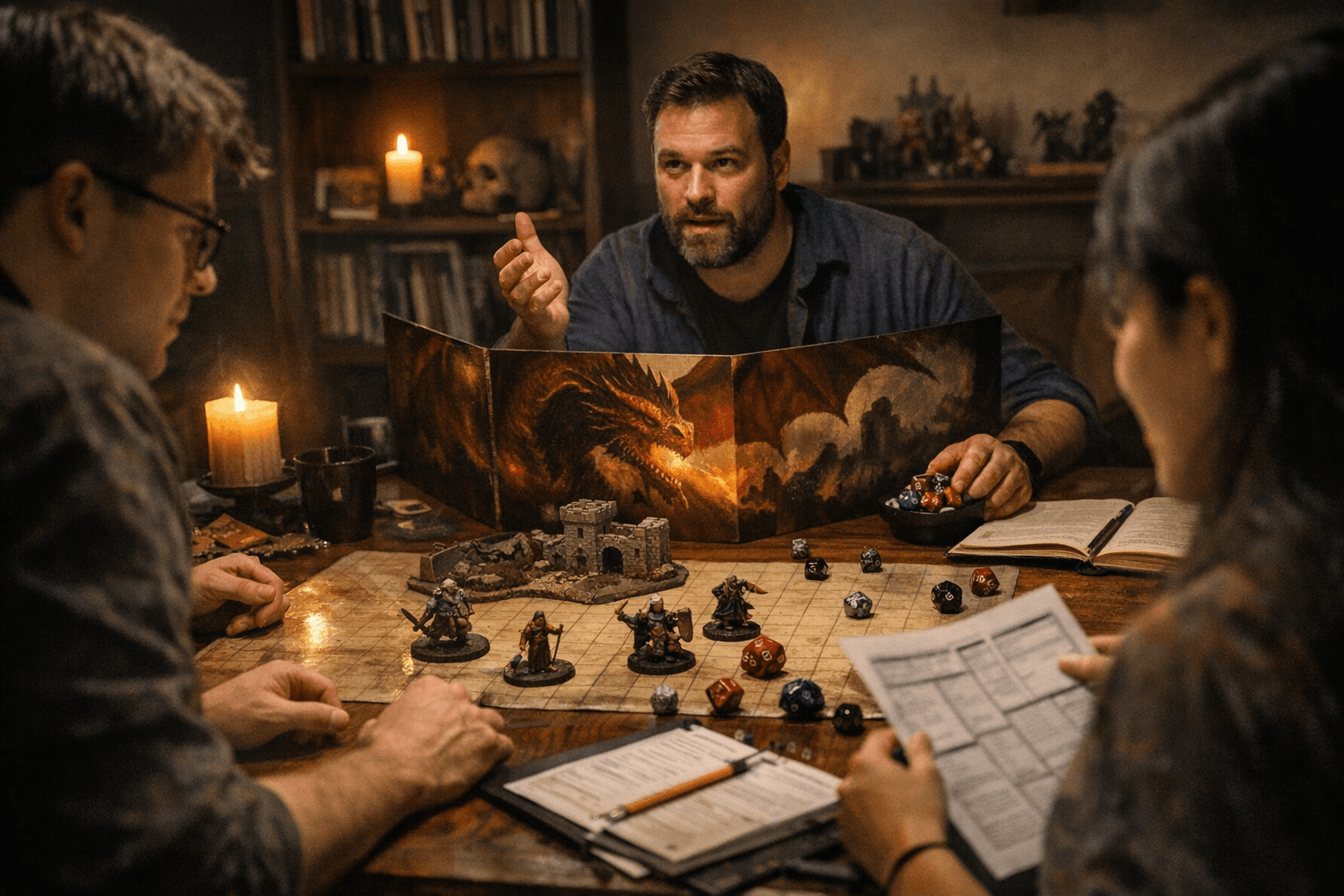
Dungeon Masters benefit from a few quick references. Prepare improvisation tools for when players go off script, pace encounters by mixing threats with breaks for roleplay, and adjust difficulty on the fly by changing enemy actions or numbers. Run social checks as conversation rather than interrogation, and use random tables for names and minor loot to save prep time.
Table etiquette and accessibility matter. Be inclusive, call on quieter players, accept failure as story fuel, and provide rules translations for neurodiverse players. Use tools like the official Basic Rules PDF, free starter adventures, the D D Beyond character builder and compendium, and community resources such as organized play, local game stores, and online actual play examples. Run short one shots to gain experience as both DM and player, keep cheat sheets for rules lookups, and get playing.
Sources:
Know something we missed? Have a correction or additional information?
Submit a Tip

