Bernalillo County Adds $1.9 Million Ladder Truck to North Valley
Bernalillo County Fire Rescue formally placed a new $1.9 million ladder truck into service at Fire Station 36 in the North Valley during a traditional push-in ceremony on January 7. The vehicle’s shorter wheelbase, more than 100-foot vertical ladder reach, and new wireless headset communications aim to improve response capability and crew safety, a development local residents should note as part of ongoing public safety investments.

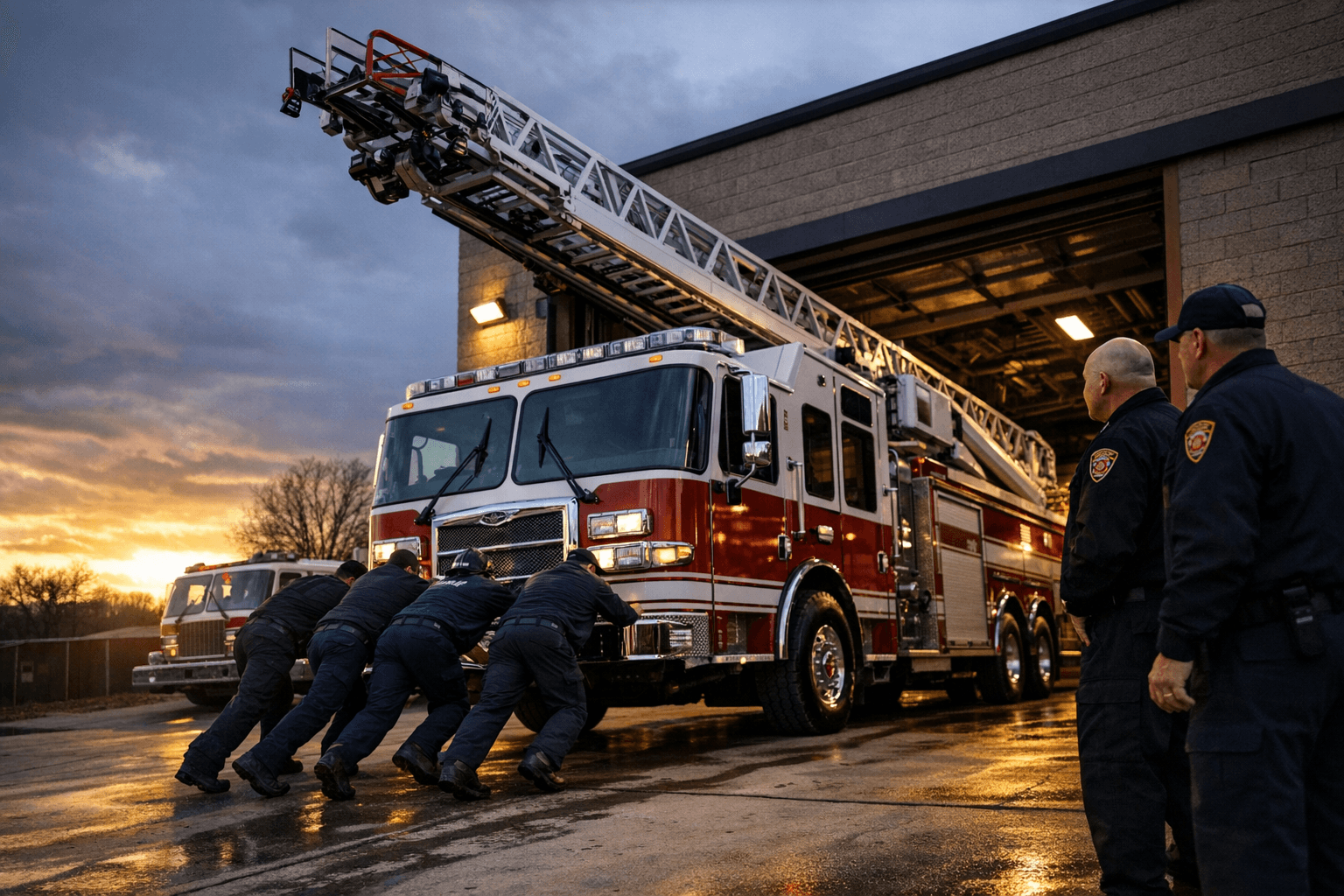
Bernalillo County Fire Rescue held a push-in ceremony at Fire Station 36 in the North Valley on January 7 to mark the arrival and commissioning of a new $1.9 million ladder truck. The ceremonial move into the bay revived a longstanding fire service tradition as crews and officials welcomed the apparatus into active service.
The single-axle truck is built with a shorter wheelbase designed to ease maneuvering on tight neighborhood streets, addressing challenges firefighters face in older or densely developed areas. Its aerial ladder offers more than 100 feet of vertical reach, extending the department’s capacity for elevated rescues and firefighting operations. The rig also includes upgraded wireless headset communications to improve on-scene coordination and provide hearing protection for crew members during incidents.
Officials said the truck was funded through a mix of capital outlay, county funds and public safety tax dollars. Bernalillo County Fire Rescue spokesperson William Harris and BCFR Chief Zach Lardy discussed the truck’s operational benefits and the cultural importance of the push-in ceremony during the event, emphasizing both the practical upgrades and the morale value of placing new apparatus into service.
For Sandoval County residents, the purchase underscores a regional trend toward modernizing municipal emergency fleets and investing in firefighter safety. While the new truck is based in Bernalillo County’s North Valley, improvements in response capability among neighboring departments can influence mutual aid dynamics and overall preparedness in the metropolitan area. The vehicle’s shorter wheelbase and extended ladder reach may reduce response times and improve access in locations with narrow streets or taller structures.
The use of public safety tax dollars and capital outlay funds to acquire the apparatus also highlights the budgetary choices local governments face when balancing equipment needs, personnel costs and other community services. For taxpayers, visible additions to the emergency fleet can be a measure of how those funds are being allocated toward public protection.
The push-in ceremony served both as a practical step to put the truck in service and as a public-facing moment to show investment in emergency response. As winter months continue to bring a range of incidents from structure fires to weather-related emergencies, the new ladder truck will be part of BCFR’s resources deployed to protect communities across county lines.
Sources:
Know something we missed? Have a correction or additional information?
Submit a Tip