Buncombe County Teachers of the Year: Who and Why It Matters
See the 2026-27 Buncombe County Teachers of the Year and what their recognition means for students and community wellbeing.
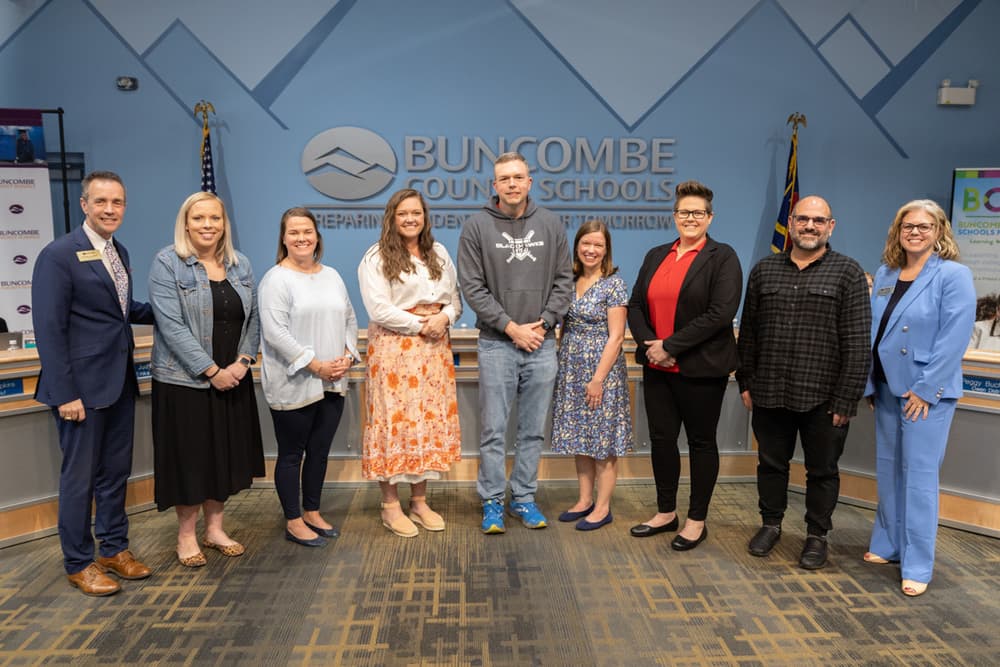
1. BCS announces 2026-27 Teachers of the Year Buncombe County Schools publicly announced its 2026-27 Teachers of the Year on January 7, 2026.
The announcement signals district-wide recognition of instructional excellence and sets the calendar for the next phases of competition and community celebration.
2. Each school selects a Teacher of the Year Every school in the district chose a Teacher of the Year to advance to the district-level competition.
That school-level selection process elevates classroom leadership and spotlights educators who are securing daily learning and support for students across neighborhoods.
3. District-level competition advances finalists School winners become district finalists who will compete for the overall Buncombe County Schools Teacher of the Year.
This step creates a collaborative competition where best practices and successful classroom strategies can spread across the county.
4. Overall county winner announced in March The district will name its overall Teacher of the Year in March, giving finalists time to share portfolios and classroom impact data.
That March announcement also syncs with state timelines so Buncombe’s representative can be prepared for the North Carolina competition.
5. County winner represents BCS in state program The overall Buncombe County winner will represent the district in the North Carolina Teacher of the Year program.
That role is a public-facing opportunity to advocate on behalf of local classrooms and to bring Buncombe’s educational needs to state-level discussion.
6. Possible advancement to national level If the county and state selections align, the chosen teacher could advance to the national Teacher of the Year competition.
That pathway raises Buncombe’s profile and can bring national attention to local programs, challenges, and innovations.
7. Program recognizes compassionate, skilled teaching BCS framed the program to honor educators who provide compassionate, skilled and engaging instruction.
Recognizing those qualities reinforces the value of relational teaching and the social-emotional work teachers perform every day.
8. Program highlights contributions to student success The awards specifically highlight teachers’ contributions to student success and school communities.
Elevating these contributions helps the public see teaching as a profession that shapes long-term academic, social and economic outcomes.
9. District congratulated all winners publicly The district congratulated all 2026-27 Teachers of the Year and posted the honorees online.
Public recognition fosters school pride and gives families, community partners and local policymakers clear examples of effective instruction.
10. Winners list includes district winners marked with an asterisk BCS noted that district winners are marked with an asterisk on the published list, signaling which awardees advanced in the competition.
That simple notation helps the public follow the selection process and track finalists as they move through the next rounds.
11. BCS Virtual Academy – Julia Doran Julia Doran was listed as the Teacher of the Year for the BCS Virtual Academy.
Her recognition underscores the evolving importance of virtual instruction and the need to support remote learners alongside in-person cohorts.
12. Community High School – Tonya Gesing Tonya Gesing is the Community High School honoree, reflecting the role of alternative and alternative-pathway schools in serving students with diverse needs.
Celebrating Community High highlights the district’s commitment to inclusion and tailored supports.
13. Enka High – Kevin Young Kevin Young was named Enka High’s Teacher of the Year, a nod to strong high-school level instruction that prepares students for college, careers and civic life.
Recognition at Enka reinforces the ripple effects of excellent teachers on graduation and postsecondary readiness.
14. Enka Middle – Lee Ann Davis Lee Ann Davis earned Enka Middle’s honor, representing the critical middle-school years when academic trajectories and social-emotional skills are forged.
Support for middle-grade educators is a public-health interest, as these years influence mental health and future risk factors.
15. Pisgah Elementary – Kevin Drury Kevin Drury was Pisgah Elementary’s recipient, spotlighting early childhood and elementary educators who build literacy and foundational learning.
Strong early instruction in schools like Pisgah reduces downstream educational inequities and supports lifelong health and opportunity.

16. Hominy Valley Elementary – Aimee Gaston Aimee Gaston was named Hominy Valley Elementary’s Teacher of the Year, celebrating classroom work in a community-oriented school.
Such honors reinforce the link between neighborhood schools and local social cohesion.
17. A.
C. Reynolds High – Kelly Kanelos Kelly Kanelos received recognition at A.C. Reynolds High, highlighting teaching that tackles rigorous curricula and student development during adolescence. High school teacher recognition often correlates with improved college and career counseling, which benefits community economic mobility.
18. T.
C. Roberson High – Tristen Plemmons Tristen Plemmons is T.C. Roberson High’s honoree, acknowledging commitment to student engagement and achievement. Honoring teachers at flagship high schools signals to families and local employers that Buncombe cultivates strong talent pipelines.
19. North Buncombe High – Wil Maney Wil Maney was named North Buncombe High’s Teacher of the Year, representing excellence in a school serving the northern reaches of the county.
Recognition for educators outside the urban core helps address geographic equity across Buncombe.
20. Weaverville Primary – Taunia Harter Taunia Harter earned Weaverville Primary’s honor, underscoring the importance of early primary-grade teachers in the Weaverville community.
Primary teachers lay groundwork for childhood development that intersects with pediatric health, nutrition and early interventions.
21. Weaverville Elementary – Robin Ingle Robin Ingle was honored at Weaverville Elementary, reinforcing the twin role of elementary schools as academic and community hubs.
Local recognition like this strengthens town identity and encourages volunteer and civic support for schools.
22. Woodfin Elementary – Samantha Marzullo Samantha Marzullo received Woodfin Elementary’s award, spotlighting educators in smaller communities where school relationships are tightly knit.
Celebrating Woodfin teachers helps maintain local morale and retention in neighborhood schools.
23. Additional school-level winners and broader coverage The district list included many additional school-level winners beyond the excerpts shared here, signaling wide geographic and instructional representation.
That breadth shows Buncombe’s commitment to recognizing talent across diverse settings, from mountain communities to Asheville neighborhoods.
24. Community impact and school pride Teacher recognition strengthens community pride and can increase volunteerism, donations, and local partnership support for schools.
When neighbors see familiar teachers honored, it reinforces mutual investment in children’s education and community resilience.
25. Teacher recognition and retention Public recognition programs contribute to teacher morale and can support retention—especially in a county facing statewide staffing pressures.
Celebrating teachers publicly complements pay and policy reforms as a tool to keep experienced educators in classrooms.
26. Equity and representation considerations As the district highlights winners, it’s important to consider whether honorees reflect Buncombe’s racial, geographic and subject-area diversity.
Ensuring equitable recognition helps surface systemic gaps and ensures advocacy for resources reaches schools and student groups with the greatest need.
27. How residents can support honorees and local educators Residents can support Teachers of the Year by attending recognition events, advocating for school funding, volunteering in classrooms and backing policies that fund mental health and wraparound services.
Practical community support helps translate recognition into sustainable improvements for students and educators.
Our two cents? Celebrate these teachers loudly, then push for policies that back their work: stable funding, mental health services in schools, and equitable supports for every neighborhood. A handshake or a public nod is good—sustained investment is what keeps classrooms healthy and thriving.
Sources:
Know something we missed? Have a correction or additional information?
Submit a Tip