Cal Poly Humboldt expands sustainability teaching across every academic discipline
Cal Poly Humboldt announced growth of its Trillium Project on December 10, highlighting a third annual conference in October that brought educators together to embed sustainability across campus curricula. The initiative aims to prepare local students with interdisciplinary climate skills, strengthen ties with Indigenous knowledge systems, and support Humboldt County workforce resilience.
Cal Poly Humboldt detailed on December 10 the expansion of the Trillium Project, an initiative led by Sustainability Faculty Fellow Jen Ortega that seeks to integrate sustainability into every classroom. Originating from a 2022 to 2023 session with Geoff Chase and modeled on his Piedmont Ponderosa Project, the effort has grown into a professional development program and secured a Center for Sustainability Across the Curriculum designation from the Association for the Advancement of Sustainability in Higher Education.
In its third iteration this October, the Trillium Project Conference convened faculty, staff, and students to reimagine climate education through an interdisciplinary lens. Guest speakers included Sarah Jaquette Ray, Kaitlin Reed, Cutcha Risling Baldy, Michelle Selvans and student Vermilion Walls, and Nick Perdue. Participants examined topics ranging from climate anxiety and student agency to decolonizing sustainability and honoring Indigenous knowledge systems. Morgan Barker, Cal Poly Humboldt’s Sustainability Librarian and chair of the Trillium Project, said, “The content serves as ‘food for thought,’ encouraging educators to sit with ideas and connect them meaningfully to their work. Faculty left with renewed connections to sustainability initiatives, inspiration for course redesign, and projects that help students engage with complex, nuanced topics.”
The project links directly to campus metrics and reporting. Trillium aligns with Cal Poly Humboldt’s Undergraduate Institutional Learning Outcomes on sustainability and equity, and with sustainability course designations and degrees that the campus documents and measures every three years through its STARS reporting system. The program also connects to the TEK Faculty Fellowship, an Indigenizing Your Curriculum Faculty Workshop, partnerships with organizations such as Save California Salmon, the Social Justice Summit, and the Campus and Community Dialogue on Race.
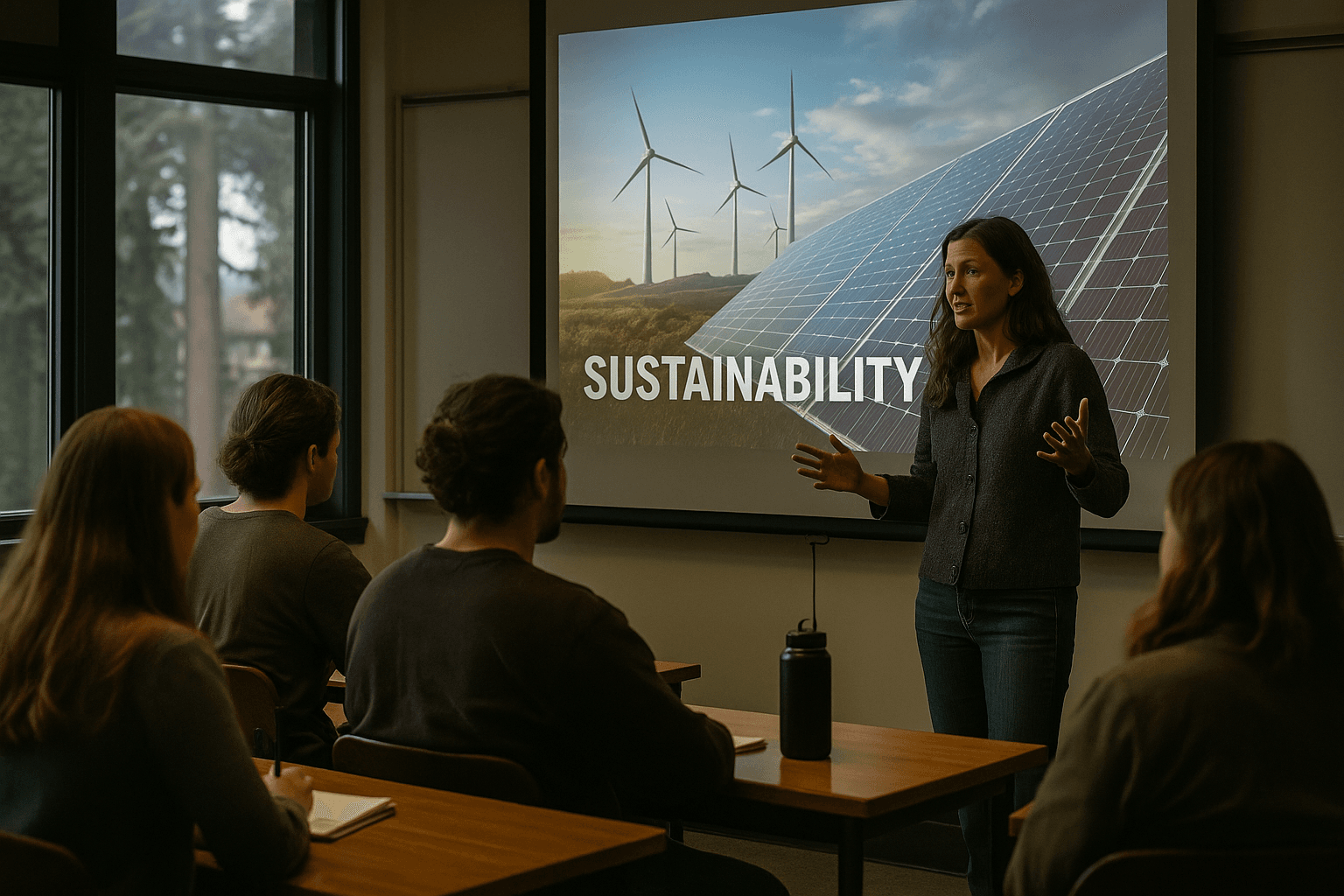
For Humboldt County residents, the shift matters for classroom experience and local economic resilience. Embedding sustainability into history, art, business, and STEM courses broadens the pool of students who graduate with climate literacy and practical skills that regional employers seek in forestry, fisheries, agriculture, and environmental services. As climate impacts intensify, interdisciplinary education can strengthen community adaptation and expand the local workforce pipeline for green jobs.
Cal Poly Humboldt officials say the Trillium Project has already extended beyond campus, welcoming educators from the region and abroad, and they plan ongoing professional development to sustain curriculum change and deepen partnerships with local communities.
Sources:
Know something we missed? Have a correction or additional information?
Submit a Tip