Cambodia accuses Thai troops of occupying civilian border areas
Cambodia says Thai forces keep villages barricaded after the December ceasefire, blocking returns and risking renewed clashes.

Thai military positions remain inside Cambodian villages despite the December ceasefire, Cambodia’s foreign minister said, warning the situation "remains calm, but there are some risks." Prak Sokhonn described barricades of barbed wire, shipping containers and tyres that have effectively sealed off residential areas and prevented families from returning to their homes.
Cambodian officials say the positions are "well inside Cambodia" and listed incursions across four provinces: Preah Vihear, Oddar Meanchey, Banteay Meanchey and Pursat. In Banteay Meanchey the government says six villages have been partially or fully occupied, naming Boeng Trakuon in Kok Romiet commune, Thmar Puok district, and Prey Chan and Chork Chhey villages in O’Chrov district among those affected. The Documentation Centre of Cambodia director Youk Chhang said the continued presence of foreign troops includes several sacred Khmer cultural sites and temples, calling the actions "flagrant violations of international law and disregard for the ceasefire agreements."
Cambodia’s account of obstructed returns is stark: Prak said up to 4,000 families along the disputed frontier remain unable to go back to their homes because of the barricades. Broader figures from earlier reporting put the human cost of the December clashes at about 101 dead and more than half a million people displaced across both sides of the border, while provincial reports suggest tens of thousands remain in camps in Banteay Meanchey alone. The differing totals reflect variations in scope and the difficulty of verifying movements along a contested frontier.
Bangkok has rejected Cambodia’s characterization. Thailand’s foreign ministry called the allegations "baseless" and said the maintenance of current troop positions after the ceasefire "constitutes direct compliance with agreed de-escalation measures" and "cannot be misconstrued as territorial occupation." The ministry framed the deployments as part of stabilizing arrangements, not as illegal occupation.
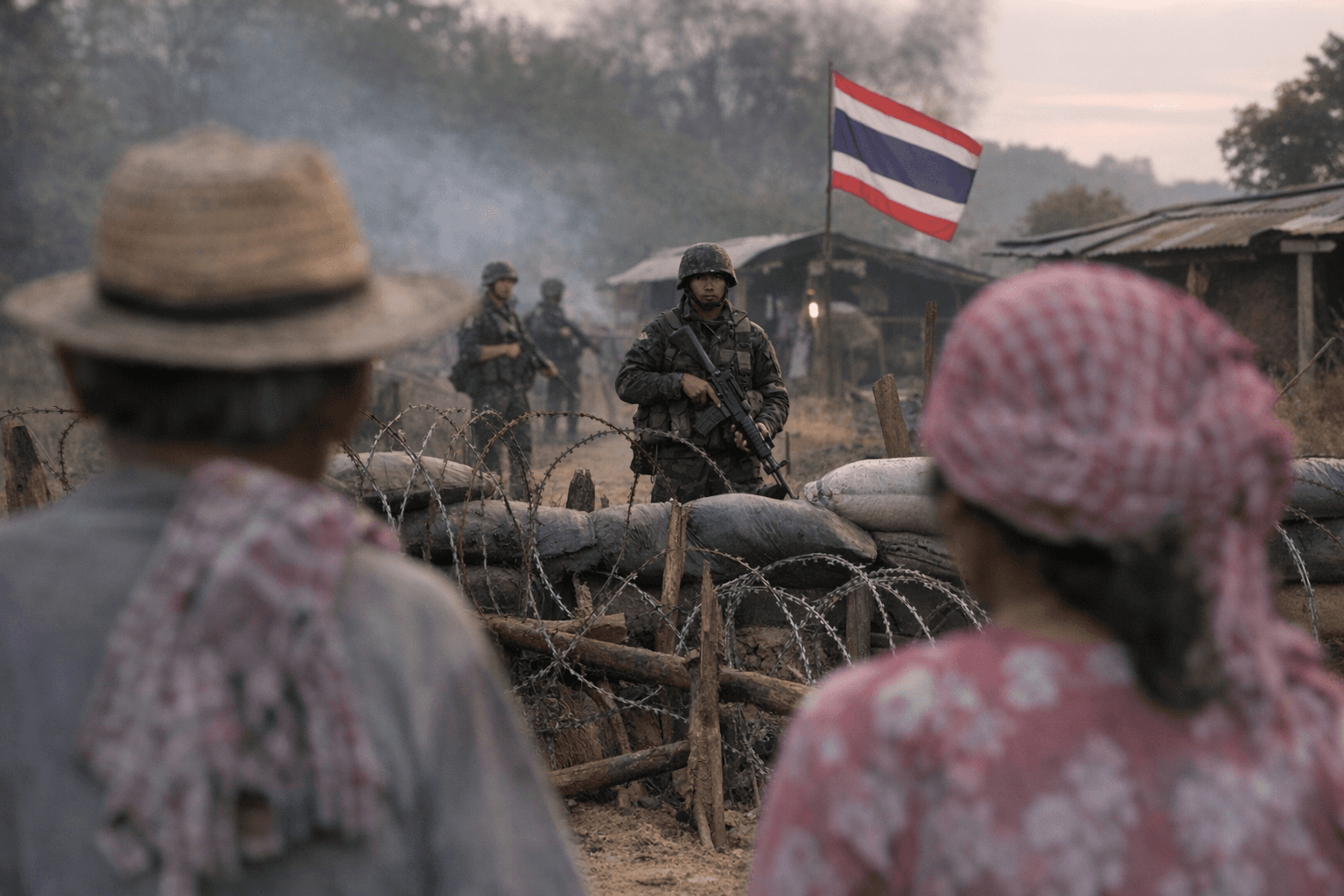
The December fighting involved roughly 20 days of intense clashes, including air sorties, artillery and rocket exchanges. A Joint Border Committee meeting on Dec. 27 produced a commitment that civilians displaced from affected areas should be allowed to return "at the earliest, without obstruction and in safety and dignity, to their homes and normal livelihoods on their own side." Cambodia has urged Thailand to implement that commitment and has requested a meeting of the Joint Boundary Commission, but Prak said Bangkok had not confirmed participation.
Two days after the ceasefire, top diplomats from China, Thailand and Cambodia met in Yunnan to try to rebuild trust, underscoring Beijing’s role as a regional interlocutor. Observers say independent verification of troop locations, the extent of barricading and the status of named villages and cultural sites is urgently needed; photographic, satellite or third-party observer evidence would strengthen claims on both sides.
The standoff presents an immediate humanitarian problem and a diplomatic test for bilateral mechanisms meant to defuse the dispute. If barricades and entrenched positions are not removed, localised tensions could flare again, complicating efforts by regional powers and ASEAN to stabilise a frontier that remains volatile and deeply sensitive to national identity and cultural heritage.
Sources:
Know something we missed? Have a correction or additional information?
Submit a Tip