Carved Lincoln Rock Remains Owsley County's Unassuming Cultural Draw
Abe Lincoln Rock, carved in the 1930s by Granville Johnson, sits off Highway 846 in Conkling and serves as a local landmark and modest draw for visitors.
Abe Lincoln Rock, the folk-art relief carved into stone in the Conkling community, stands as one of Owsley County’s most recognizable roadside attractions. Created in the 1930s by Granville Johnson, the Abraham Lincoln Relief Sculpture sits just off Highway 846 and is recorded in the Smithsonian inventory of folk art, a credential that places the piece in a national catalog of vernacular cultural objects.
Locally the work is routinely cited in community and visitor guides and features in both the county’s Wikipedia profile and the Kentucky Historical Marker database, which indexes markers by county for visitors and researchers. That recognition gives the rock more than sentimental value: it is part of the county’s cultural inventory and the kind of low-cost heritage asset that small rural communities can highlight when attracting daytrippers, history buffs, and photographers passing through eastern Kentucky.
For residents, the sculpture is more than a photo stop. In a county with limited economic levers, historic and folk-art sites help sustain a modest tourism corridor off primary routes. The Smithsonian listing and historical marker references create credibility that can be used in local promotion and wayfinding, and they give researchers and teachers a documented point of interest when compiling local history. Because the site is easily accessible from Highway 846, it functions as an entry-level cultural destination that requires little infrastructure to enjoy.
From a policy and planning perspective, the rock illustrates a practical approach to rural cultural preservation. Small public investments in signage, roadside safety, and basic maintenance can protect the sculpture while improving the visitor experience. Inclusion in official county materials and maps leverages existing recognitions—Smithsonian inventory and the historical marker database—into clearer messaging for visitors. That approach can help channel occasional tourism spending to nearby businesses without the large capital outlays required for bigger attractions.
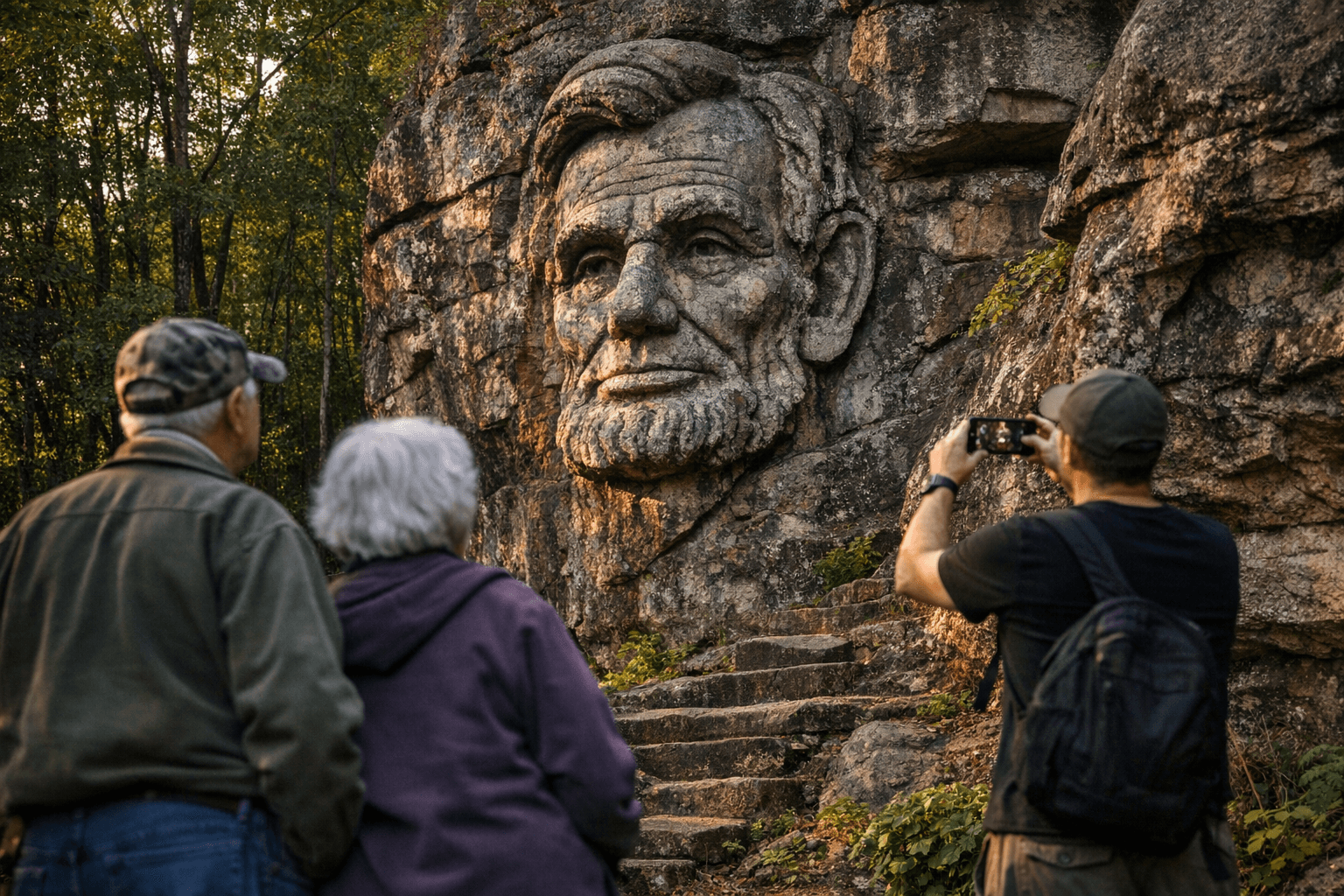
Looking ahead, the long-term value of Abe Lincoln Rock depends on simple preservation choices. Regular documentation, respectful site management, and visible acknowledgment in county tourism materials will keep the sculpture from fading into obscurity as roads and travel patterns change. It also gives Owsley a tangible cultural touchpoint that connects present-day residents to the county’s folk-art tradition.
Our two cents? Treat the rock like a local heirloom: drive by, take a photo from the public right of way, and let county leaders know the site matters. Small, steady attention protects our stone-cold celebrity and helps turn quiet curiosities into quiet economic opportunities.
Sources:
Know something we missed? Have a correction or additional information?
Submit a Tip