Chevron Houston Marathon weekend closed streets, stretched city services
Marathon weekend Jan. 9–11 routed runners through central neighborhoods, causing closures and medical staging. Residents faced heavy traffic; runners had 4- and 6-hour time limits.
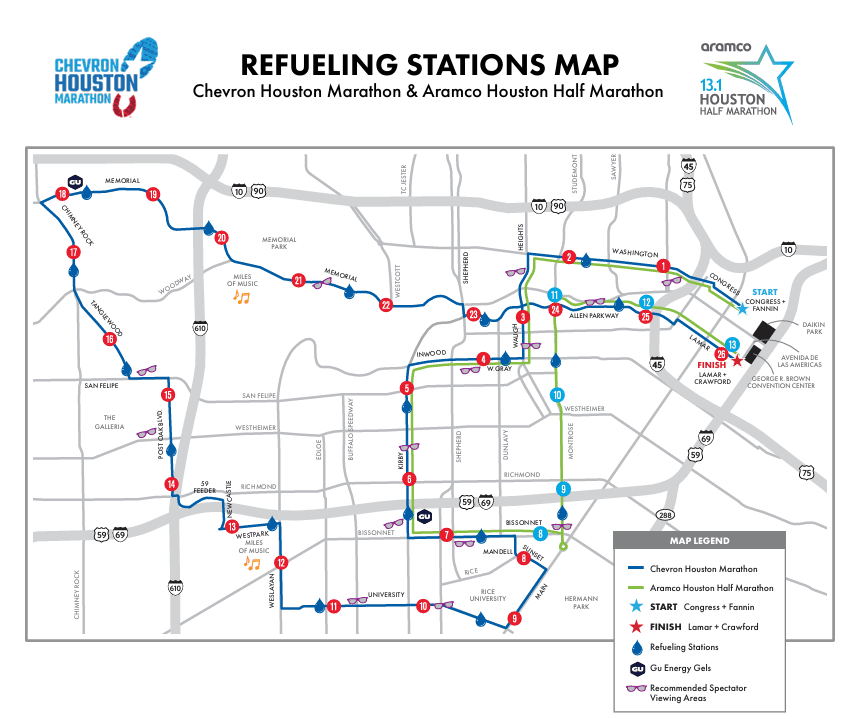
The Chevron Houston Marathon weekend ran Jan. 9–11, sending tens of thousands of participants and spectators through central Houston neighborhoods and prompting broad street closures, staged medical teams and coordinated safety briefings from Houston police and fire departments. The multi-day event included packet pickup, the We Are Houston 5K, RunFest and the full and half marathon courses that passed through downtown and adjacent communities.
Race organizers published course maps and schedules in advance, assigned runners to corrals and enforced timing limits to keep streets clear: the half marathon had a 4-hour cutoff and the full marathon a 6-hour cutoff. Medical resources were stationed along the course and at key intersections while HPD and HFD issued safety guidance and traffic control plans to protect runners and the public. Spectators were directed to official viewing areas and advised to follow posted course maps for safe access.
For Harris County residents and motorists the weekend meant significant disruption to normal travel. Downtown arteries and neighborhood streets were closed for hours as runners passed through, creating heavy traffic on alternate routes and delayed deliveries and commutes. Transit riders and drivers were urged to expect reroutes and allow extra time; nearby businesses saw a mix of increased foot traffic near festival zones and temporary access limitations for customers and suppliers. The concentrated impact on central Houston underscores the trade-offs cities face hosting large signature events: immediate economic activity for restaurants, hotels and retailers against short-term friction for commuters and local logistics.
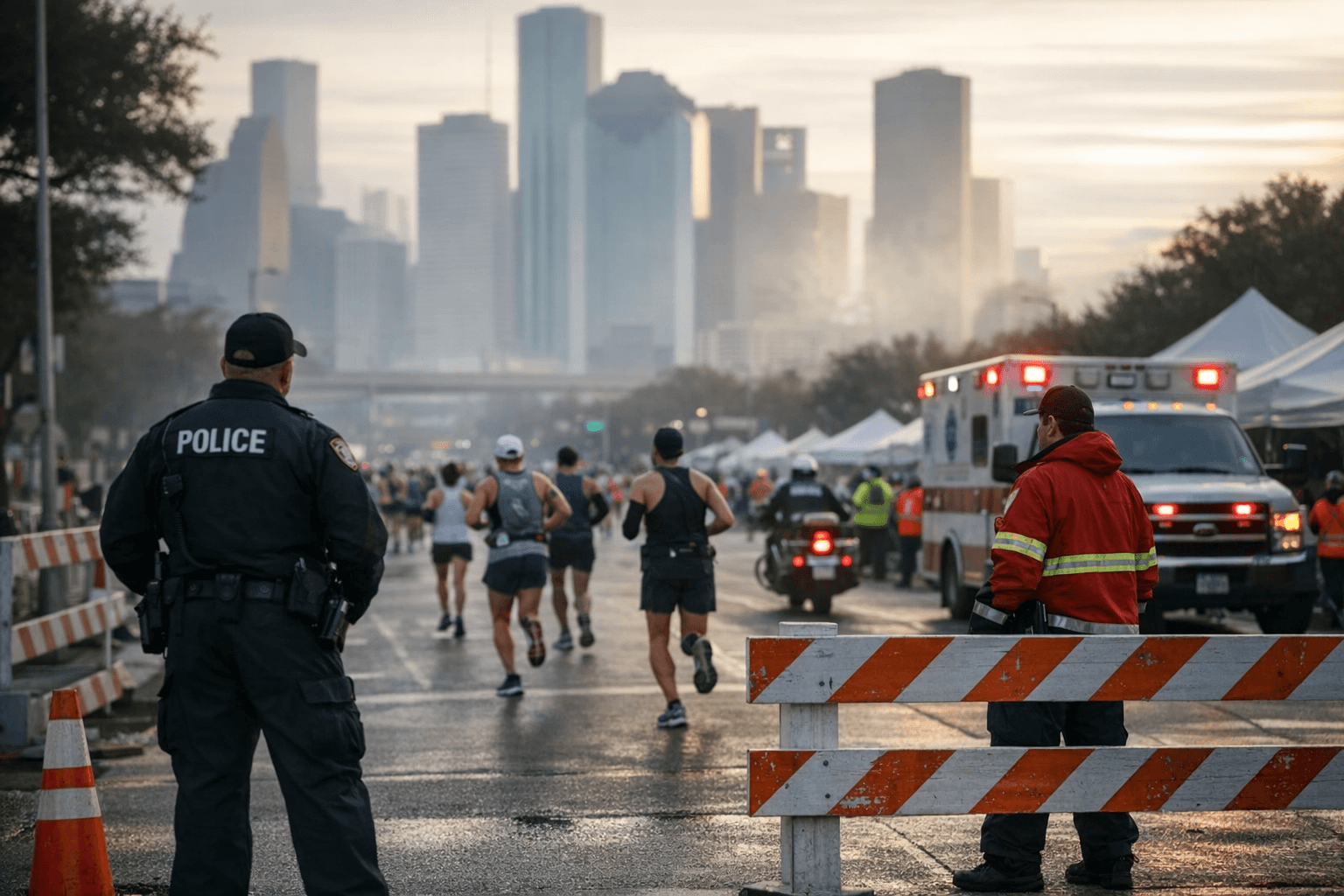
Public safety agencies focused on crowd control, rapid response and medical staging rather than evacuations, and emphasized coordination with race organizers to move runners safely through congested stretches. The use of corrals and strict timing limits is designed to limit how long streets must remain closed and to help emergency services maintain access. For neighborhoods bordering the course, that meant planned windows of restricted vehicle access rather than open-ended closures.
Longer term, these weekend operations highlight how recurring large-scale races influence city planning for traffic management, emergency services and economic benefits from event tourism. Better advance notice for deliveries, flexible work schedules for downtown employees and clearer spectator routing can reduce friction while preserving the economic upside.
Our two cents? If you live or work near the course, treat future marathon weekends like a planned outage: check the official course maps before you leave, move deliveries to off-peak windows, expect heavy traffic and keep a water bottle handy if you head out to watch.
Sources:
Know something we missed? Have a correction or additional information?
Submit a Tip