Chinese reconnaissance drone briefly entered airspace over Pratas islands, Taiwan says
Taipei says a Chinese drone entered the airspace above the Pratas Islands, calling the flight "provocative and irresponsible," a move that heightens regional tensions.
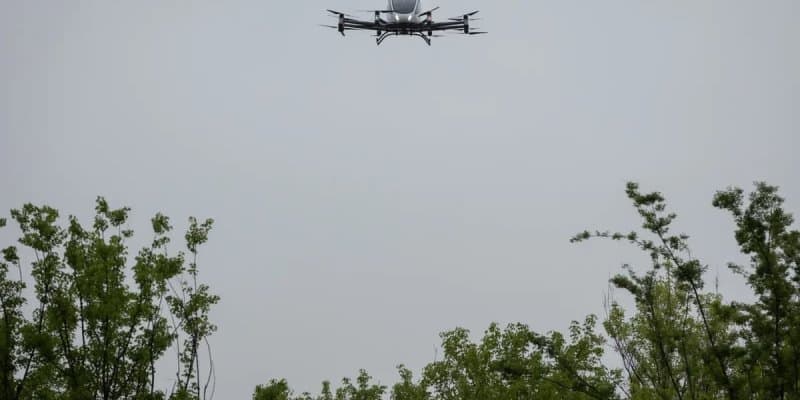
Taiwan’s Ministry of National Defense reported that a Chinese reconnaissance drone briefly entered the airspace above the Taiwan-controlled Pratas (Dongsha) Islands around dawn on Jan. 17, flying over the remote archipelago in the northern South China Sea before departing after warnings. Taipei described the flight as "provocative and irresponsible," saying it "seriously undermine[s] regional peace and stability" and "violate[s] international legal norms," and said its armed forces would remain on alert and "respond in accordance with the routine combat readiness rules."
The ministry said the unmanned aircraft was detected as it approached the Pratas Islands, was in the islands’ airspace for a short period and left after Taiwan broadcast warnings on international channels. Published accounts differ on the precise timeline: the ministry cited a departure time of 05:48 local time and characterized the incursion as lasting about eight minutes, while another public account put the entry at 05:44 and said the drone left four minutes later. Taiwan also reported the drone was flying at an altitude outside the effective range of its anti-aircraft weapons.
China’s Southern Theatre Command posted on its official WeChat account that the drones were conducting "normal flight training" in the airspace, reflecting Beijing’s broader claim to the Pratas or Dongsha islands. Taiwan said calls to China’s defence ministry outside office hours were not answered when contacted about the incident.
Analysts and officials note the episode fits a broader pattern of near-daily Chinese air and maritime pressure around Taiwan. Drones have rarely crossed into Taiwan’s declared airspace, making this incursion notable even as aircraft and maritime sorties occur frequently. Separate operational summaries compiled by analysts recorded a wider wave of activity on the same day, including several dozen aircraft sorties and multiple navy vessels operating in the South China Sea, underscoring the density of PLA operations in the area.

The Pratas archipelago sits roughly between southern Taiwan and Hong Kong and lies more than 400 km (about 250 miles) from Taiwan’s main islands, a geographic reality that defense planners say leaves the islands vulnerable to coercion or attack. Taiwan has fortified the islands as a forward outpost for maritime surveillance and air defense, but distance and logistics complicate rapid reinforcement.
The incident has immediate security and economic implications. Repeated Chinese probes increase geopolitical risk premiums that can affect shipping insurance costs and raise supply-chain concerns for sectors dependent on Taiwan, notably semiconductors. Markets typically react to heightened cross-strait tensions with increased volatility in regional equity and currency markets and with re-pricing of risk for companies with concentrated production in Taiwan. Policymakers in Taipei and partner capitals face pressure to calibrate deterrence, intelligence sharing and diplomatic messaging to prevent escalation without worsening tensions.
Several key details remain unresolved. Published accounts have not produced a reconciled radar log or a consistent timeline, and the drone’s platform and identifying characteristics were not released. For follow-up reporting, Taiwan’s defense ministry could provide tracking data and clarify what measures accompanied the broadcast warnings, while Chinese authorities could be asked to share flight plans and altitude data to substantiate the training claim. Absent such disclosures, the incident will likely be read as another example of incremental, low-cost coercion that complicates regional security and economic stability.
Sources:
Know something we missed? Have a correction or additional information?
Submit a Tip

