Christ of the Ohio Statue Remains Troy's Riverfront Landmark
Christ of the Ohio, an 11-foot white cement statue installed on Fulton Hill in the mid-1950s, continues to serve as a visible landmark for Troy and Perry County. Maintained by the Town of Troy and recorded in national art inventories, the statue remains a focal point for local identity, tourism promotion, and conversations about ongoing preservation and municipal maintenance costs.
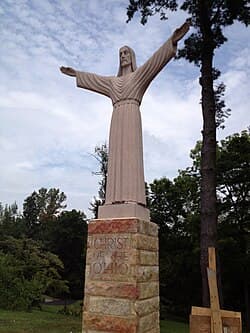
Perched on Fulton Hill overlooking the Ohio River, Christ of the Ohio is one of Troy’s most recognizable visual markers. Sculpted by Herbert Jogerst and installed in the mid-1950s with a noted dedication date in 1957, the figure stands roughly 11 feet high on a sandstone-and-concrete base and is floodlit so it can be seen for miles along the river and the highway below. The statue’s materials include white portland cement with an aggregate of crushed pink stone or travertine, and its pedestal incorporates St. Meinrad sandstone and cement.
The statue’s prominence is not purely symbolic. The Town of Troy is responsible for its upkeep, and the figure appears in local tourism and visitors’ materials, contributing to the town’s riverfront identity. Its inclusion in the Smithsonian’s Save Outdoor Sculpture! inventory and the Art Inventories Catalog provides formal recognition that can strengthen preservation credentials. For a small river town, that recognition matters: documented heritage assets often factor into grant applications, historic preservation funding and targeted tourism promotion strategies that can steer a modest but steady stream of visitors to local businesses.
Municipal maintenance of outdoor sculptures presents regular budgetary questions for towns like Troy. Weathering, flood exposure, and freeze-thaw cycles can accelerate wear on cement and stone, meaning periodic conservation work will be necessary to preserve the landmark’s visibility and structural soundness. Because the town manages the site, decisions about maintenance frequency, lighting upkeep and any interpretive signage involve local budget priorities and potential outside funding. The Smithsonian inventory listing can be a practical asset in those discussions, helping justify requests for state historic preservation grants or private donations.

For residents, Christ of the Ohio is more than a roadside image. It functions as a navigational cue for river traffic and a civic touchstone in event listings and visitor guides. Its long-standing presence on the Troy skyline links mid-20th century public art practice with present-day efforts to promote Perry County’s riverfront assets. As communities increasingly leverage heritage and river tourism for economic development, maintaining such landmarks balances cultural stewardship with practical questions about municipal resources and long-term preservation planning.
Sources:
Know something we missed? Have a correction or additional information?
Submit a Tip