College Therapy Dogs Aid Students, Highlight Local Animal Adoption
On December 2, 2025, Humane Society of Yuma volunteers brought four adoptable dogs to Arizona Western College Yuma campus to help students de stress during finals week. The visit offered immediate mental health relief for students while raising visibility for local animal adoptions, underscoring the role of campus community partnerships in supporting student well being and civic engagement.

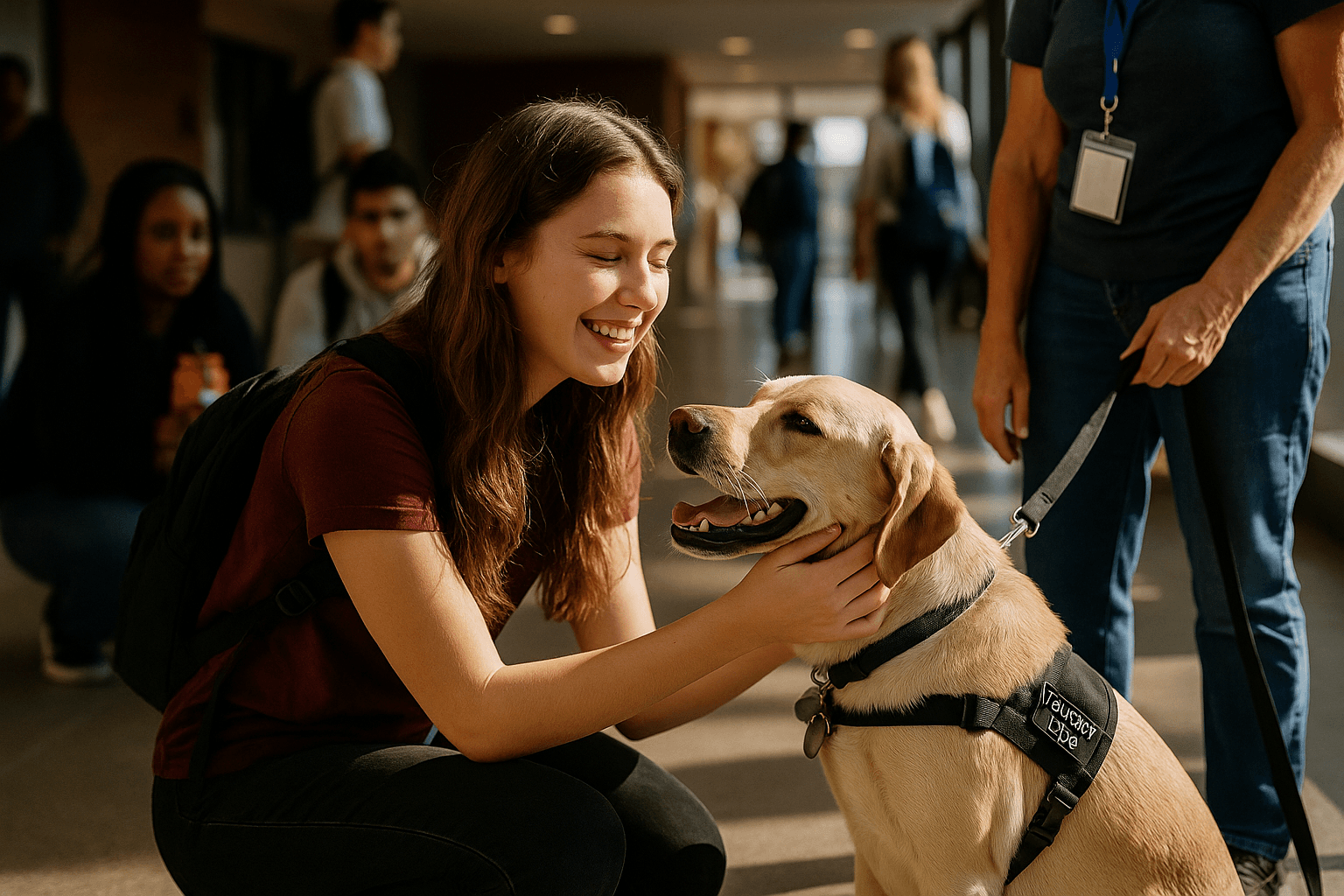
Humane Society of Yuma volunteers brought four dogs named Yuma, Arizona, Artemis and Dobby to the Matador Activity Center at Arizona Western College on December 2, 2025, as finals week began. The dogs wore leashes labeled ADOPT ME while volunteers and members of the AWC Business Club staffed the event, and campus photographers documented the scene in a nine image photo gallery showing students petting the animals and volunteers on site.
Student response was immediate. AWC student Connor Fletcher said, "Finals can be a very stressful time." Professor Kris Duke, who partnered with the Business Club and the humane society to organize the visit, noted strong turnout and described the event as serving a dual purpose of offering student stress relief while highlighting adoptable animals.
The event illustrates two intersecting local priorities. First, it provided a low cost, high impact form of stress mitigation at a moment of heightened need for students. Temporary animal visits have become a common campus strategy to reduce acute anxiety during exams, and the AWC initiative demonstrates how student organizations and faculty can mobilize community partners to fill short term support gaps. Second, the event functioned as community outreach for the Humane Society of Yuma, increasing the visibility of adoptable animals and connecting potential adopters with shelter volunteers.
For Yuma County residents the visit highlights how cross institutional collaboration can produce practical benefits without significant new resources. Campus leaders and local nonprofits can replicate this model to expand mental health supports, create volunteer opportunities, and boost adoption rates. Policymakers and college administrators looking to strengthen student services may consider formalizing such partnerships, tracking outcomes and ensuring they complement ongoing counseling and wellness programs.
The gathering also serves as a reminder that civic engagement can take many forms, from volunteering with animal welfare groups to supporting student run organizations that address community needs. Events like the AWC and Humane Society of Yuma collaboration provide immediate relief for students and create tangible pathways for residents to support local institutions and vulnerable animals.