Community assembles 1,200 holiday food bags, eases student hunger over break
On December 8 community volunteers assembled 1,200 food bags weighing about 24,000 pounds and valued at roughly $90,000 for Wasatch County School District students facing food insecurity during the two week Christmas break. The effort relied on about 460 volunteers, donated cloth bags, and distribution through family registration at the Christian Center of Park City, providing a measurable safety net while highlighting gaps when schools are closed.
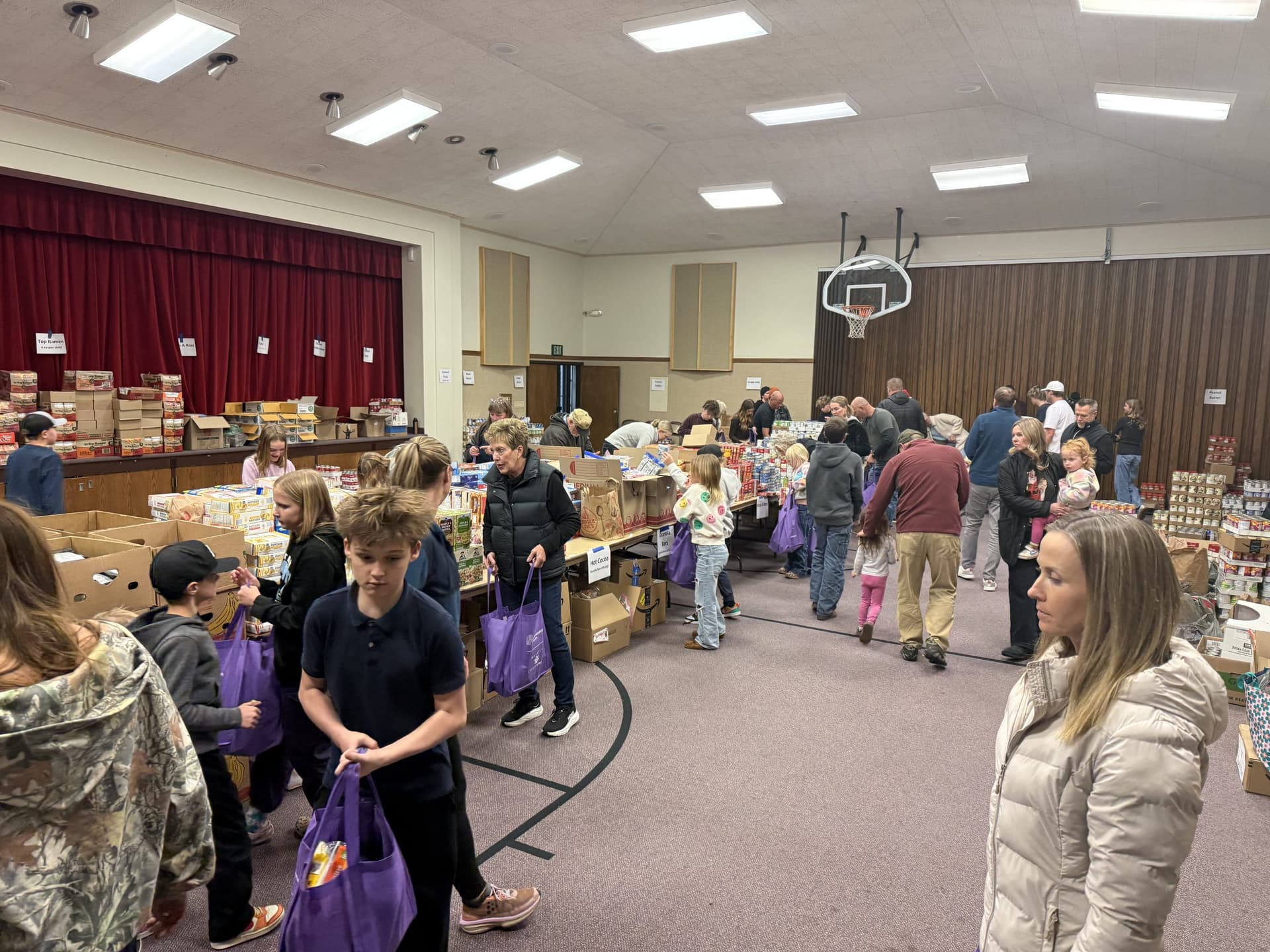
Volunteers and organizers mobilized on December 8 to assemble 1,200 food bags intended to sustain students in the Wasatch County School District through the two week Christmas break. The packages totaled about 24,000 pounds of food and carried an estimated retail value of $90,000. Families registered for pickup through the Christian Center of Park City and collected the items after distribution was staged and completed by community volunteers.
The operation was organized by the Wasatch Community Foundation with leadership from Diane Glenn and supported by roughly 460 volunteers. Donated cloth bags were collected, staged, filled and handed out in a coordinated workflow that moved supplies from drop off to distribution. The math underscores the scale of the response. Each bag weighed about 20 pounds on average and held roughly $75 worth of food. With about 1,200 bags and 460 volunteers, volunteers collectively produced about 2.6 bags each, reflecting a high degree of community engagement in a concentrated time frame.
For Summit County residents the event offers both reassurance and a reminder. The effort plugged the well documented gap that appears when school meal programs pause for holiday breaks. In immediate financial terms the program delivered about $90,000 of food purchasing power to local families, reducing short term household food costs and preserving family budgets that might otherwise be strained by holiday expenses or seasonal work fluctuations.
Beyond the immediate relief, the event raises policy questions about the resilience of the local food safety net. Relying on charity to fill the gap during predictable school closures leaves households exposed. Options worth local consideration include expanding year round meal support programs, coordinating regional food purchasing to capture bulk discounts, and directing public funds toward predictable holiday coverage. From a market perspective, coordinated community purchasing and volunteer logistics generate scale economies that reduce per bag costs and improve distribution efficiency.
The foundation described the drive as part of an ongoing response to local need during school closures. As winter advances and holiday schedules recur, the community response on December 8 demonstrates capacity and commitment, while also pointing to the longer term need for more permanent policy solutions to protect children from food insecurity when school meals are not available.