Community Q&A offers steps to balance older driver mobility and safety
A local Q&A explains when older drivers should seek evaluations and where families can find assessments and transportation alternatives. It matters for safety, independence, and access across Adams County.
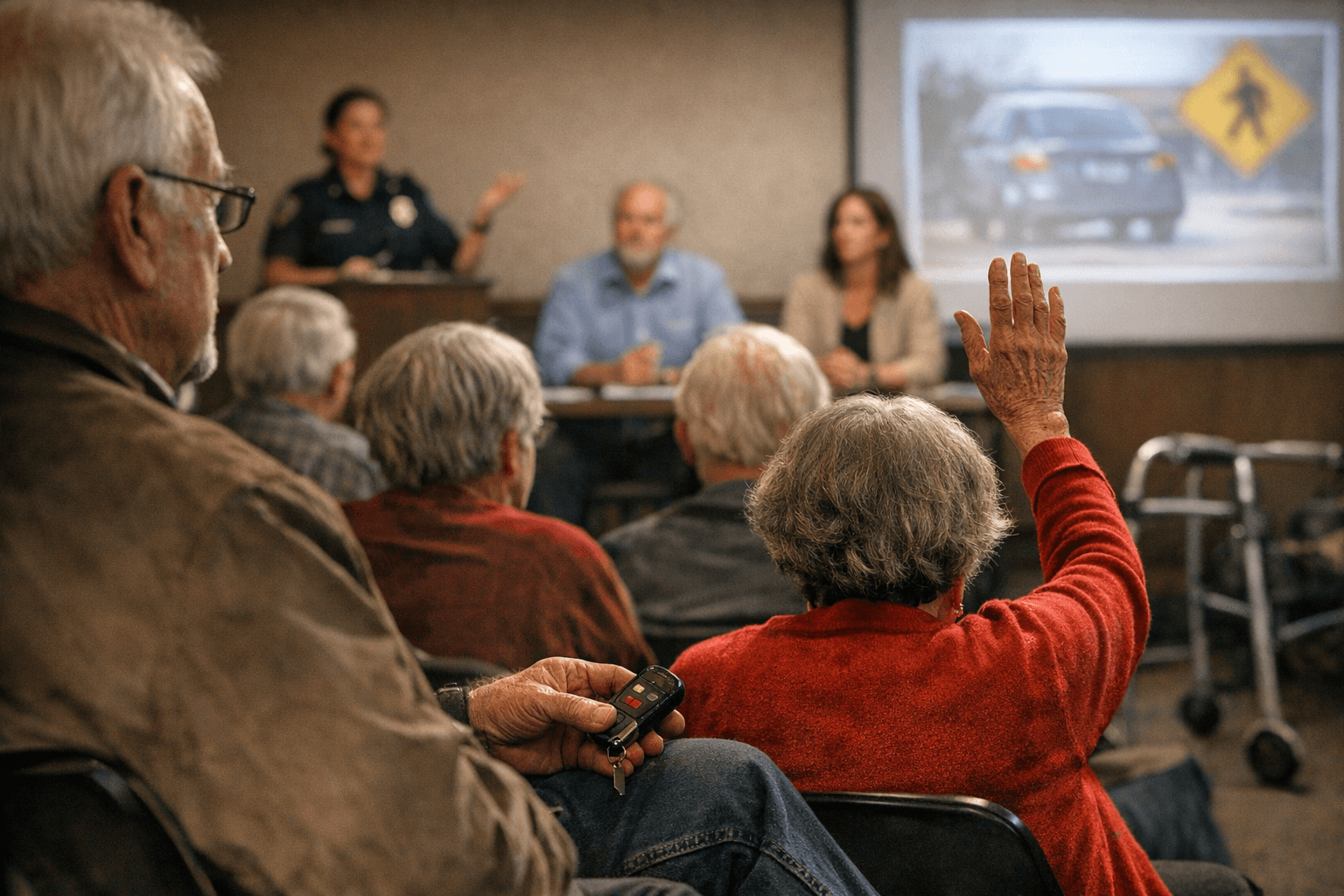
Last week a public-safety and health Q&A laid out practical steps for Adams County families facing the wrenching decision about an older relative's driving. The piece focuses on when to pursue formal evaluations, how to have safety-minded family conversations, what assessments are available, how to arrange medical or occupational-therapy exams, and local alternatives for getting around without a car.
The most urgent takeaway is recognizing warning signs: unexplained dents or near-misses, difficulty staying in lanes, slower reaction to traffic changes, getting lost on familiar routes, or feedback from other drivers. The Q&A recommends starting with a medical checkup or a conversation with a primary care clinician when concerns arise rather than waiting for a crash or a license review.
For assessment options, the Q&A highlights two paths: driver re-training and comprehensive mobility assessments. Driver re-training focuses on behind-the-wheel skills and can refresh knowledge of new traffic laws and in-car technology. Mobility assessments, often led by occupational therapists, evaluate vision, cognition, reaction time, and functional skills related to driving and travel. The Q&A explains that clinicians and occupational therapists can make referrals or complete evaluation orders, and that families can ask a doctor to document specific concerns to support scheduling an assessment.
The guidance also covers how families can approach conversations without blame. Suggestions include framing the talk around safety and independence, bringing objective observations and recent examples, involving the older driver in planning alternatives, and using brief trial changes such as limiting nighttime driving or highway routes as a step toward more formal decisions.
Local impact goes beyond individual households. Loss of driving can increase social isolation, missed medical appointments, and difficulty accessing grocery stores or work - problems that hit hardest in rural and outer-suburban parts of Adams County where transit is limited. The Q&A urges communities and policymakers to view driving evaluations and alternative transport as public-health tools that prevent injuries while supporting mobility and equity.
On transportation options, the piece points to community-based alternatives common in counties like ours: county transit or paratransit services, senior center shuttles, volunteer driver programs, and coordinated rides through health and social service agencies. It encourages residents to contact their primary care clinic, local aging services, or county human services to learn what is available and affordable.
The takeaway? Start the conversation early, lean on clinicians and occupational therapists for objective assessments, and map out nearby rides so losing a key to the car doesn't mean losing your life. Our two cents? Treat driving as part of a broader plan for health and community connection, and make a list of local options before you need them.
Sources:
Know something we missed? Have a correction or additional information?
Submit a Tip