Copernicus Says 2025 Will Be Among Hottest Years on Record
The EU Copernicus Climate Change Service reported that 2025 is likely to be the world’s second or third warmest year, following a record in 2024. The bulletin signals that recent warming has pushed multi year averages past the 1.5°C threshold relative to pre industrial levels, intensifying pressure on governments to deliver deeper, faster emissions cuts.
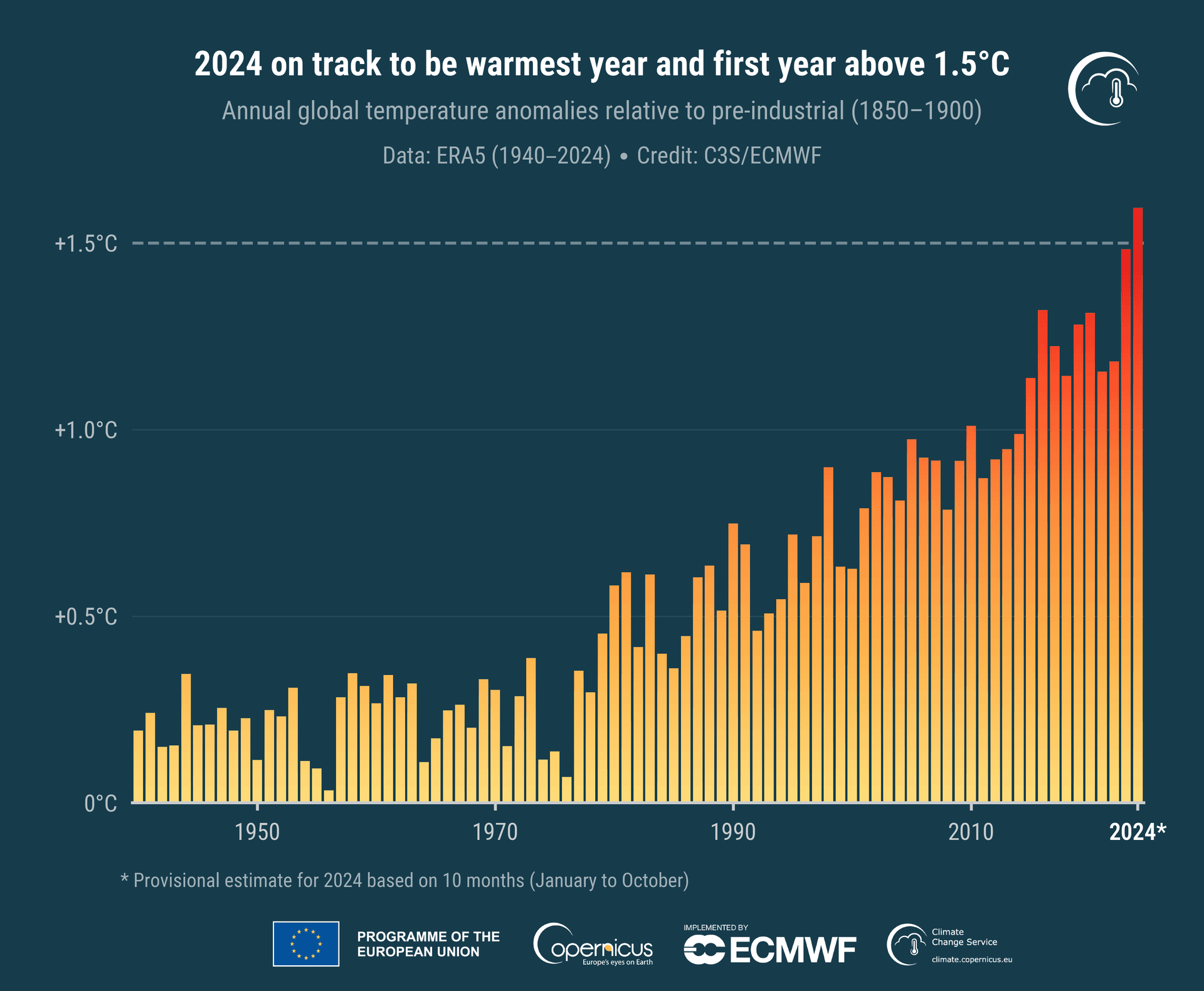
The European Union’s Copernicus Climate Change Service released a monthly bulletin on Tuesday indicating that 2025 is likely to rank as the planet’s second or third warmest year on record, after 2024’s unprecedented peak. The agency said the 12 month period around mid 2025 produced global averages that place the world firmly among its hottest years, continuing an extraordinary run of warm conditions that has persisted into the present.
Copernicus highlighted that rolling multi year averages are now among the first multi year spans to exceed 1.5°C above the 1850 to 1900 pre industrial baseline, a benchmark long tied to the Paris Agreement’s ambition to limit warming. That milestone is not a single year statistic, but a signal that sustained warming now places portions of recent decades above a threshold many scientists and vulnerable countries regard as a marker of heightened risk.
Climate scientists and policy analysts have interpreted the bulletin as confirmation that the pace of global warming is accelerating, driven by continued greenhouse gas emissions. The Copernicus findings arrive against a strained backdrop of international diplomacy, where recent negotiations produced limited consensus on deeper near term action. Governments left meetings with unresolved tensions over emissions pathways, adaptation finance, and the distribution of responsibilities between wealthy and developing states.
For nations already on the frontline of climate impacts, the data are more than an abstract measure. Rising temperatures compound droughts, extreme heat events, and pressure on agricultural yields in parts of Africa, Latin America, and South Asia. Small island states face intensified sea level rise and storm risk, while northern economies confront longer term disruptions to ecosystems and infrastructure. The crossing of a 1.5°C multi year threshold is likely to sharpen calls for accelerated mitigation, expanded adaptation funding, and reforms to international climate finance to address losses and damages.

Legal and political consequences may also follow. As empirical evidence of rapid warming accumulates, governments and corporations could confront heightened scrutiny over emissions commitments and implementation. International institutions will face renewed pressure to translate high level pledges into measurable near term reductions, while donor nations will be urged to clarify finance windows and mechanisms that support vulnerable populations.
Copernicus’s bulletin serves as a data point that links atmospheric science to geopolitics and everyday livelihoods. The agency’s assessment underscores that decisions made by governments in the coming months will influence how rapidly warming trends translate into concrete impacts. While scientific measurements do not prescribe policy, the growing body of evidence narrows the options available to stay within internationally endorsed temperature limits, increasing the urgency for coordinated global action on emissions, adaptation, and equitable support for those hit hardest.