Courtroom Testimony Details McDonald’s Role in Mangione Arrest
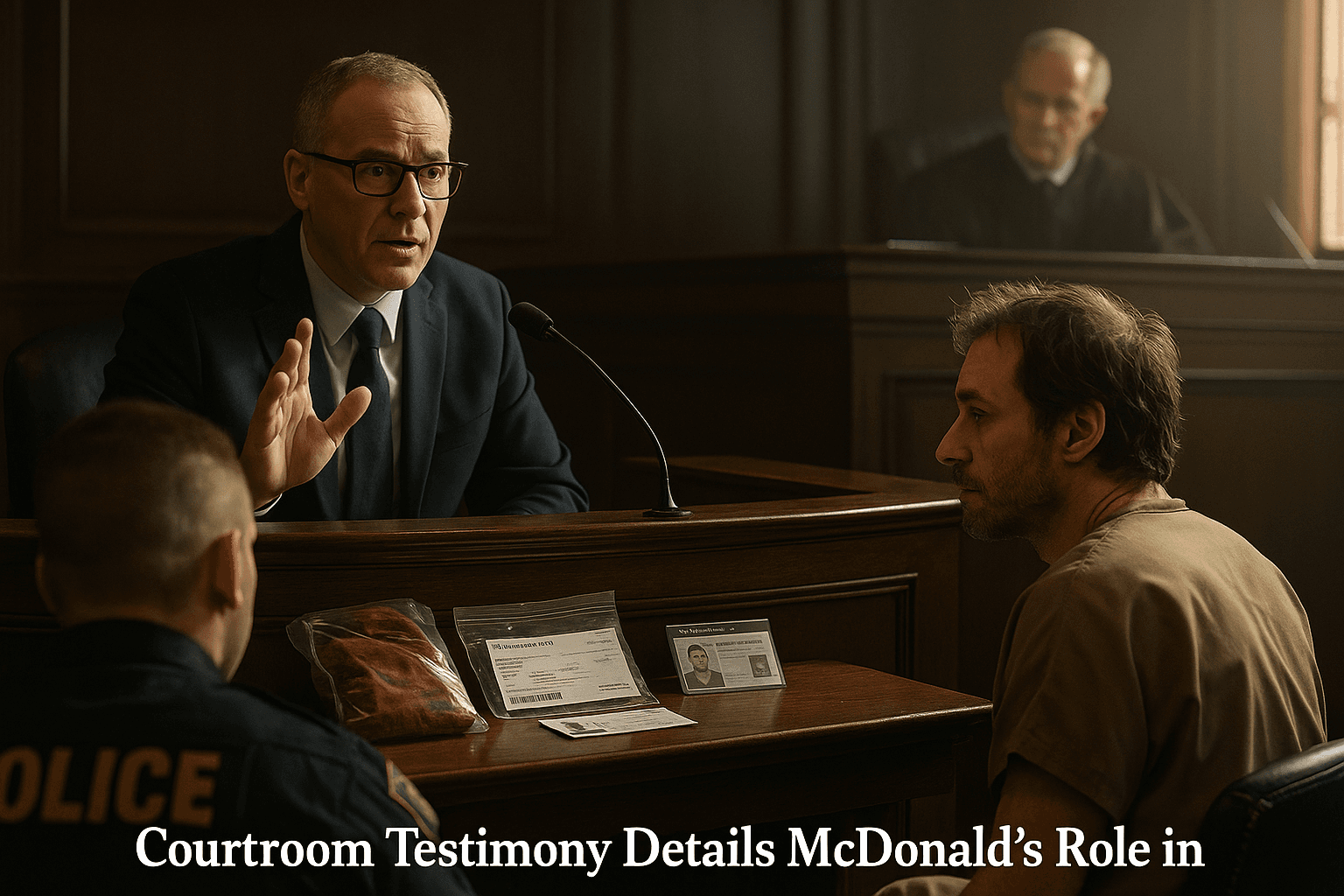
Court testimony on December 4 documented Altoona police accounts and evidence recovered at the McDonald’s where Mangione was arrested, including clothing, a fake identification card, and a Greyhound bus ticket bearing the name Sam Dawson. The hearing matters to restaurant workers because it highlights how routine customer interactions and staff emergency calls can intersect with criminal investigations, create legal scrutiny of evidence gathering, and place employees at the center of public safety responses.
%3Amax_bytes(150000)%3Astrip_icc()%3Afocal(958x558%3A960x560)%2Fluigi-mangione-court2-12425-84d03a8616994b58bcdf281e3313d124.jpg&w=1920&q=75)
Prosecutors presented testimony and exhibits on December 4 at the Mangione evidentiary hearing describing the Altoona police response at a McDonald’s where authorities arrested the defendant last December. Officers testified about body camera footage and showed items recovered at the scene, including clothing, a fake identification card, and a Greyhound bus ticket bearing the name Sam Dawson. The session focused on how those items were found and documented during the encounter.
Defense attorneys argued that statements and physical evidence should be excluded because they were obtained in violation of Mangione’s rights, and they pressed the court on procedural issues surrounding the stop and arrest. The judge heard competing arguments on admissibility, and the hearing is expected to continue for several days as both sides parse the video evidence and witness accounts.
The McDonald’s location and its staff played a central role in ending the manhunt, according to testimony that described a manager calling 911 after a customer recognized the suspect. That detail underscores how front line employees can become inadvertent participants in criminal cases, and it raises questions about workplace safety expectations, training, and liability for staff who intervene or report suspicious activity.
For McDonald’s employees and managers, the hearing highlights practical implications. Staff may face pressure to make rapid safety judgments during shifts, and their actions can be recorded, scrutinized in court, and used as evidence. Restaurants and franchise operators may need to revisit protocols for when to involve law enforcement, how to document incidents, and how to support employees who are involved in high stress confrontations. The prospect of future subpoenas or requests to review surveillance footage can also complicate routine store operations.
As the evidentiary hearing continues, the outcome will determine which items and statements can be used at trial and may set a precedent for how similar cases treat evidence gathered in public commercial spaces. For workers, the proceedings are a reminder that everyday service roles sometimes intersect with law enforcement in ways that have legal and emotional consequences.
%3Amax_bytes(150000)%3Astrip_icc()%3Afocal(621x466%3A623x468)%2Fluigi-mangione-court2-12125-a2e1c4e5ae8342b99a1177beb5d8a106.jpg&w=1920&q=75)
