Crews Shore Up Failed Levee, Evacuations Ordered South of Seattle
Heavy rains and successive atmospheric rivers sent a section of the Desimone levee along the Green River in Tukwila giving way, forcing rapid evacuations and temporary flood control measures for hundreds of residents. The breach highlights immediate public health risks from flooding and renewed pressure on local and regional infrastructure policies as officials scramble to secure homes and critical services.
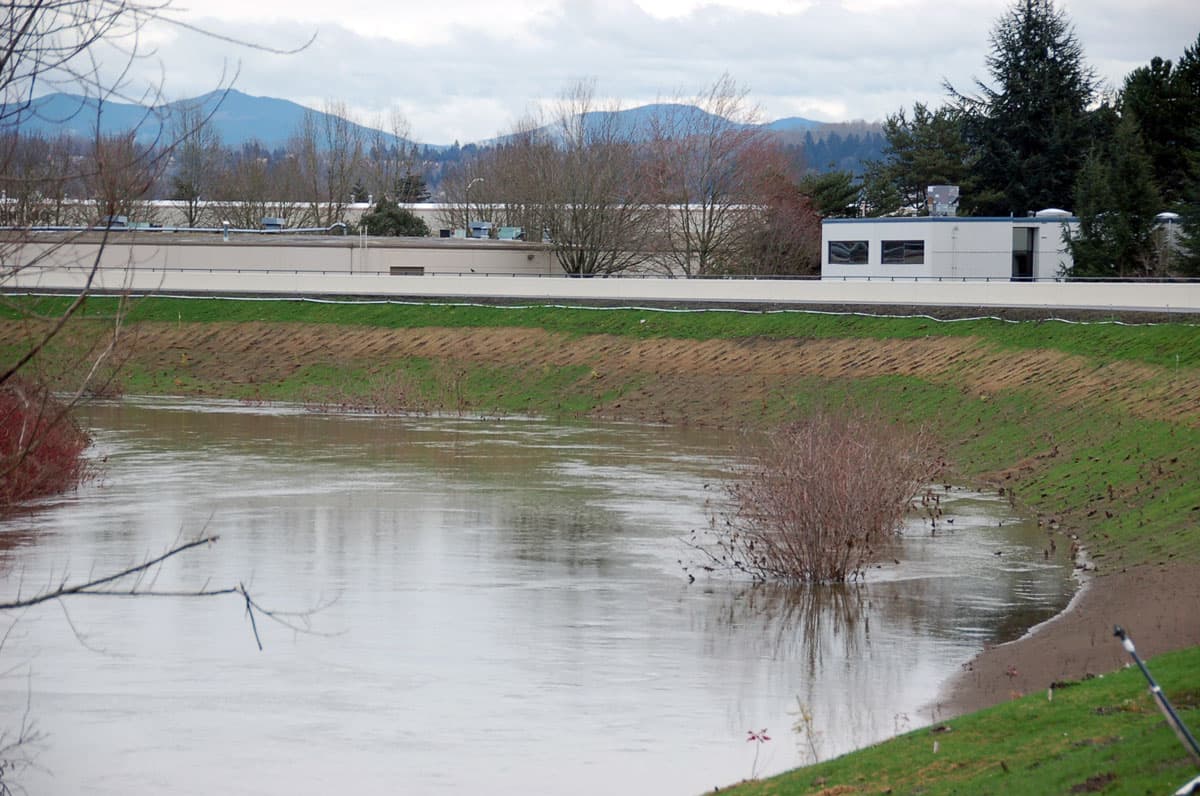
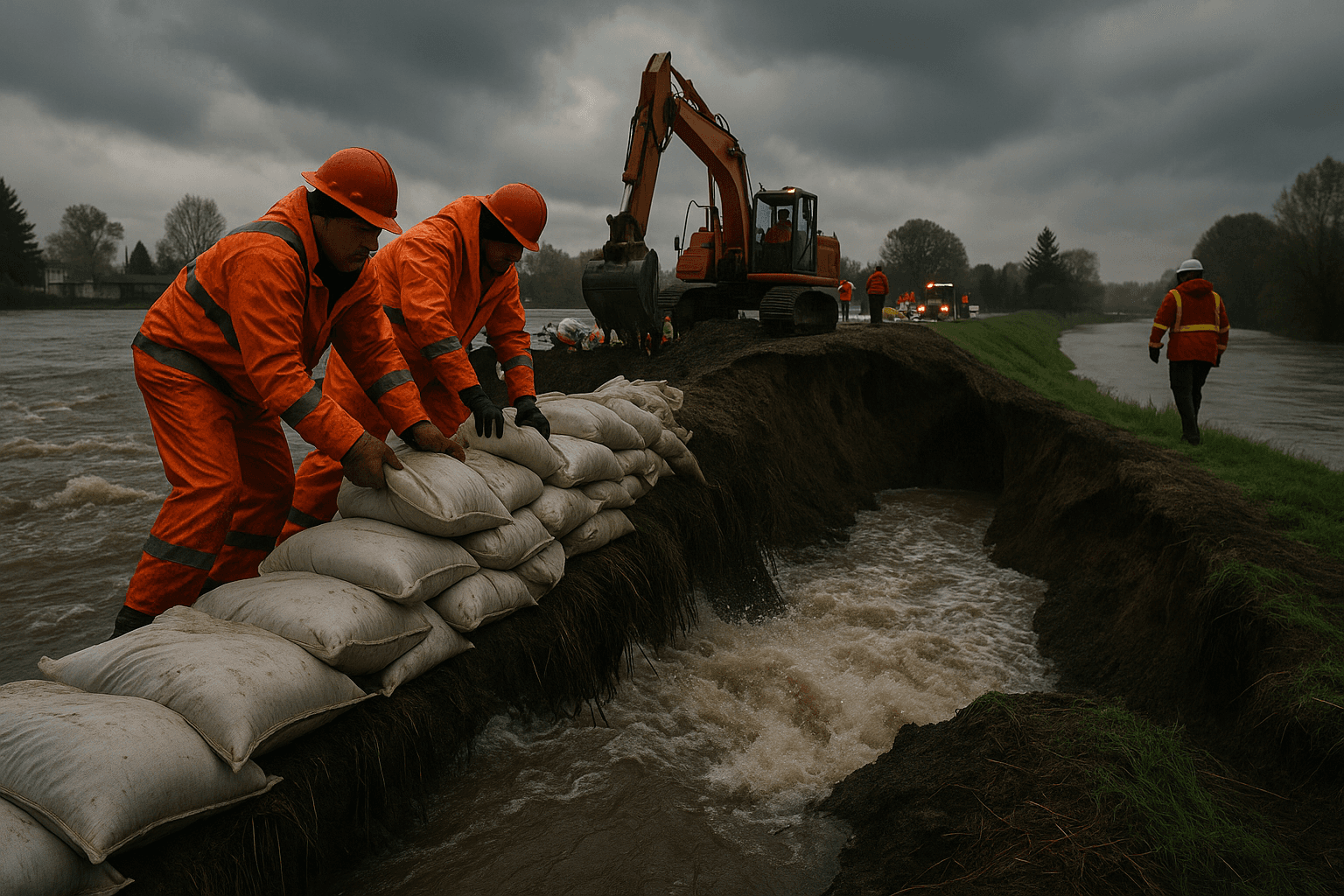
A small section of the earthen Desimone levee beside the Green River in Tukwila failed on December 15 after a week of heavy rains that battered western Washington. County and city crews moved quickly to stop the flow using sandbags and other temporary measures, while evacuation orders and flash flood warnings were issued for low lying neighborhoods south of Seattle.
King County and local emergency authorities said the flow of water from the breach was halted and a temporary repair was being completed by Monday evening. Images and drone video from the scene showed crews shoring up the riverbank and assessing a visible crack where the levee gave way. The National Weather Service in Seattle issued a flash flood warning for parts of King County that remained in effect into the evening.
The failure prompted immediate evacuations across multiple suburbs. Emergency responders pulled about 100 people from a Pacific apartment building early on Tuesday after a 911 call reported water entering a unit, and some residents were taken from first floor apartment windows. The Valley Regional Fire Authority later said residents of roughly 220 homes were told to evacuate within its response area. County dispatch logs and agency notices indicated that broader evacuation messages reached roughly 1,100 recipients, though accounts of the total affected addresses varied across reports.
There were no reported injuries related to the Tukwila breach. Elsewhere in the region the heavy rain and flooding produced at least one fatality in Snohomish County. Rescue swimmers found a submerged vehicle and a driver in about six feet of water in a roadside ditch northeast of Seattle, and the death was being investigated.
Local officials said the Desimone levee had been monitored and worked on in recent days, reflecting long standing concern about the structure. John Taylor, director of the King County Department of Natural Resources and Parks, told reporters the county was watching the levee and credited response teams for their speed, saying the county "was able to respond very swiftly."
Public health authorities and social service providers warned that even temporary flooding can carry acute and long term health risks. Standing water raises the possibility of contaminated floodwater entering homes and utility systems, increasing exposure to sewage and chemical runoff. Displacement concentrated the most risk on people with limited mobility, older adults, people with chronic illnesses, and renters in ground floor units who often have fewer resources to recover quickly.
Local leaders and advocacy groups called for attention to equity in relief and long term resilience planning. Authorities set up shelters and urged affected residents to seek assistance, and in at least one evacuation the message to residents was direct and urgent, "Go Now!"
The failure came amid a string of atmospheric rivers and relentless rain that strained levees, drainage systems, and emergency response capacity across western Washington. As crews finish temporary shoring and begin damage assessments, elected officials face renewed questions about investment in flood infrastructure, emergency preparedness for vulnerable communities, and long term adaptation to more frequent extreme precipitation events.
Know something we missed? Have a correction or additional information?
Submit a Tip