Department of Labor Guidance Clarifies Organizing Rights for McDonald's Workers
The Department of Labor issued guidance that lays out employee rights under the National Labor Relations Act and explains common steps in union organizing, including authorization cards and NLRB elections. The guidance matters to McDonald’s employees and managers because it highlights what activity is protected, what actions employers must avoid, and practical steps HR and field leadership should take when organizing activity occurs.

The Department of Labor guidance summarizes worker protections under the National Labor Relations Act and provides a clear roadmap for how union formation typically proceeds. For McDonald’s crew members, restaurant managers, and corporate HR teams the guidance makes explicit that most private sector, non managerial employees have the right to organize and to act together to improve wages and working conditions, with or without a union. That right triggers specific legal obligations for employers and practical considerations for workplace leaders.
The document outlines common organizing steps. Employees often collect signed authorization cards to show support, with a common threshold being roughly 30 percent to trigger an NLRB petition for a secret ballot election. If a petition is filed the National Labor Relations Board conducts the election and enforces related unfair labor practice charges, and state labor agencies may play a role in some circumstances. Employees may also seek voluntary recognition from an employer if a majority demonstrate support, a route that bypasses a formal NLRB election when both sides agree.
For McDonald’s workplace teams the most immediate takeaway is the prohibition on employer interference. Employers must not interfere with, coerce, or retaliate against employees for engaging in protected concerted activity. That legal standard affects how managers communicate about organizing, how investigations are handled, and how discipline is applied during periods of heightened organizing interest.
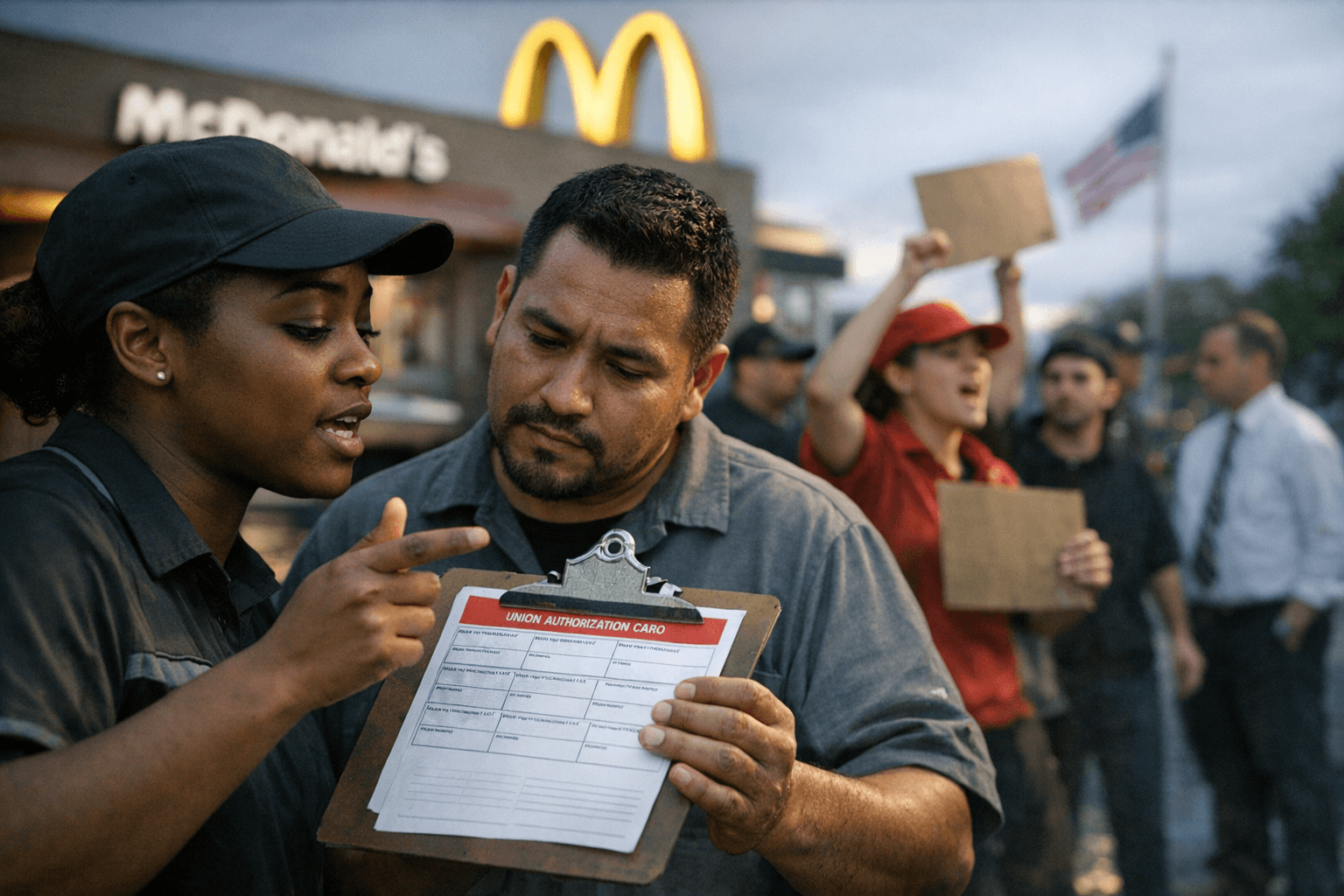
Practically speaking McDonald’s HR and field leadership should refresh training on what constitutes protected activity and unlawful interference, create transparent channels for employees to raise workplace issues, and coordinate closely with legal and labor relations before responding to organizing activity. Clear internal procedures reduce the risk of unfair labor practice charges and help preserve constructive workplace relations.
For frontline workers the guidance reinforces that they have options to press workplace concerns collectively, while for managers it underscores the need for careful adherence to labor law and consistent, lawful communications.
Sources:
Know something we missed? Have a correction or additional information?
Submit a Tip