Douglas County trains residents in adult mental health first aid
Douglas County held a mental health first aid for adults training Jan. 12 to teach residents how to recognize and respond to mental health and substance-use challenges.

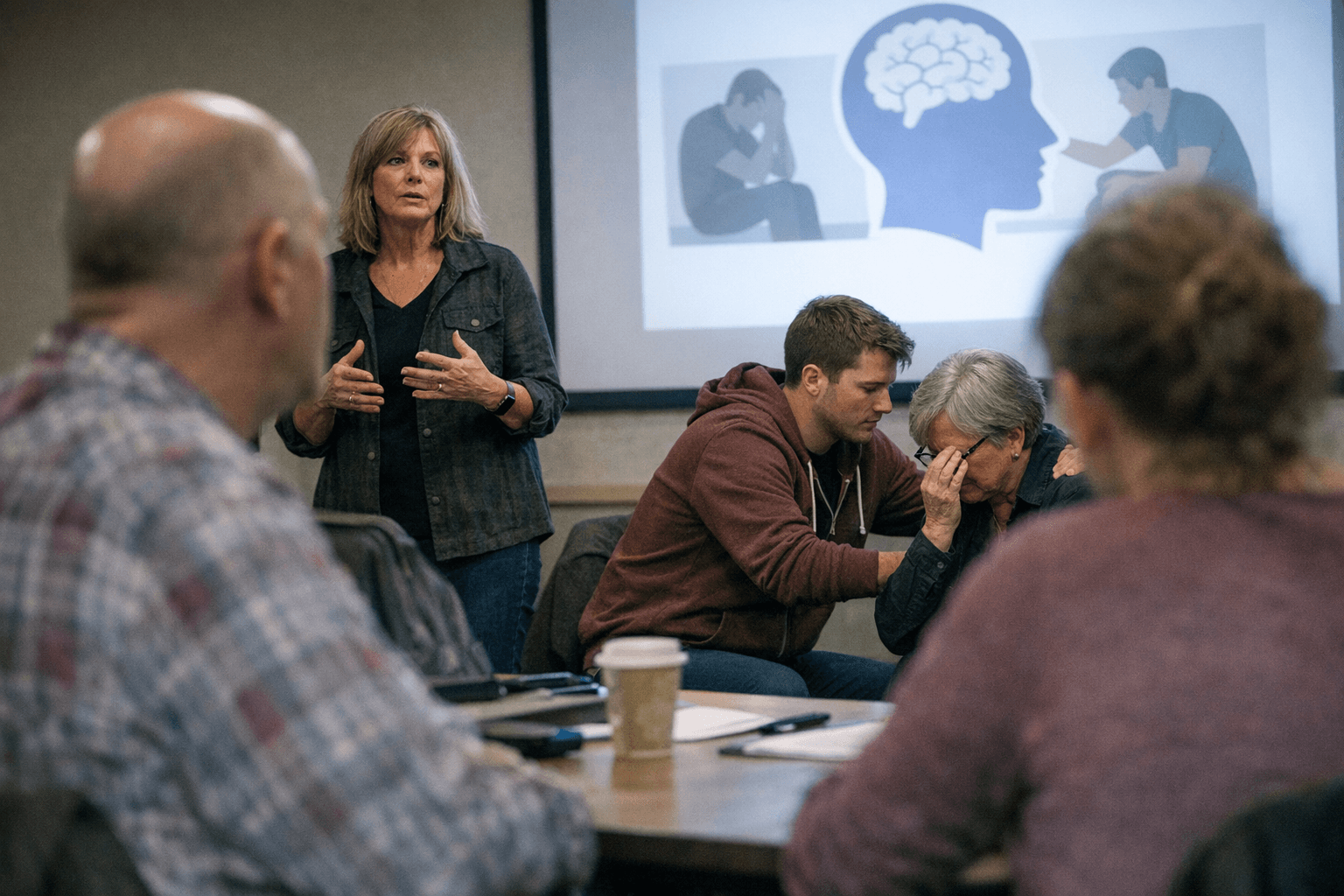
Douglas County held a Mental Health First Aid for Adults training on Jan. 12 that aimed to give neighbors the skills to spot and respond to mental health and substance-use challenges. The one-day course ran from 9:00 a.m. to 4:00 p.m. and focused on recognizing signs of distress, offering initial help, and guiding someone to appropriate care.
County organizers described the course as practical, equipping more people to start helpful dialogues across the community. For residents, that means more neighbors, co-workers, teachers and front-line staff will be able to identify early warning signs and take steps that may prevent crises from escalating. The training is designed to bridge the gap between concern and professional care by teaching how to open conversations and connect people with local supports.
Mental Health First Aid courses typically package core skills into a single-day format so participants can return to their workplaces and neighborhoods ready to act. Douglas County’s session put those elements into a schedule that ran through morning and afternoon modules, allowing time for practice and discussion. Participants left with a clearer sense of what to look for in adults showing signs of depression, anxiety, suicidal thinking or substance-use problems, and how to encourage next steps toward treatment or crisis services.
For Douglas County, the training supports public health and public safety goals by expanding community-level awareness. In rural and suburban pockets of the county where professional services may be harder to access quickly, trained lay responders can ease immediate distress while formal help is arranged. Employers and community groups who invest in this training reduce stigma by normalizing conversations about mental health and create safer workplaces and public spaces.
Local impact is practical: someone who knows how to ask the right question or suggest a next step can change the course of a neighbor’s day, and potentially their life. The course also helps families and workplaces develop clearer plans for connecting people to care when they show warning signs.
The takeaway? If you missed this session, consider signing up for the next county offering or bring the training to your workplace or volunteer group. A small investment in skills and a readiness to start honest conversations makes Douglas County a safer place to live and look out for one another.
Sources:
Know something we missed? Have a correction or additional information?
Submit a Tip