East Point Lighthouse Faces Chronic Erosion, Preservation Efforts Intensify
East Point Lighthouse at Bivalve and Port Norris is increasingly threatened by chronic shoreline erosion and repeated storm impacts, prompting emergency protections and renewed calls for long term stabilization. The site remains state owned but management disputes and licensing questions have limited interior access, making funding and coordinated planning urgent priorities for Cumberland County residents.

East Point Lighthouse, one of New Jerseys oldest land based lighthouses on the Delaware Bay, stands at the center of a growing local debate over coastal resilience, public access, and historic preservation. The property is owned by the state, and the Maurice River Historical Society has historically managed the site, but persistent shoreline erosion and storm damage have left the structure vulnerable and periodically closed to interior visits. Grounds have sometimes remained accessible, but practical challenges to protecting the site have limited full public access for residents and visitors.
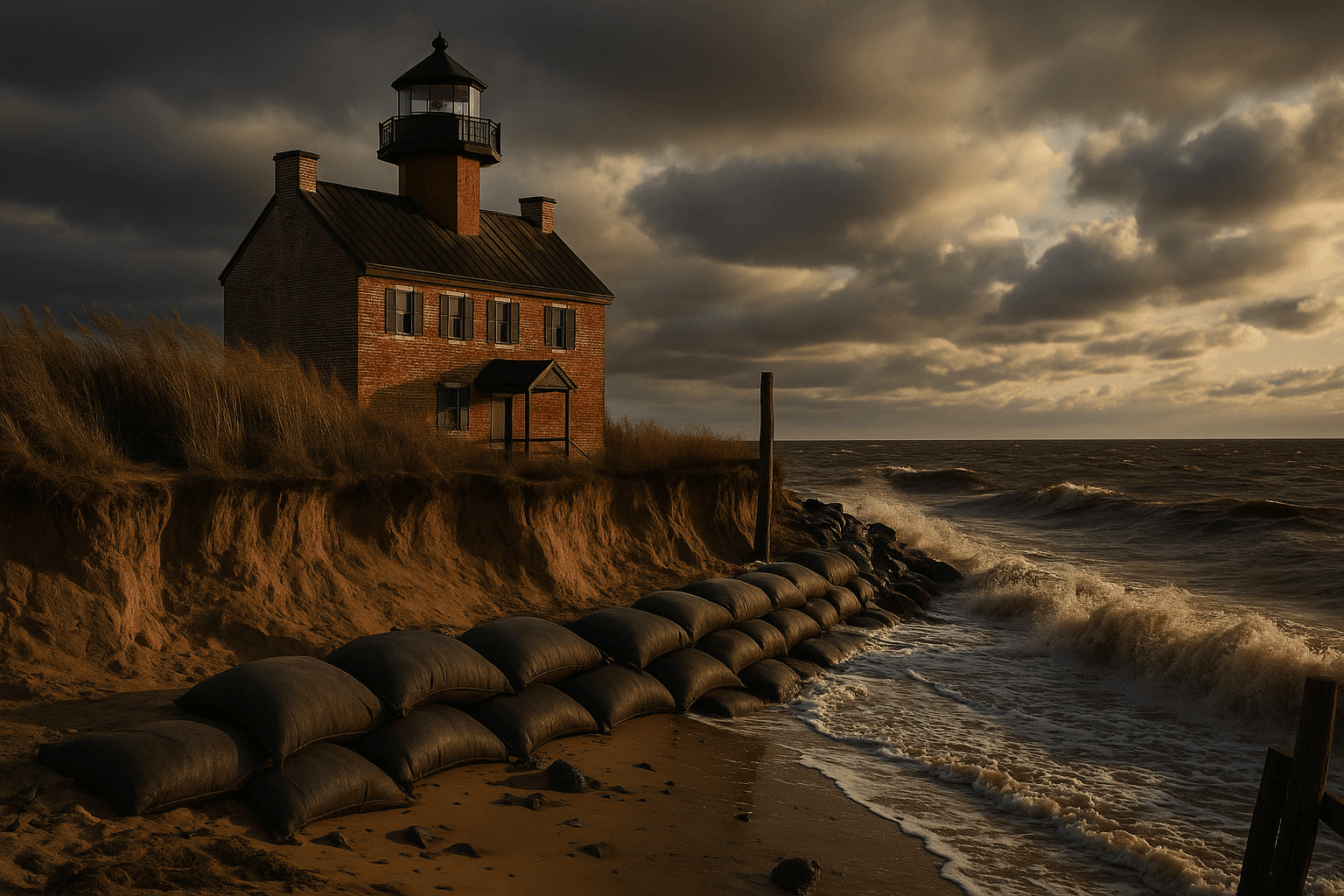
Emergency measures undertaken in recent years have included sand filled geotube berms and other temporary protective work intended to hold the line against rising tides and shifting beaches. Longer term proposals such as breakwaters and revetments have been discussed and pursued through partnerships involving local nonprofits and coastal organizations. Local preservation advocates and regional environmental groups have worked to secure federal and state funding to stabilize and restore the shoreline around the lighthouse, reflecting wider concerns about sea level rise and storm driven erosion along Cumberland Countys bayfront.
The immediate impact on the community includes restricted tourism and educational programming connected to the lighthouses maritime heritage, uncertainty for volunteer stewards who have long maintained the site, and the potential for escalating public costs if emergency fixes are relied upon instead of durable solutions. Institutional questions remain pressing. Because the state owns the property, decisions about licensing and long term management hinge on coordination among state agencies, nonprofit managers, and coastal regulators. Management disputes have complicated volunteer access and fundraising, and the absence of a clear, funded preservation plan leaves both the structure and the surrounding habitat exposed to further loss.
For Cumberland County voters and local officials, the lighthouse issue underscores broader policy choices about coastal investment priorities, emergency versus permanent protection, and how to allocate limited federal and state resilience dollars. Sustained civic engagement will be necessary to press for a transparent management plan, secured funding, and clear timelines that protect an irreplaceable element of the regions maritime history.
Sources:
Know something we missed? Have a correction or additional information?
Submit a Tip