Española Pathways director details homelessness response for Los Alamos
Dena Moscola discussed Española Pathways Shelter's growth, services and regional needs at a League of Women Voters event. This matters for Los Alamos planning and support.

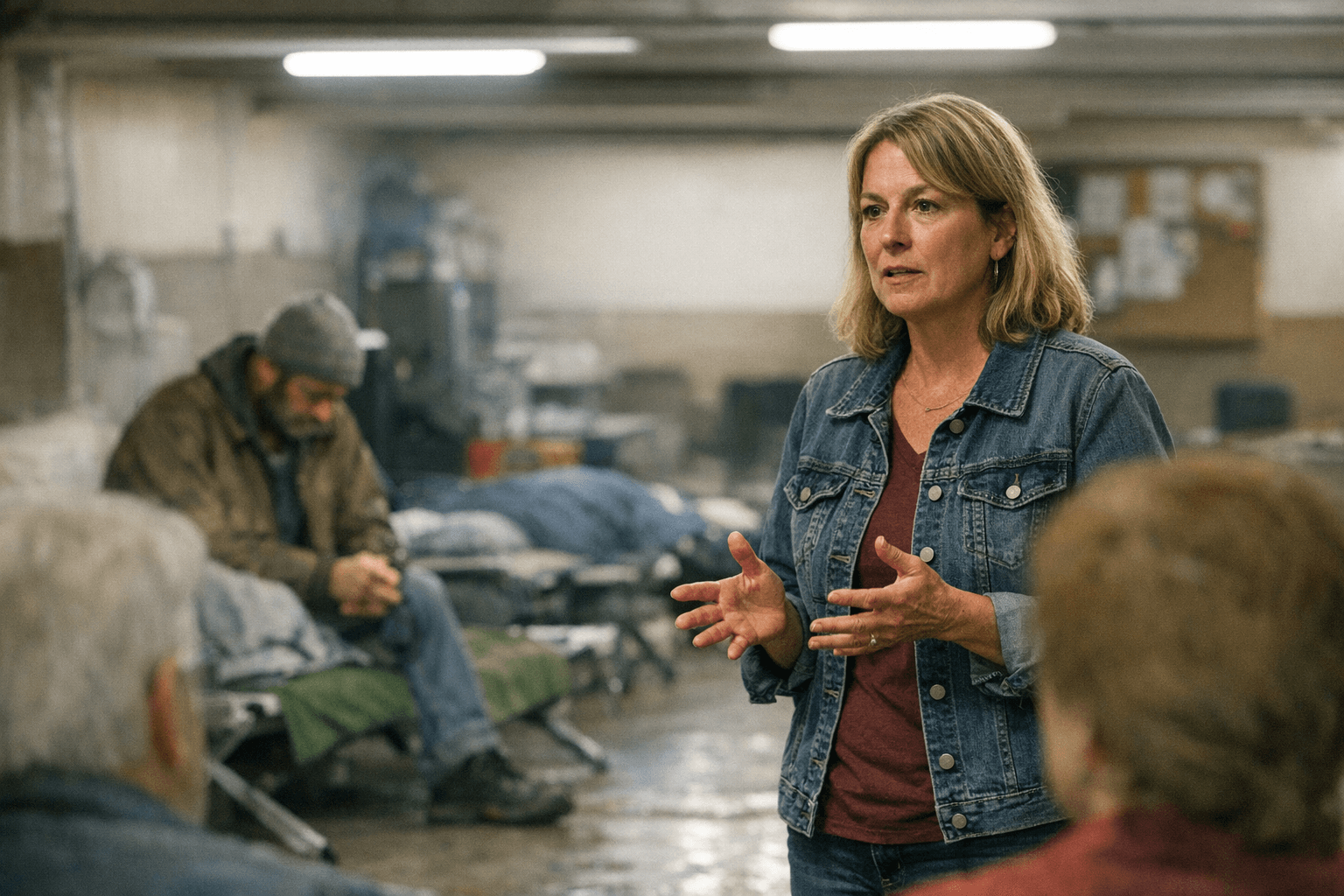
Dena Moscola, executive director of Española Pathways Shelter, outlined the shelter’s origin, mission and operational lessons on Jan. 8 during the League of Women Voters of Los Alamos Lunch with a Leader presentation. Moscola traced the shelter’s start to its opening on January 6, 2020, and explained how the organization has evolved from an emergency overnight shelter into a provider of transitional services and supportive housing solutions.
Moscola described a rapid trajectory of growth and adaptation, with the pandemic serving as an accelerant for operational changes and service expansion. The presentation reviewed core services offered today: emergency shelter, transitional housing placements and case management aimed at moving clients toward stable housing. She also mapped the operational challenges that accompanied scaling those services, including staffing, facility capacity, client intake processes, and the logistics of extending short term shelter into longer term transitional care.
A key portion of the talk focused on funding and donations and how those resources are applied. Moscola laid out that donations and grant funding are directed to day to day operations, staff and case management services, and client supports necessary to transition people into permanent housing. She emphasized that predictable funding streams are essential to maintain continuity of care as the shelter shifts from crisis response to housing-focused interventions.
The local implications for Los Alamos County are practical and fiscal. Moscola framed regional needs in Northern New Mexico as larger than any single organization can meet alone, highlighting the importance of cross jurisdictional coordination, stable funding and supportive housing development to reduce returns to homelessness. For Los Alamos residents, that means local philanthropy, volunteer capacity and county-level policy choices will help determine whether people experiencing homelessness in the region can access sustained services rather than short term fixes.
From a policy perspective, the model Moscola described aligns with an emphasis on transition to permanent housing supported by case management rather than standalone emergency sheltering. The pandemic produced lessons about surge capacity, infection control and the need for flexible funding that can be redirected quickly. Long term, sustaining transitional and supportive housing requires aligning local budgets, state grants and private donations to cover operating as well as capital costs.
The takeaway? Invest time, money or advocacy in local and regional solutions that prioritize stable housing and predictable operating support. Practical steps for residents include volunteering, donating and pressing county leaders to back supportive housing initiatives so emergency shelter can be a bridge, not an endpoint.
Sources:
Know something we missed? Have a correction or additional information?
Submit a Tip