Federal Funds to Bolster Rural Health Care in Illinois
The federal government has awarded Illinois more than $193 million a year for five years to expand access to health care in rural communities, funding telehealth, mobile services, emergency response and workforce development. For Morgan County residents, the infusion could shore up services, create training and scholarship opportunities, and ease travel burdens for specialty care, though officials warn it will not replace other funding shortfalls.

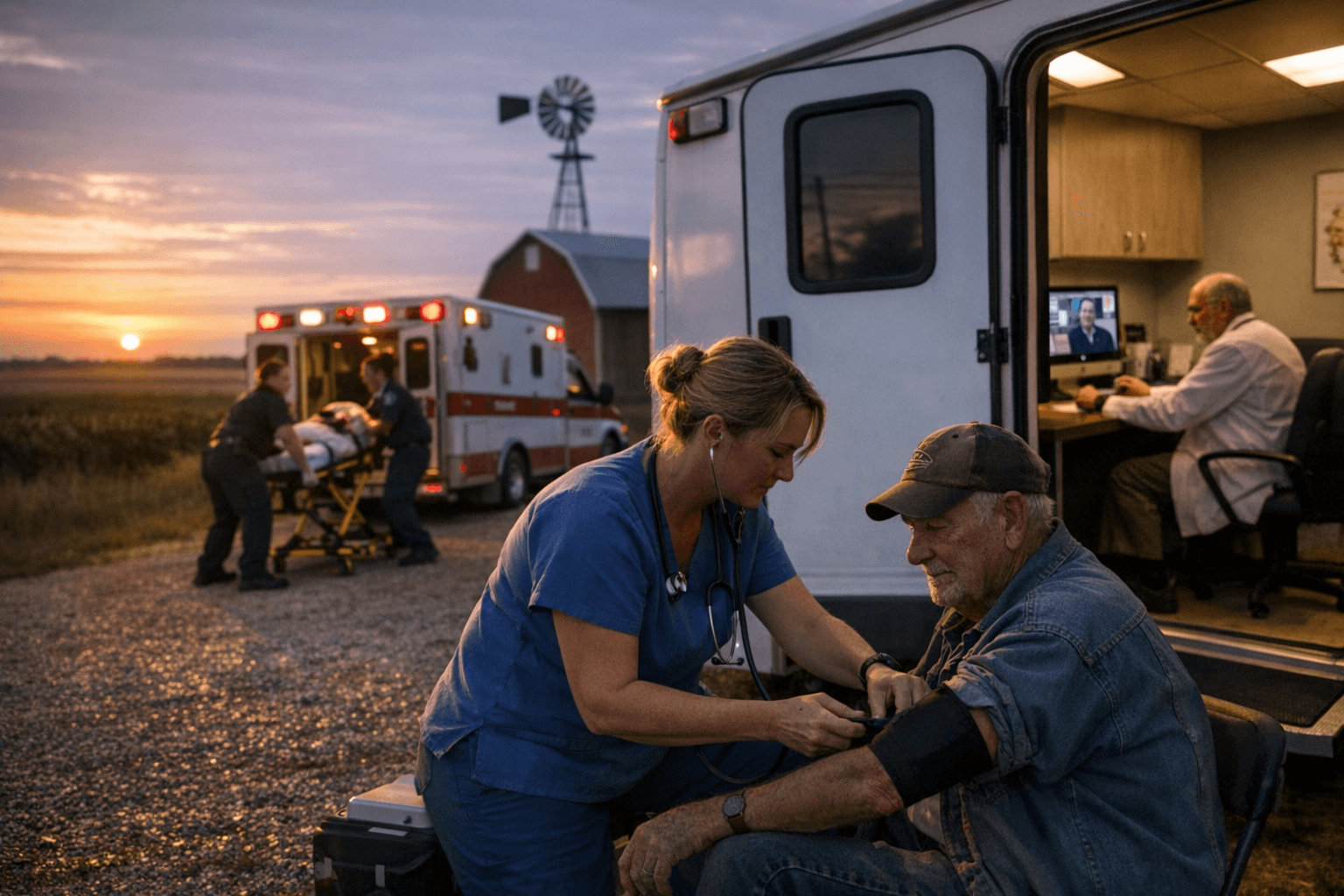
Illinois is receiving more than $193 million annually for five years in federal resources to expand health care access in rural parts of the state, a package totaling more than $965 million over the grant period. State and hospital officials say the funds will support regional health-care partnerships, transformation of hospital and provider service lines, population-health management, expansion of telehealth and mobile services, stronger emergency-response systems, and workforce development through scholarships, apprenticeships and training at universities and community colleges.
The award arrives as rural hospitals face mounting financial pressures. Across Illinois, closures and loss of service lines have narrowed options for residents who already experience worse health outcomes than urban populations. Illinois Health and Hospital Association officials emphasize that while the new dollars are important, they will not fully substitute for other funding shortfalls such as cuts to Medicaid. Governor J.B. Pritzker has indicated the state will use the federal dollars to help rural communities.
For Morgan County, the funding holds immediate practical potential. Expanded telehealth and mobile clinics could reduce long drives to specialty care centers and allow local primary care providers to manage chronic conditions more effectively through population-health initiatives. Strengthening emergency-response systems can shorten critical transfer times for heart attacks, strokes and trauma. The workforce provisions aim to develop a local pipeline of clinicians and technicians through scholarships, apprenticeships and community college training, which could help prevent future service-line losses by staffing rural hospitals and clinics.
Public health experts caution that grant-funded projects must be paired with longer-term policy changes to sustain gains. Stable reimbursement rates, sufficient Medicaid funding and investment in facility upgrades are cited as necessary complements to one-time federal grants. Without those systemic fixes, communities risk seeing temporary improvements dissipate once grant cycles end.
Local leaders and health systems in Morgan County will now need to identify partnership opportunities, apply for competitive awards, and align local training programs with planned workforce initiatives. For residents, the new funding offers tangible hope for better access and for young people seeking health-care careers closer to home. At the same time, the award underscores broader inequities in rural health care and the need for sustained public investment to ensure those improvements last.
Sources:
Know something we missed? Have a correction or additional information?
Submit a Tip