Federal Judge Invalidates Blanket Pause on Wind Project Permits, Clearing Way
A Boston federal judge has vacated the Trump administration's indefinite suspension of federal approvals for onshore and offshore wind projects, finding agencies failed to justify the pause and violated obligations to decide permits within a reasonable time. The ruling could speed construction of delayed projects, reshape investment plans across the clean energy sector, and intensify legal scrutiny of executive directives over agency processes.

A U.S. District Court judge in Boston has voided the Trump administration's broad suspension of federal leases and permits for wind energy projects, ruling that the action lacked a reasoned explanation and ran afoul of statutory obligations to resolve permitting matters within a reasonable time. U.S. District Judge Patti Saris issued the decision on December 9, 2025, siding with a coalition of 17 Democratic led states and the District of Columbia that had sued after the Department of the Interior implemented the president's directive to pause approvals.
The injunction targets an indefinite halt that interrupted reviews and construction on multiple projects, including work on Equinor's Empire Wind development off New York. Judge Saris concluded that the agencies effected a change of course without the necessary administrative justification and did so in response to a presidential directive rather than through settled agency reasoning. The court found that approach incompatible with the legal duty to process permitting decisions within time frames set by statute and agency practice.
Plaintiffs and wind industry groups immediately welcomed the ruling, framing it as a legal reaffirmation of predictable permitting and a boost for climate policy and clean energy investment. The Interior Department and the White House had no immediate comment. Industry officials and state regulators will now turn to federal permitting offices to seek resumption of paused reviews and to clarify the backlog of applications and proposed lease actions.
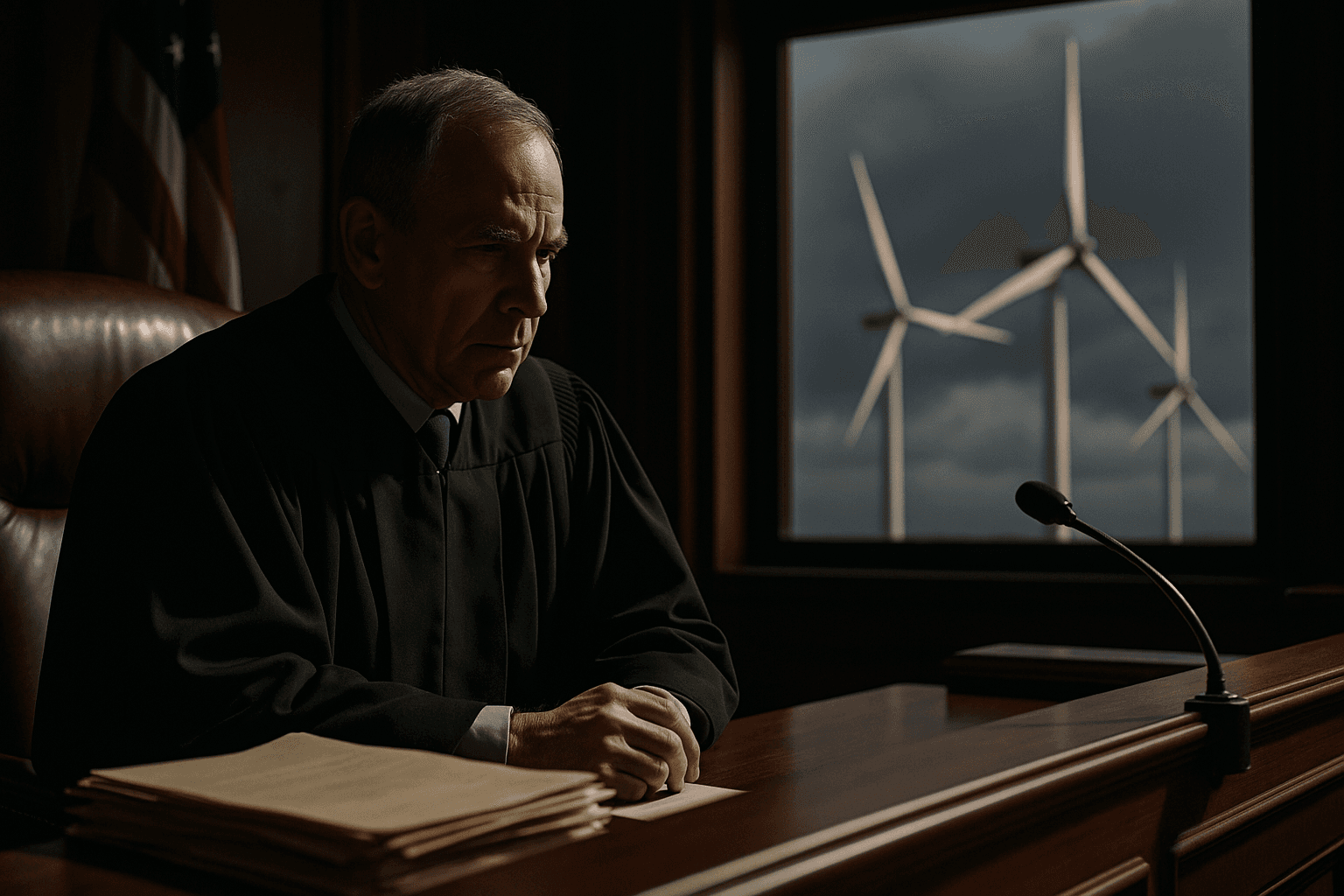
The decision has immediate practical implications. Projects long delayed by the pause may proceed to the next regulatory milestones, potentially unlocking financing, supply chain commitments, and construction schedules. Developers and suppliers face critical timing pressures to secure vessels, turbines, ports, and staffing that were put on hold. Investors had cited regulatory uncertainty as a key barrier to raising capital for large scale offshore and onshore wind projects.
Beyond the immediate commercial effects, the ruling underscores a broader institutional tension between presidential directives and agency processes. Courts have long served as arbiters when administrations alter policy abruptly, and this decision reinforces the principle that agencies must demonstrate reasoned decision making when changing course. For states, the case highlights litigation as an available check on federal actions that states view as undermining economic or environmental priorities. Seventeen Democratic led states and the District of Columbia chose coordinated legal action to defend their interests, signaling that state level governance will remain a significant factor in national energy policy disputes.
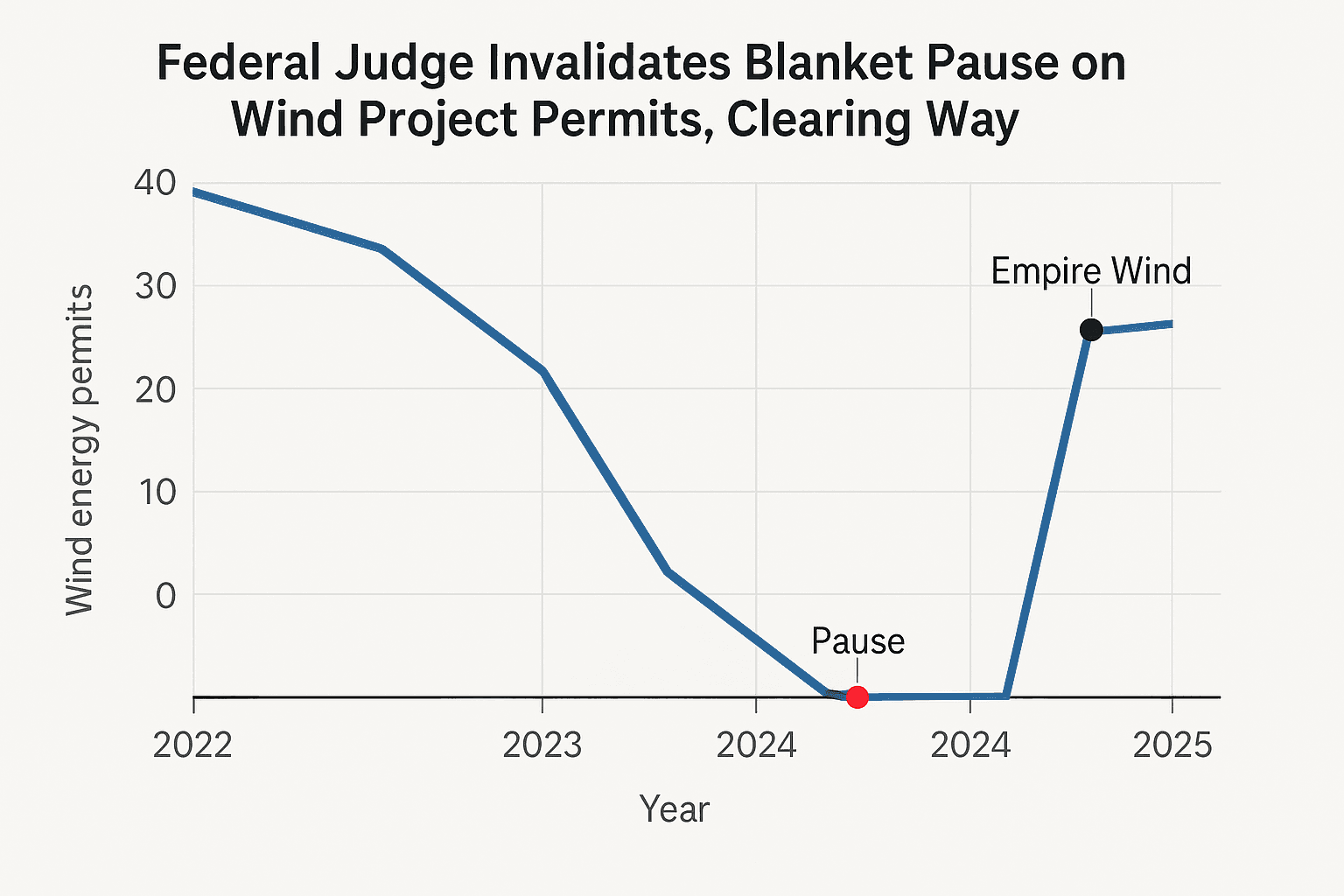
The judgment also carries political implications as energy policy becomes a focal point in electoral politics. Lawmakers and candidates in states with growing clean energy sectors may use the ruling to press for clearer federal timelines, while opponents may press for more expansive executive authority over national energy strategy. For industry observers the central question now is how quickly federal agencies can restore procedural certainty and whether future administrations will alter permitting legal frameworks to reduce the prospect of similar disruptions.


