Fighting Escalates Along Thailand, Cambodia Border as Clashes Spread
Heavy exchanges of artillery and small arms have erupted along multiple stretches of the Thailand Cambodia frontier, prompting evacuations, border closures and a sharp rise in troop deployments. Neighboring capitals and ASEAN have urged restraint and offered mediation as both governments weigh military action against urgent diplomatic engagement.

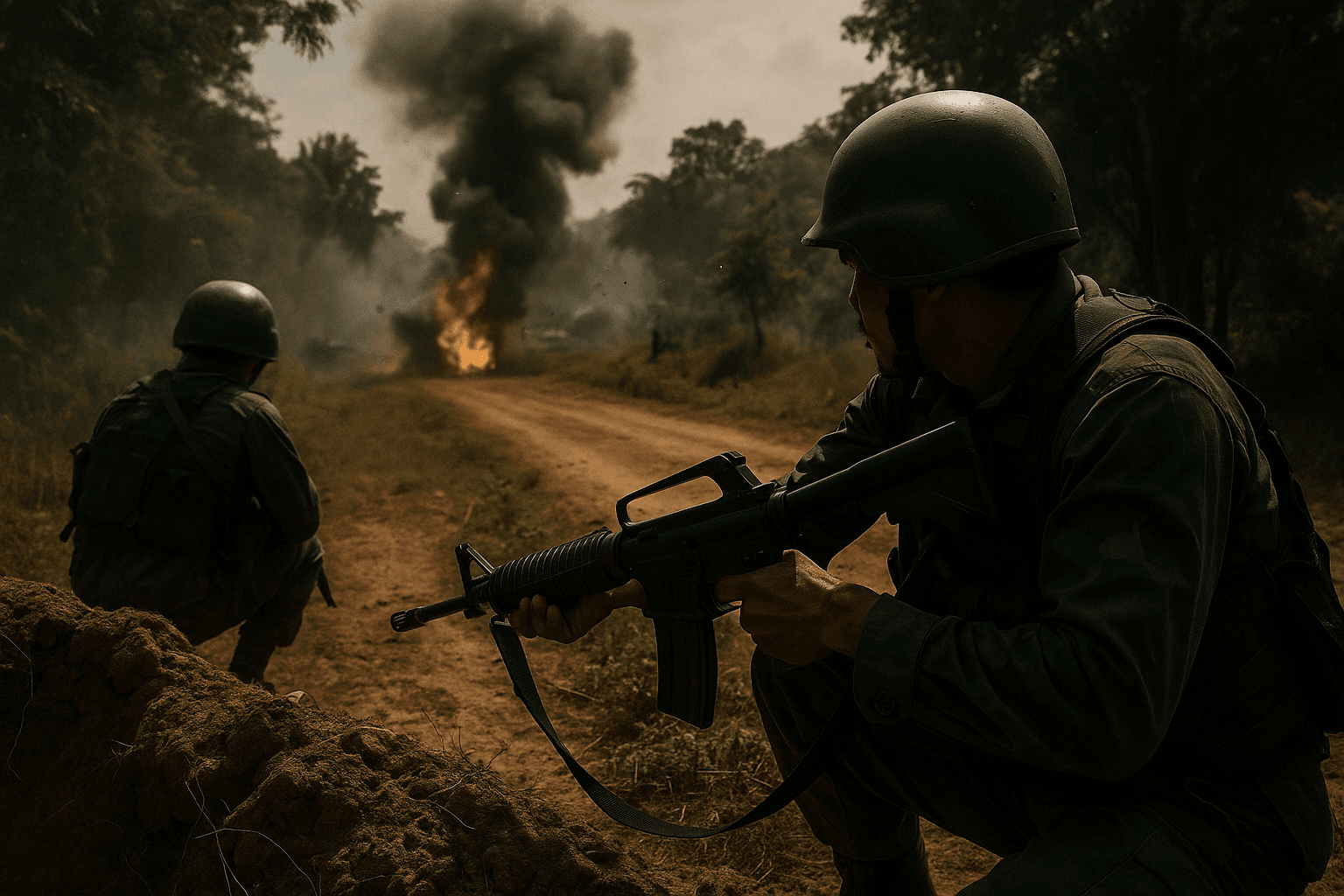
Heavy fighting spread along sections of the contested Thailand Cambodia border on December 9, 2025, after several days of earlier skirmishes, forcing local authorities to order evacuations and close multiple crossings. The violence has included artillery fire and small arms exchanges in several border districts, authorities on both sides said, creating a volatile security situation in a region long marked by sensitive territorial claims and periodic flare ups.
Phnom Penh described its operations as a response to incursions and acts of sabotage attributed to armed groups operating near the frontier. Bangkok framed its actions as measures to protect border communities and to contest what it said were Cambodian troop movements into disputed territory. With both capitals publicly asserting defensive rationales, the immediate effect has been civilian displacement and damage to infrastructure near the frontier.
Local officials reported dozens of families fleeing homes near the most active sectors of fighting. Roads and at least one local market sustained damage, and military vehicles and convoys moved to reinforce forward positions on both sides. Several official border crossings were temporarily closed, disrupting cross border commerce and raising concern among traders and residents who rely on daily cross border links.
The fighting has heightened diplomatic activity in the region. Envoys from neighboring states and representatives of the Association of Southeast Asian Nations urged restraint and offered to mediate, warning that escalation could have wider economic and security consequences for Southeast Asia. Diplomacy has proceeded even as both armies maintained elevated readiness, a balance that governments across the region described as fraught and unpredictable.
International legal questions are likely to shape any follow up, as governments and outside mediators examine whether the incidents amount to cross border incursions, internal armed activity crossing an international boundary, or clashes between regular forces. Observers note that any use of artillery near populated border zones risks breaching international obligations to protect civilians and to avoid indiscriminate harm.
For residents in affected districts, the immediate needs are shelter, medical care and assurances that humanitarian access will be permitted. Aid agencies and local relief groups are monitoring the situation but have not yet reported large scale humanitarian deployments, given continuing insecurity and the closure of several crossing points.
Analysts caution that a rapid de escalation will require clear communication channels between Phnom Penh and Bangkok, third party facilitation to verify troop positions, and immediate confidence building measures that permit civilian movement and commerce to resume. Absent such steps, the risk remains that localized clashes could draw in broader military responses or provoke nationalist pressures in both capitals.
As of December 9 the situation remained fluid. Governments emphasized both the right to defend sovereign territory and a willingness to pursue talks, leaving open a narrow path for diplomacy to prevent a deeper confrontation.