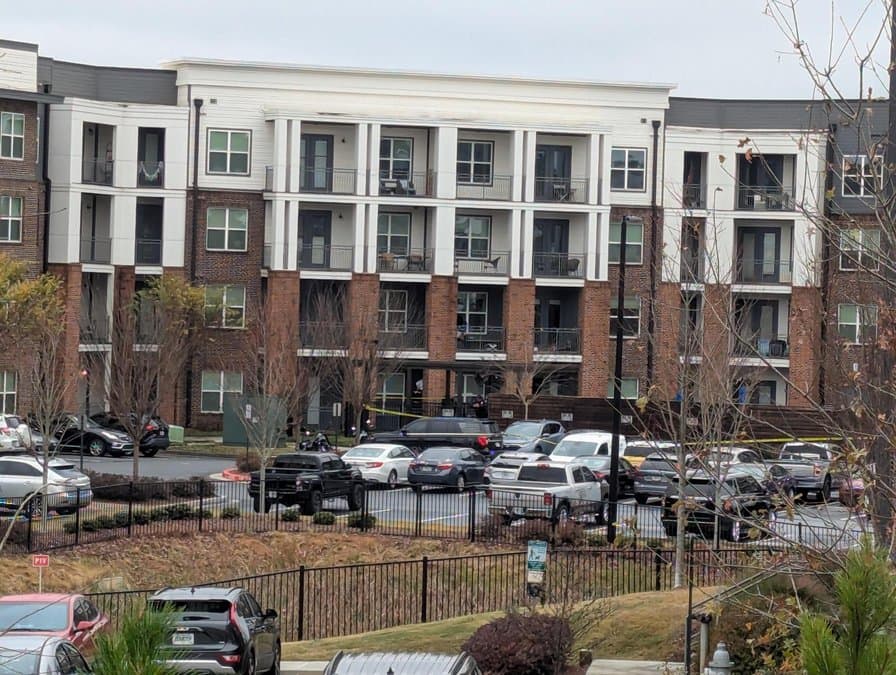
Forsyth County Extends Moratorium on Residential Development Submissions
Forsyth County commissioners unanimously voted on December 4 to extend a second moratorium that freezes submissions of sketch plats and land disturbance permits for residential development. The action follows public hearings and appeals over rezoning and development density, and it will delay new residential filings while county officials consider changes to growth policy.
Forsyth County commissioners voted unanimously on December 4 to extend a second moratorium that halts the submission of sketch plats and land disturbance permits for residential projects. The extension came after a series of public hearings and comment sessions on residential rezoning and development density, and follows a week of related administrative actions, hearings and appeals by property owners affected by the freeze.
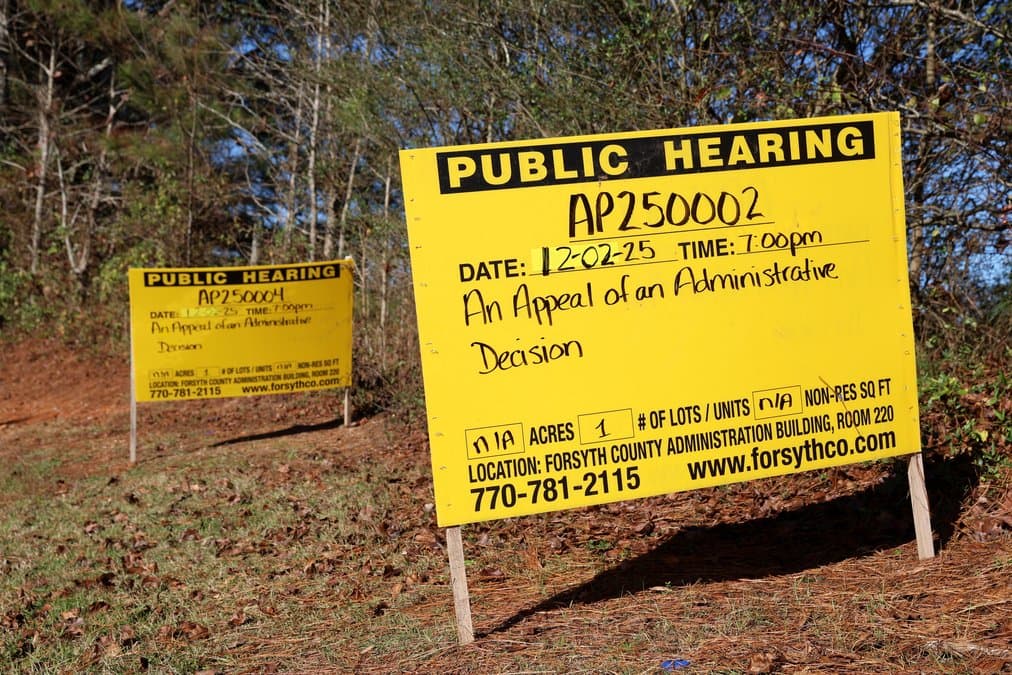
Public hearings drew visible community attention, with signs posted along Post Road during the sessions held the week of December 3. County meetings focused on the pace and pattern of residential growth, and on how rezoning decisions will shape density near established neighborhoods. The extension leaves developers and property owners unable to file the initial paperwork that starts many residential projects while county staff and elected officials review policy options.
The moratorium specifically freezes submissions of sketch plats and land disturbance permits for residential development. For property owners and builders, that means planned projects cannot move into the permitting pipeline until the county lifts the freeze or adopts new rules. Owners who sought rezoning this week have already filed appeals and participated in hearings, creating an immediate backlog of matters for county planning and legal staff to resolve.
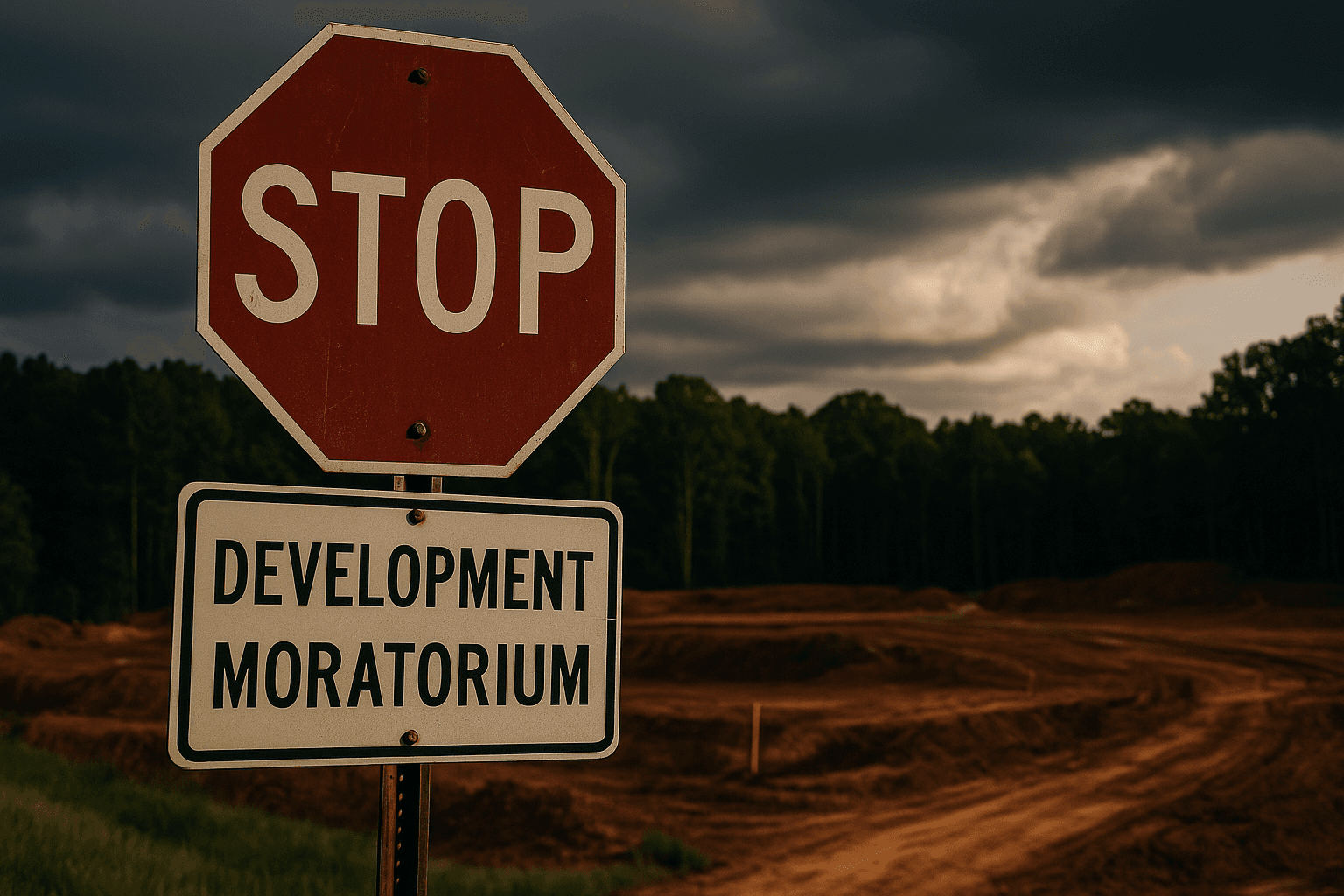
Local impacts include project delays, uncertainty for buyers and sellers in active transactions, and potential shifts in construction timelines for firms working in Forsyth County. The pause also gives commissioners additional time to consider community concerns about density, infrastructure capacity and the long term fiscal effects of large scale residential growth. County officials will need to weigh those local considerations against development interests and legal constraints raised by property owners during appeals.
The debate in Forsyth reflects larger conversations taking place in many jurisdictions about how to manage growth while protecting community character and infrastructure. For now residents and developers must await further action from the county, as the extended moratorium preserves the status quo while officials reexamine zoning and permitting practices that will guide future residential development.