Forward Forsyth unveils five year plan to boost higher paying jobs
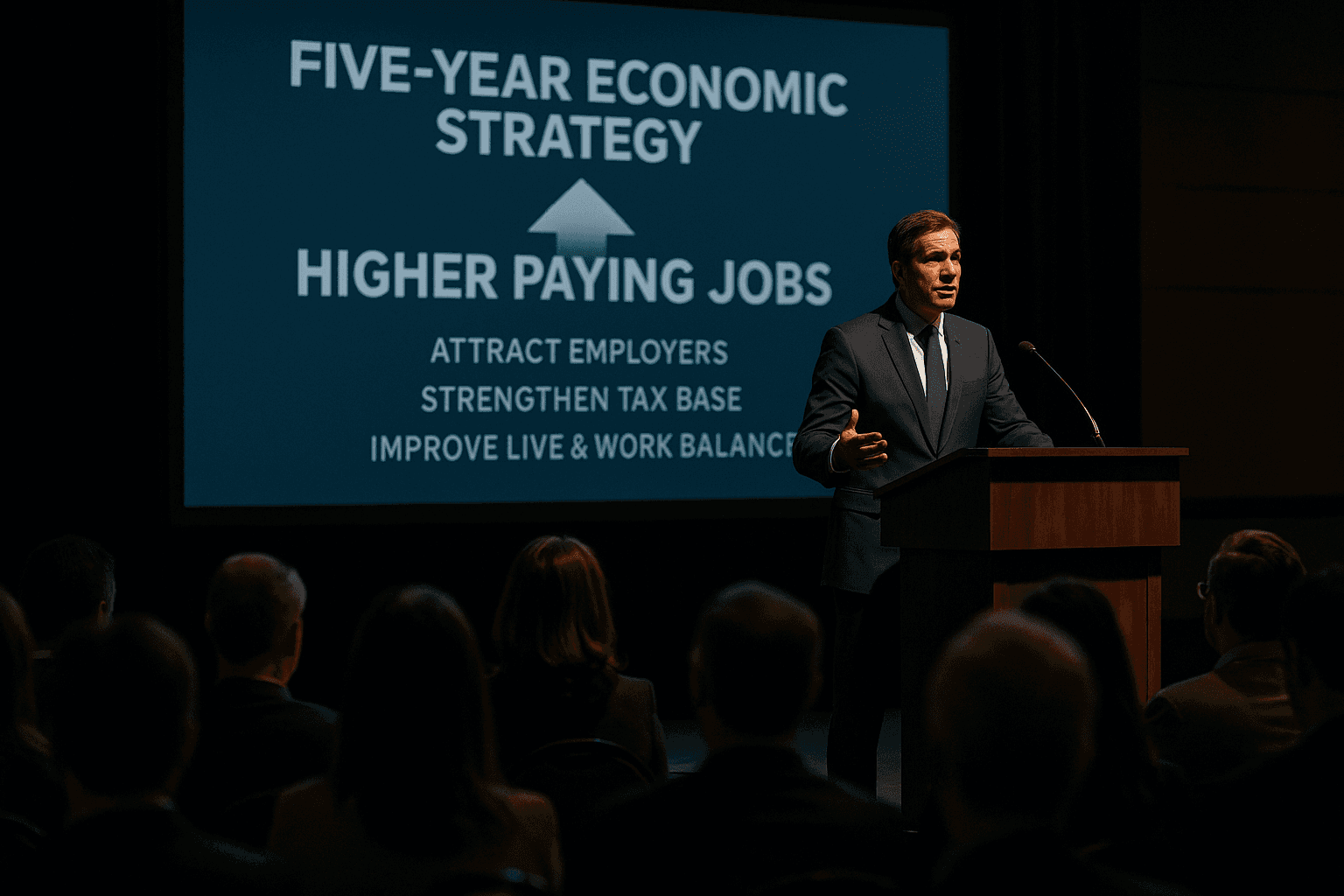
Forward Forsyth unveiled a five year economic strategy at the Economic Development Summit on December 9 at the Forsyth Conference Center, focusing on attracting higher paying employers, strengthening the commercial tax base, and improving the county's live and work balance. The plan could reshape local workforce training, industrial site readiness, and housing and transit priorities that affect residents' jobs and commuting costs.

Forward Forsyth presented a comprehensive five year economic strategy at its Economic Development Summit on December 9 at the Forsyth Conference Center, setting priorities to grow higher paying jobs, broaden the commercial tax base, and improve the county's live and work balance. The plan centers on attracting and growing higher skilled and higher wage employers, supporting workforce development partnerships, and aligning county economic development tools with community goals such as better transit and workforce housing.
Organizers laid out several explicit priorities that will guide implementation. Workforce training and partnerships with local education and training providers are positioned as core tactics to raise labor force skills and connect residents to higher wage opportunities. Retention of existing businesses features prominently, with resources proposed to help current employers expand and avoid relocation. Industrial site readiness is another central target, aimed at ensuring available land and infrastructure can meet the needs of advanced manufacturing and logistics firms that county leaders hope to attract.
For Forsyth County residents the plan carries multiple local implications. A stronger commercial tax base can help distribute the public finance burden more evenly, potentially reducing pressure on residential property tax rates while generating revenue for schools, roads, and transit. Emphasis on workforce housing and transit aligns with efforts to shorten commutes and help workers live closer to jobs, a quality of life change that could influence housing demand and local commuting patterns over the coming years.
Market and policy implications are clear. Attracting higher wage employers requires investments in site preparation, broadband, and targeted incentives, while workforce upgrading demands coordination among county government, school systems, community colleges, and employers. Retention programs aim to stabilize existing payrolls and tax contributions, offering a counterweight to recruitment efforts that often favor new relocations.
Local leaders and business representatives at the summit expressed support for the direction and stressed the need for sustained funding and cross sector collaboration to translate strategy into measurable gains. Implementation will be the critical next step, as officials move from goal setting toward specific projects, budgets, and performance metrics to track job growth, wage gains, and tax base expansion over the five year horizon.
Sources:
Know something we missed? Have a correction or additional information?
Submit a Tip