Fresno to Add Nearly 300 Affordable Housing Units, Development Gains Momentum
Local housing officials announced that roughly 300 new or rehabilitated affordable and mixed use housing units are expected to begin construction or open in 2026, a sign of cautious optimism for Fresno County residents seeking more income restricted options. The projects come amid ongoing pressures from higher interest rates, fluctuating construction costs and rising tax credit pricing, issues that will shape how quickly new units reach the market and where they are built.
Fresno County is preparing for a notable increase in affordable and mixed use housing supply in 2026, as local agencies and developers move forward with projects intended to expand income restricted options across the city. County housing leaders reported that nearly 300 units will either start construction or open next year, a development that officials characterize as cautious but positive given current economic headwinds.
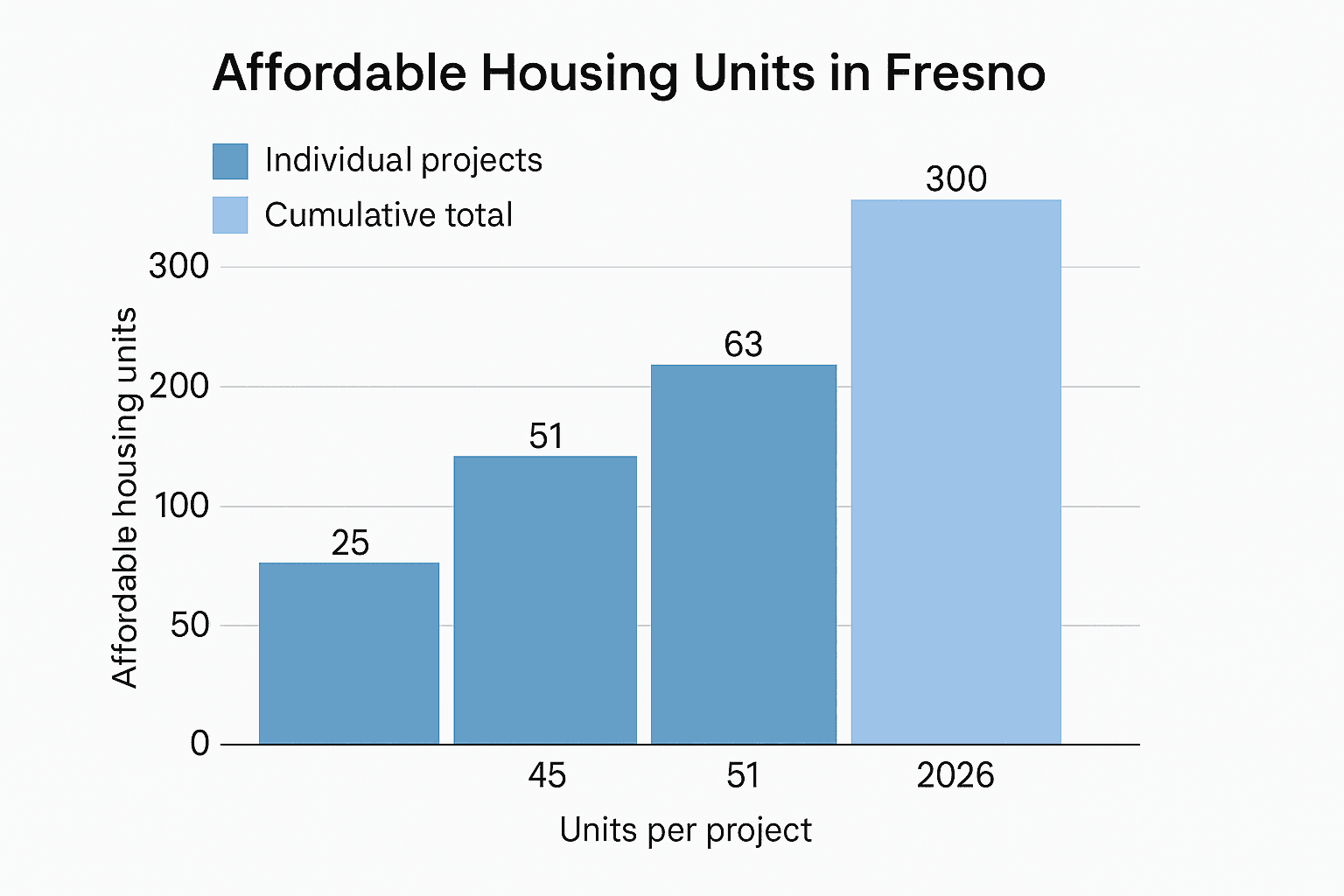
Among projects already cited, four specific developments account for 184 units that will contribute to the 2026 pipeline. Mosaic will add 25 units, Avalon Commons II will add 45 units, Garland Gardens will deliver 51 rehabilitated units, and DABU Village will provide 63 units through adaptive reuse. These projects include new construction and rehabilitation work, reflecting a strategy that mixes building where feasible with converting existing structures to speed delivery and control costs.
The expansion comes at a time when financing and materials markets remain unsettled. Developers and housing agencies point to fluctuating construction costs, higher interest rates and elevated tax credit pricing as the principal constraints on scale and pace. Those factors increase financing gaps and can lengthen timelines for projects that rely on low income housing tax credit equity and other subsidized financing. Local agencies are therefore prioritizing placement of income restricted housing in a wider set of neighborhoods to sustain development momentum while seeking cost effective approaches such as adaptive reuse and rehabilitation.
For Fresno County residents the anticipated additions will have several local effects. Incremental increases in affordable inventory can ease pressure on lower income renters and reduce displacement risks in targeted neighborhoods, though the scale of the new supply will not meet total regional demand. Construction activity will support local spending and employment during buildout, while long term occupancy will influence school enrollments, transit use and service needs in host neighborhoods.
Policy choices in 2026 will matter for whether this cautious optimism translates into measurable relief. Accelerating approvals, leveraging public land and tailoring financing to mitigate interest rate impacts can help convert pipeline projects into occupied units more quickly. The county view is that combining rehabilitation, adaptive reuse and targeted new construction offers the most viable path to sustain production under present market conditions.
Sources:
Know something we missed? Have a correction or additional information?
Submit a Tip