Fusion Industry Seeks Billions From U.S. To Build Pilot Plants
Executives from private fusion companies met with Department of Energy officials on Dec. 8 and 9 to press for sustained federal funding that they say is essential to move fusion from laboratory demonstration to grid connected pilot plants. The industry is urging more than one billion dollars annually and a large one time infrastructure investment, arguing that predictable capital and new federal direction are needed to compete with China and accelerate commercialization.

Industry leaders from the private fusion sector gathered with senior Department of Energy officials this week as the agency rolls out a new Office of Fusion intended to centralize federal efforts. Company executives and trade group representatives pressed for large, sustained federal commitments, saying that predictable long term appropriations and a one time infrastructure infusion are vital to close the gap between laboratory milestones and commercial scale demonstration projects.
Participants asked for annual appropriations on the order of over one billion dollars per year, along with a substantial one time investment to support transmission upgrades, test facilities and the construction of grid connected pilot plants. They framed the request as a bridge from laboratory proofs of concept to the engineering scale projects that would demonstrate reliable, continuous power generation. Industry representatives said such funding would reduce private capital risk and enable firms working with magnet based and laser based approaches to scale up.
Speakers argued that U.S. policy should reallocate some funds that had been set aside for other energy subsidies toward fusion to maintain competitiveness with China. They cited the 2022 result at Lawrence Livermore National Laboratory in which researchers reported a brief net energy gain as evidence that the science has advanced to a point where engineering and industrial scale investment could yield tangible progress. They also flagged the White House Genesis Mission on next generation artificial intelligence as a potential partner for fusion research, suggesting that AI tools could accelerate design optimization and materials development.
Industry participants said they believed Congress would be receptive if the administration makes an explicit funding request tied to the Office of Fusion. Reuters reporting noted that fusion companies and national laboratories are pressing for clearer commercialization pathways and predictable capital to scale technologies based on magnets or lasers, underscoring the sector s need for both policy clarity and multi year financial commitments.
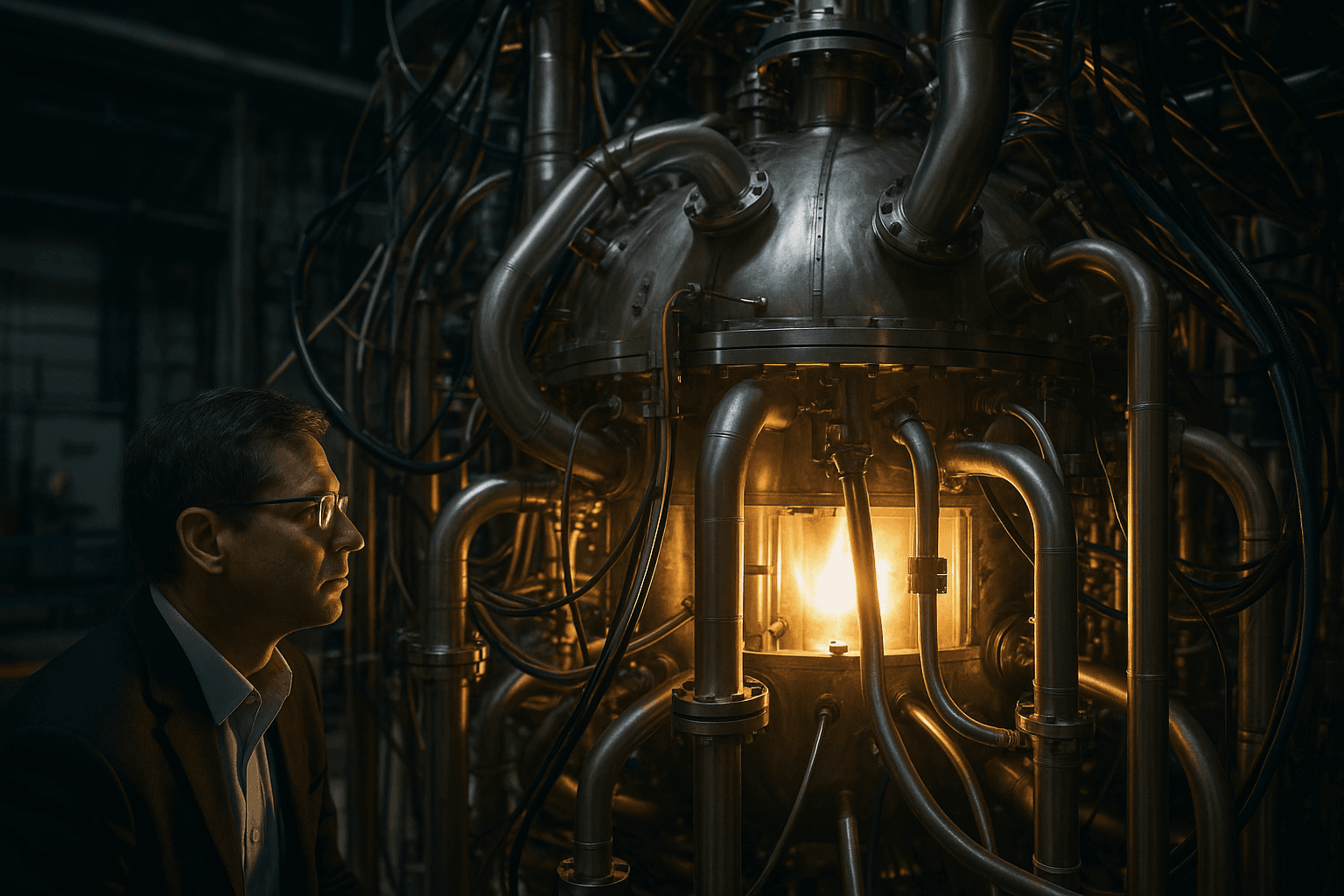
The effort comes as the Department of Energy reorganizes to provide a single office with authority to coordinate laboratory research, private sector development and regulatory engagement. Proponents say that a unified federal presence will help streamline permitting, align public research priorities with industrial needs and attract private investors who require steady policy signals.
Analysts caution that fusion remains a complex engineering challenge that has historically required decades of sustained investment. Advocates say that with recent scientific advances and new private capital entering the field, the United States can accelerate commercialization if Washington pairs funding with clear milestones and regulatory frameworks. The debate over reallocating existing energy subsidies underscores broader tensions in climate and industrial policy about where limited public funds will have the greatest impact in the coming years.