Gallup-McKinley Funding Fight Creates $35 Million State Shortfall
State education officials told lawmakers on Jan. 9 that New Mexico faces a roughly $35 million gap tied to funding for students in a long-distance learning program once run through Gallup-McKinley County Schools. The dispute over who should be paid for students moved between districts matters locally because it affects school budgets, services for remote students, and the broader equity of education funding in McKinley County.

New Mexico officials reported to lawmakers that the Public Education Department had paid about $35 million last school year for students enrolled in a long-distance learning program the Gallup-McKinley County Schools later cut off, and that the department is seeking an additional $35 million to address duplicate payments made after those students were reassigned. The funding dispute surfaced at a legislative finance committee meeting on Jan. 9 and has left local leaders and families watching closely for impacts on classroom resources and student services.
The program, run by Stride K12, was billed as a way to provide access to public education for as many as 4,000 students in remote areas of the state. Gallup-McKinley canceled its contract with the for-profit company last August after graduation rates in the program fell nearly 30 percent and the district said Stride violated state rules on student-to-teacher ratios. Former superintendent Mike Hyatt described his reaction to the situation: "LAST AUGUST, I WAS SHOCKED." He added, "I WAS ALSO SHOCKED WITH THIS COMPANY THAT WAS FOR PROFIT MARGINS, WAS SHOVING STUDENTS AGAINST THE STATE LAW INTO CLASSROOMS."
Public Education Secretary Mariana Padilla told legislators the department is currently paying the original Gallup-McKinley allocation while also paying the two districts that accepted most of the reassigned students, including a growth factor. "We are paying Gallup McKinley for those students, and we are now paying these two new school districts for those students, including a growth factor," Padilla said, explaining the source of the $35 million shortfall.
Sen. George Munoz, who represents Gallup, criticized the district's actions and warned of aggressive remedies. "The rest of the kids in the state of New Mexico should not suffer because of what Gallup did," Munoz said. He also said, "I'm gonna call the governor, we're gonna call the school district today, and they're gonna get that money back, because I'm not gonna, even though I represent them, that is not a responsible way to do things."
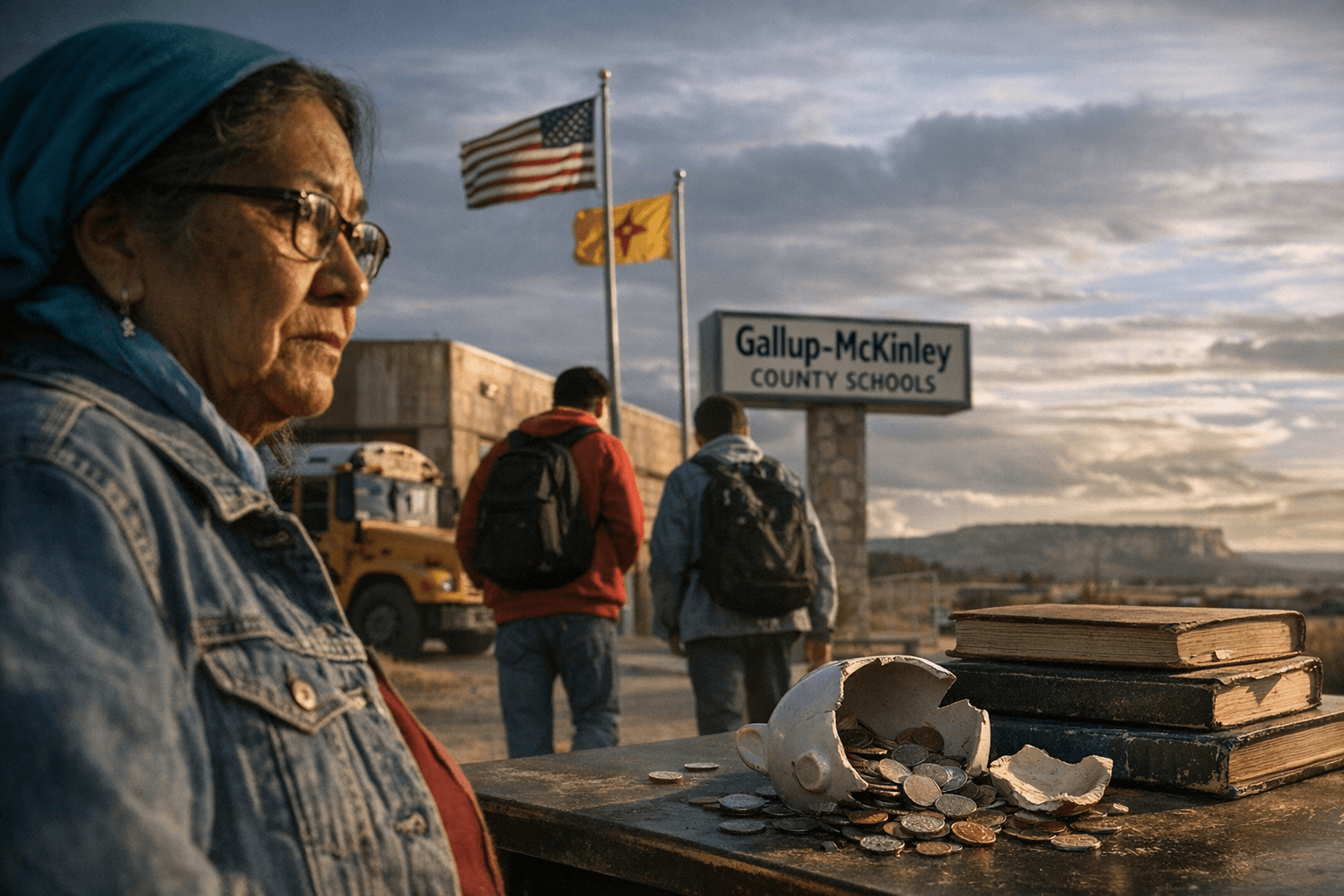
Gallup-McKinley leaders have disputed the characterization that the district improperly kept funds. Deputy Superintendent Jvonna (Giovanna) Hanks explained the funding mechanics tied to prior-year enrollment: "The state was aware of last year's enrollment for Gallup McKinley County Schools, and we won't receive any current year money for changes that we made to our online program. This year's student count will be paid out next year." She added that talks with the department are ongoing and framed the issue as formula-driven rather than punitive: "It's not any particular school district or action that has happened, because everything that is being funded is being funded statutorily according to the funding formula."
The district and Stride remain in legal dispute over their contract. For McKinley County families, the controversy has practical consequences: funding uncertainty can reduce support for students who rely on school-based health services, nutrition programs, and stable instruction—services that are key social determinants of health and educational equity in rural communities. Lawmakers and education officials must now weigh correcting accounting and funding errors against maintaining services for students displaced by the contract termination, while residents press for clarity on who will bear the financial and social costs of the disruption.
Sources:
Know something we missed? Have a correction or additional information?
Submit a Tip