German Exports Rise in October, Trade Surplus Widens
Germany reported an unexpected increase in exports in October, surpassing analyst expectations and driven by stronger shipments within the European Union. The rebound narrowed near term downside risks for Europe’s largest economy, though weaker sales to the United States and China and recent geopolitical shifts leave 2026 trade prospects uncertain.
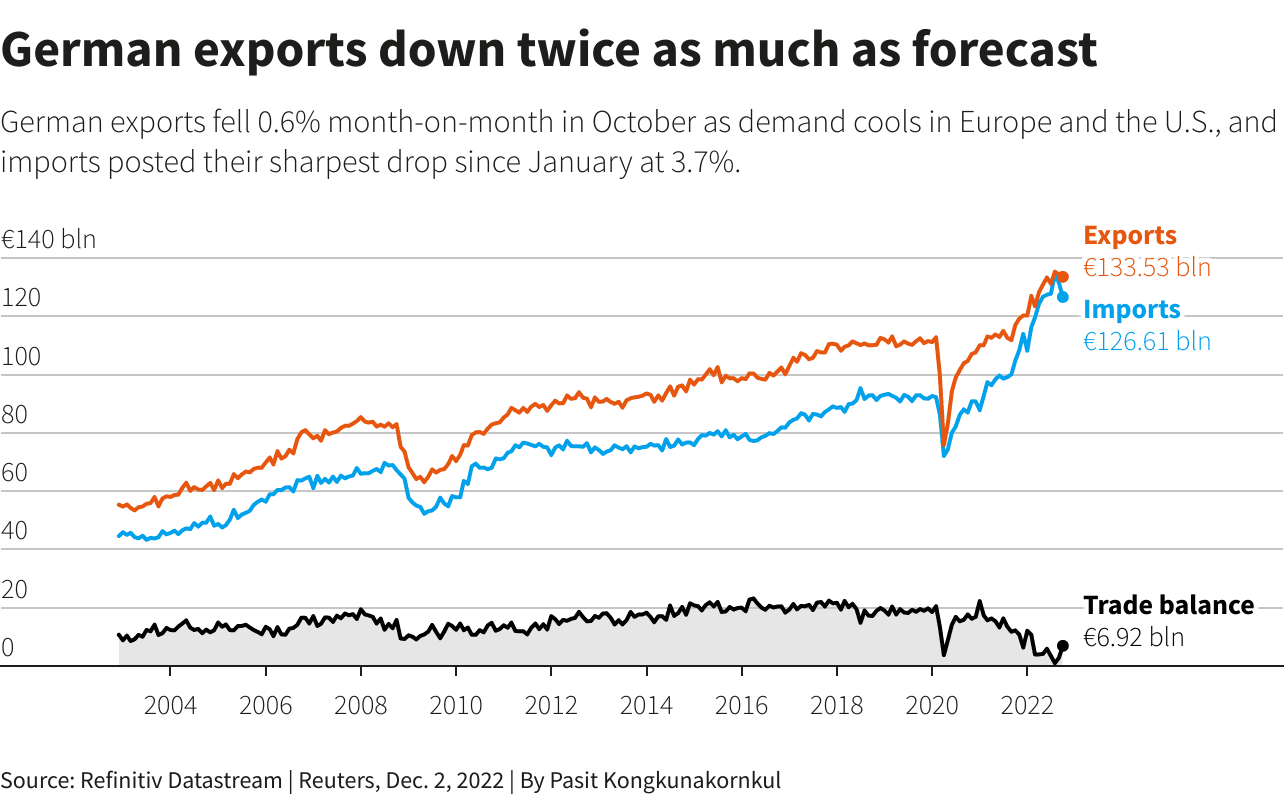
Germany’s Federal Statistical Office on December 9 released Eurostat linked data showing that exports rose in October, a surprise that reversed a run of softer readings earlier in the year. The upturn was concentrated in shipments to partners inside the European Union while exports to destinations outside the bloc weakened, with sales to the United States and China particularly soft. The result was a wider trade surplus for the month, underpinned by resilient intra EU demand.
Economists framed the October figure as a modest but important stabilization for an economy that had shown signs of strain from slowing global demand and subdued industrial orders. By lifting shipments to neighboring economies, the export increase helped blunt some near term downside pressure on German manufacturing output and overall growth. Analysts noted however that the October snapshot came before a series of geopolitical and market developments that have unfolded in recent weeks and could influence trade flows as 2026 begins.
From a market perspective the data can be read as a partial vindication for investors who have been betting on a gradual recovery in European activity. Stronger flows within the EU reduce the immediate risk of a deeper contraction in Germany’s industrial heartlands, which are highly integrated with continental supply chains. The weakness in extra EU destinations however highlights the ongoing vulnerability of German exporters to demand shocks in large external markets, especially the United States and China, which have historically absorbed a sizable share of German machinery and automotive exports.
Policy implications are multi layered. For Berlin, a rebound driven by intra EU demand provides breathing room for fiscal planners who must balance support for an industrial transition with commitments to fiscal prudence. For the European Central Bank, the picture is nuanced. A stabilization in Germany, the euro area’s largest economy, could temper calls for aggressive easing if price pressures remain contained, yet continued softness in external demand could argue for a more accommodative stance to support growth across the bloc.
Longer term the October reading underscores structural trends that have been reshaping German trade. Export dependence remains a structural feature of the economy, but the composition of demand is shifting toward regional partners and services linked to green and digital investment. At the same time exposure to cyclical external markets leaves Germany sensitive to slower global growth, trade tensions, and shifts in global supply chains.
Analysts caution that one month does not make a trend. The October rise offers a welcome reprieve, but policymakers and firms will be watching indicators such as new export orders, inventory adjustments, and developments in key markets in the months ahead. How exporters respond to evolving geopolitics and whether intra EU demand can sustain the momentum will be central to Germany’s growth trajectory in 2026.

%2Fcloudfront-us-east-2.images.arcpublishing.com%2Freuters%2FH7UAM7SDIZONBHJOIIBY6T4DZM.jpg&w=1920&q=75)