Groundbreaking Starts for Whiteaker Commons, 120 Affordable Units
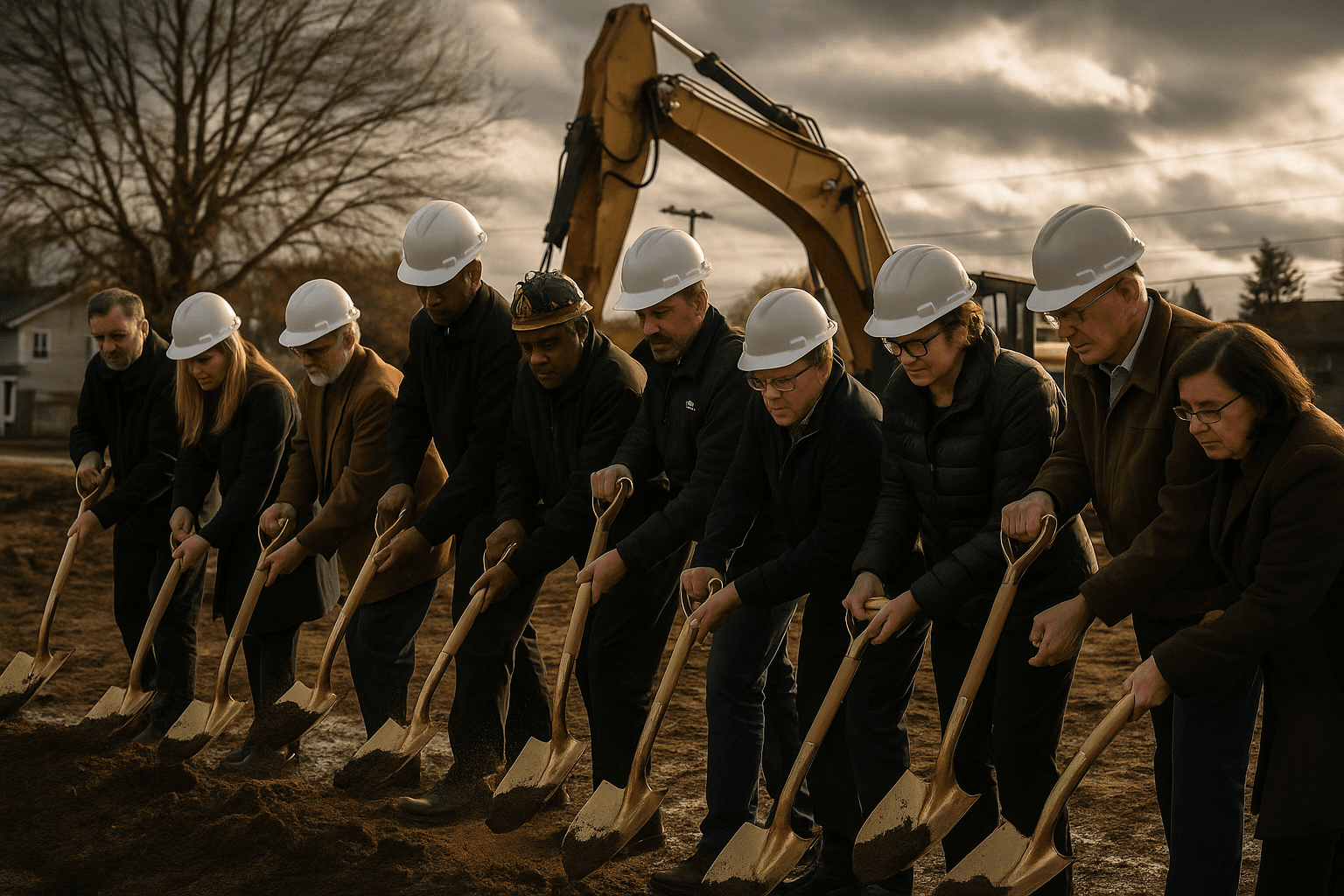
A ceremonial groundbreaking was held December 2 for Whiteaker Commons, a 120 unit affordable housing development at 5th Avenue and Adams Street in Eugene. The project will add studios and one and two bedroom apartments for households earning up to 60 percent of area median income, improving transit access while replacing a paid parking lot.

City leaders and developers marked the start of construction December 2 for Whiteaker Commons, a 120 unit affordable housing project slated for a former paid parking lot at the corner of 5th Avenue and Adams Street. The site sits adjacent to a bus stop on its north side and just north of the Bruns' Apple Market parking lot, offering residents direct access to transit and nearby amenities.
Developer Red Apple Square will deliver 66 studio units, 40 one bedroom units and 14 two bedroom units. The complex will include a community room and on site resident social services intended to connect tenants with supports beyond housing. Jason Lear, an advisor to the developer, emphasized the site is highly desirable because of its proximity to transit and city amenities, and noted the scarcity of available land for new housing in central neighborhoods.
Meili Construction will build the project with an emphasis on durability and sustainability, according to company leadership. Project leadership said the units will be smaller than many market rate apartments, but will be designed to rival market rate quality while keeping long term maintenance costs lower through durable finishes and sustainable systems.
Funding for Whiteaker Commons includes support from Oregon Housing and Community Services and the City of Eugene through the Low Income Rental Housing Property Tax Exemptions program. Apartments will be reserved for households earning up to 60 percent of area median income, a threshold commonly used to target lower income renters. Construction is expected to take approximately 18 months from the groundbreaking, putting completion in mid 2027.
For Lane County residents, the project represents a measurable addition to the affordable housing supply in a central neighborhood where new development is rare. The development could modestly relieve pressure on the local rental market by adding 120 restricted units and provide convenient transit oriented options for lower income households. At the same time the conversion of a paid lot to housing reflects a policy choice that balances increased housing capacity and social services against loss of short term parking and reduced property tax receipts under the city exemption program. As construction proceeds, the project will illustrate how local public funding and zoning decisions shape long term housing availability and neighborhood form.