Hawai‘i Receives $188.9 Million to Transform Rural Health Care
The State of Hawai‘i has been awarded $188,892,440 through the federal Centers for Medicare & Medicaid Services’ Rural Health Transformation Program to implement a five-year plan to modernize rural and neighbor-island health care. The investment aims to expand local primary and specialty services, strengthen emergency response, and build digital and workforce capacity that could reduce travel and wait times for Big Island residents.
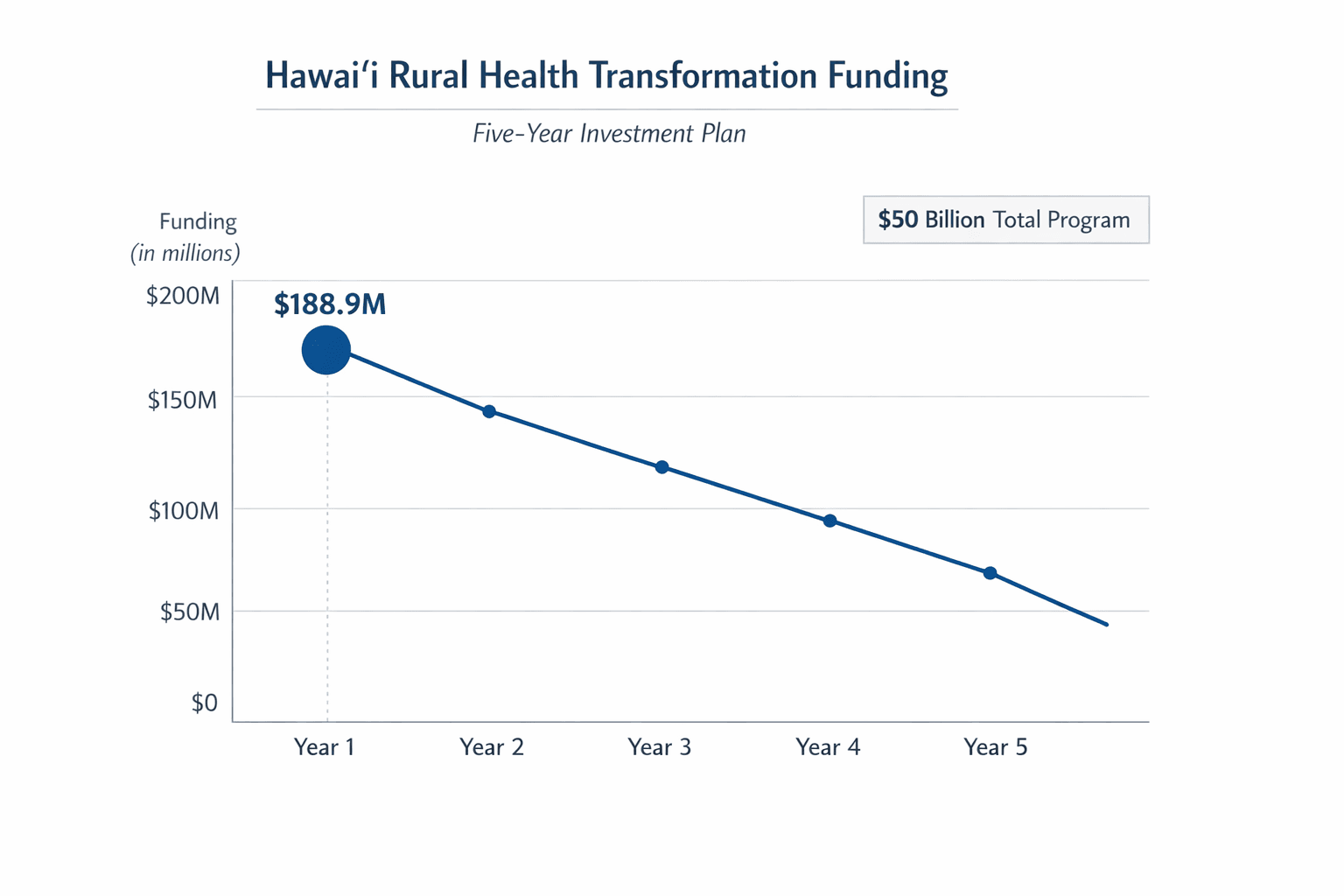
The State of Hawai‘i has been awarded $188,892,440 through the federal Centers for Medicare & Medicaid Services’ Rural Health Transformation Program, marking the state’s first-year share of a national $50 billion investment aimed at reshaping rural health care. The funds will support the Hawai‘i Rural Health Transformation Plan, a five-year strategy designed to modernize and strengthen health care delivery across rural and neighbor-island communities.
At the center of the plan are six initiatives intended to create a more connected, resilient system. A Rural Health Information Network will serve as a digital backbone to link rural hospitals and clinics through interoperable electronic health records and shared data hubs. Other priorities include expanding primary care, behavioral health, and emergency response services; stabilizing and training the health care workforce; improving telehealth and broadband connectivity; upgrading digital systems and infrastructure; and developing sustainable financing models to maintain improvements beyond the federal award.
For the Big Island, planners identified direct benefits for facilities such as Kaʻū Hospital and East Hawai‘i Health Clinic. The funding is expected to bolster specialty and emergency care capacity and invest in services that could reduce travel times for rural residents who now must journey long distances for certain types of care. Improvements in telehealth and broadband are also expected to make remote consultations more reliable and effective for patients across the island.
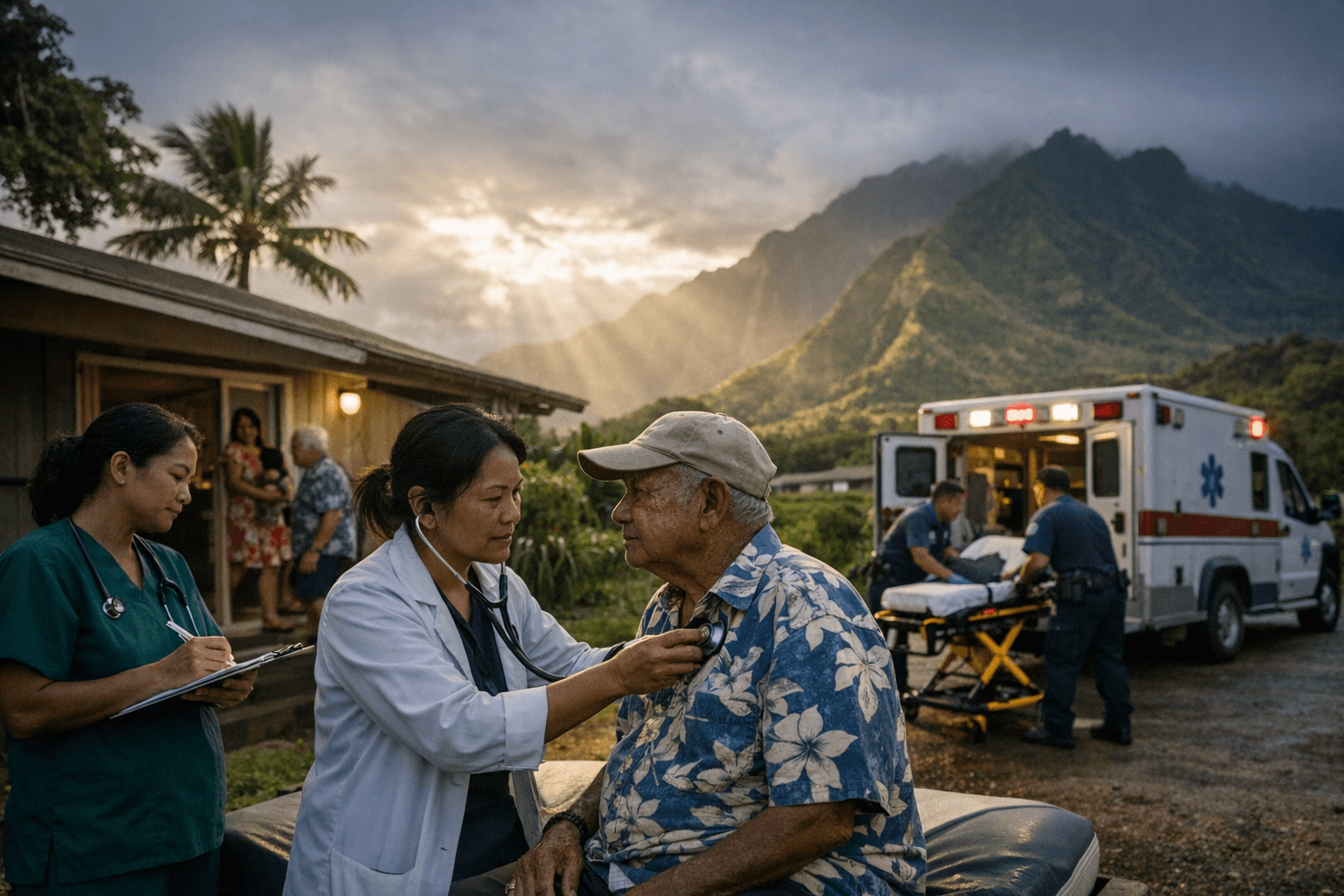
Governor Josh Green framed the award as a step toward equalizing access to care, saying the investment will "close the distance between rural communities and the care they deserve." State and local health officials will now move into planning and implementation phases that include technical upgrades, workforce training programs, and coordination among hospitals, clinics, and community partners.
The five-year timeline will guide how the funds are allocated and rolled out, with a focus on sustainable changes rather than one-time purchases. For Big Island residents, that means potential upgrades to digital records and telehealth, new training opportunities for clinical staff, and expanded local services that could reduce dependence on mainland transfers or lengthy inter-island travel.
As work begins, community leaders and health providers will need to coordinate on priorities and timelines to ensure the investments address the island’s most pressing needs. The award creates an opportunity to reshape how rural health care is delivered across Hawai‘i, with tangible benefits expected for residents in remote communities on the Big Island.
Sources:
Know something we missed? Have a correction or additional information?
Submit a Tip