HISD reshuffles high school magnets for 'high-wage' job pathways
HISD proposed shifting several arts and communications programs to a career center to expand pathways tied to "high-wage" industries; parents cite rushed rollout and transit concerns.
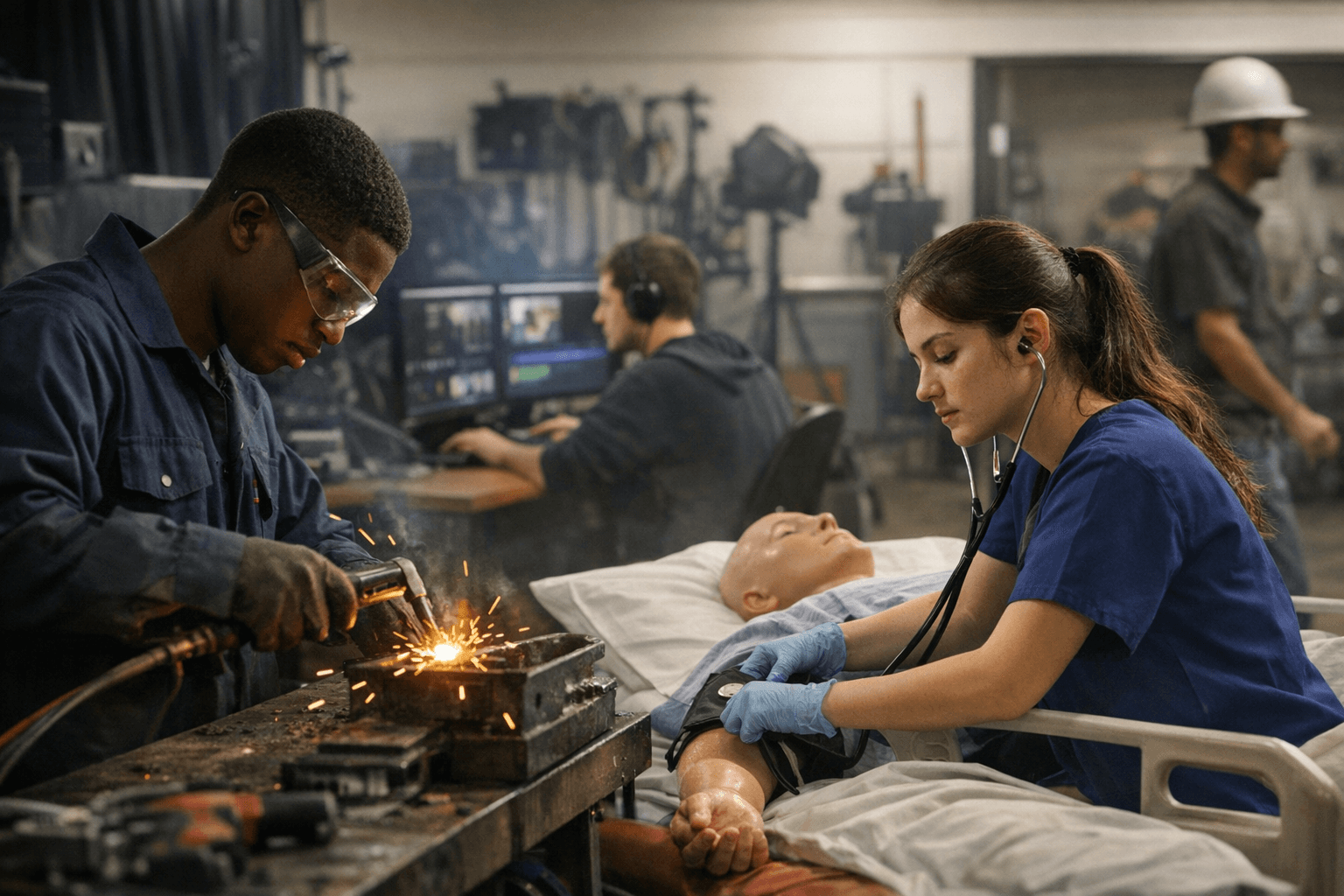
Houston Independent School District unveiled a sweeping proposal on Jan. 12 that would rework dozens of magnet and career-technical education offerings, moving many arts- and communications-focused programs off high school campuses and concentrating expanded vocational pathways at the Barbara Jordan Career Center. The district framed the changes as an effort to align programs with regional labor market data and boost students' chances of earning a living wage after graduation.
HISD and Contigo Ed engaged the Education Strategy Group to review program alignment with local workforce needs. The resulting plan targets growth in five industry clusters the district labels "high-wage": health, trades, human services, information technology and engineering. The proposal affects more than a dozen programs across 10 high schools and would relocate several programs to the Barbara Jordan campus to centralize resources and expand access, the district says.
The proposal immediately drew mixed reactions from families, teachers and community advocates. Critics said the rollout felt rushed and that the district did not provide sufficient community input before announcing the changes. Parents and educators argued that popular programs such as graphic design and communication arts teach transferable skills valuable across industries, even if they are not categorized as "high-wage." Several speakers also raised practical concerns about transportation and time costs if students must travel to the career center instead of walking to a neighborhood high school program.
HISD has already adjusted parts of the plan following community sessions. One notable change preserved graphic design as an elective at Heights High, and the district says current students enrolled in affected programs would not be dropped mid-course. Those concessions underscore how community feedback shaped early revisions, but they leave unresolved questions about longer-term enrollment, scheduling and equitable access for students who lack reliable transit.
From an economic-policy perspective, the district faces a familiar public-education tradeoff: aligning CTE programs to labor-market demand can increase students' near-term employability and wage prospects, but narrowing offerings risks shrinking opportunities for creative and communicative skill development that often transfer into tech, entrepreneurship and design roles. The decision to centralize at a career center could achieve scale efficiencies and stronger employer partnerships, but only if HISD pairs the physical reconfiguration with concrete supports such as reliable transportation, clear pathways to credentials and transparent outcome metrics that track postgraduation employment and earnings.
The takeaway? This is a significant restructuring with real implications for students' schedules, commutes and career options. Our two cents? Push HISD for a detailed transition plan: guaranteed transit solutions, published outcome goals tied to wage improvements, and retention of transferable arts and communications coursework so students keep flexible pathways to jobs and college.
Sources:
Know something we missed? Have a correction or additional information?
Submit a Tip