How to Cut Cards From Your Commander Decks, Practical Steps
Roman Milan laid out a practical step by step method to trim large candidate pools into playable 100 card Commander decks, using his experience building a Flubs, the Fool deck as a motivating example. The guide matters because it gives new players concrete targets and a repeatable workflow, helping reduce decision fatigue and speed up deckbuilding and playtesting.

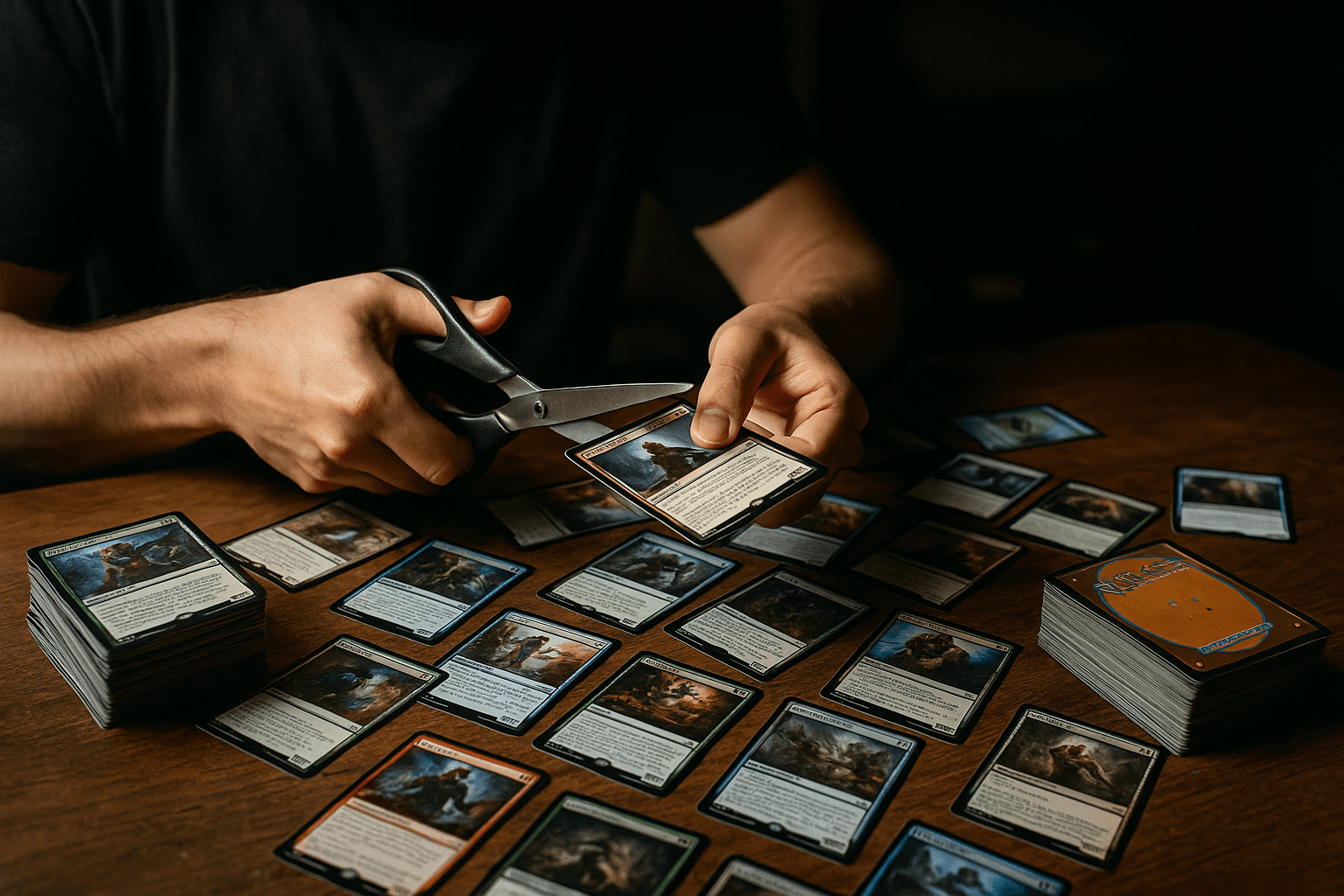
Roman Milan opened with a familiar frustration. He had more than 200 candidate cards while building a Flubs, the Fool Commander deck and faced the emotional challenge of trimming that pile down to a single 100 card list. What follows is a clear method designed to take that overwhelm apart, prioritize land and synergy, and leave a deck that performs at the table.
The process begins by adopting a guide that sets target counts for land, ramp, removal and other roles. Use an established template as a starting point to avoid reinventing baseline numbers. Next, add lands early, aiming for about 38 lands as a useful baseline, and set those cards aside as the deck foundation. Keep that land count fixed during initial cuts so you can evaluate spells and synergy without constantly shifting the floor.
After the land foundation is in place, fill the remaining slots according to the guide and then look for what feels off relative to your commander and intended theme. Make swaps deliberately, one in, one out, so counts remain accurate and each change is intentional. Once a functioning list exists it is fine to trim a couple of lands as a tweak where the deck can support it, but avoid cutting land too early.
Most importantly, play the deck. Milan emphasized testing through games and goldfishing, taking notes and iterating. He recommended keeping a small sideboard of cards you wanted but did not include, and swapping those cards between games to test alternatives. That approach turns theoretical choices into practical data gathered at the table.
This method matters for anyone customizing a commander, adapting a preconstructed deck, or learning deckbuilding priorities. The step by step workflow reduces analysis paralysis, preserves the deck identity while allowing measured experiments, and centers iteration and playtesting as the path to a satisfying 100 card Commander deck.