Human skull found in Shiprock classroom prompts cleansings, policy review
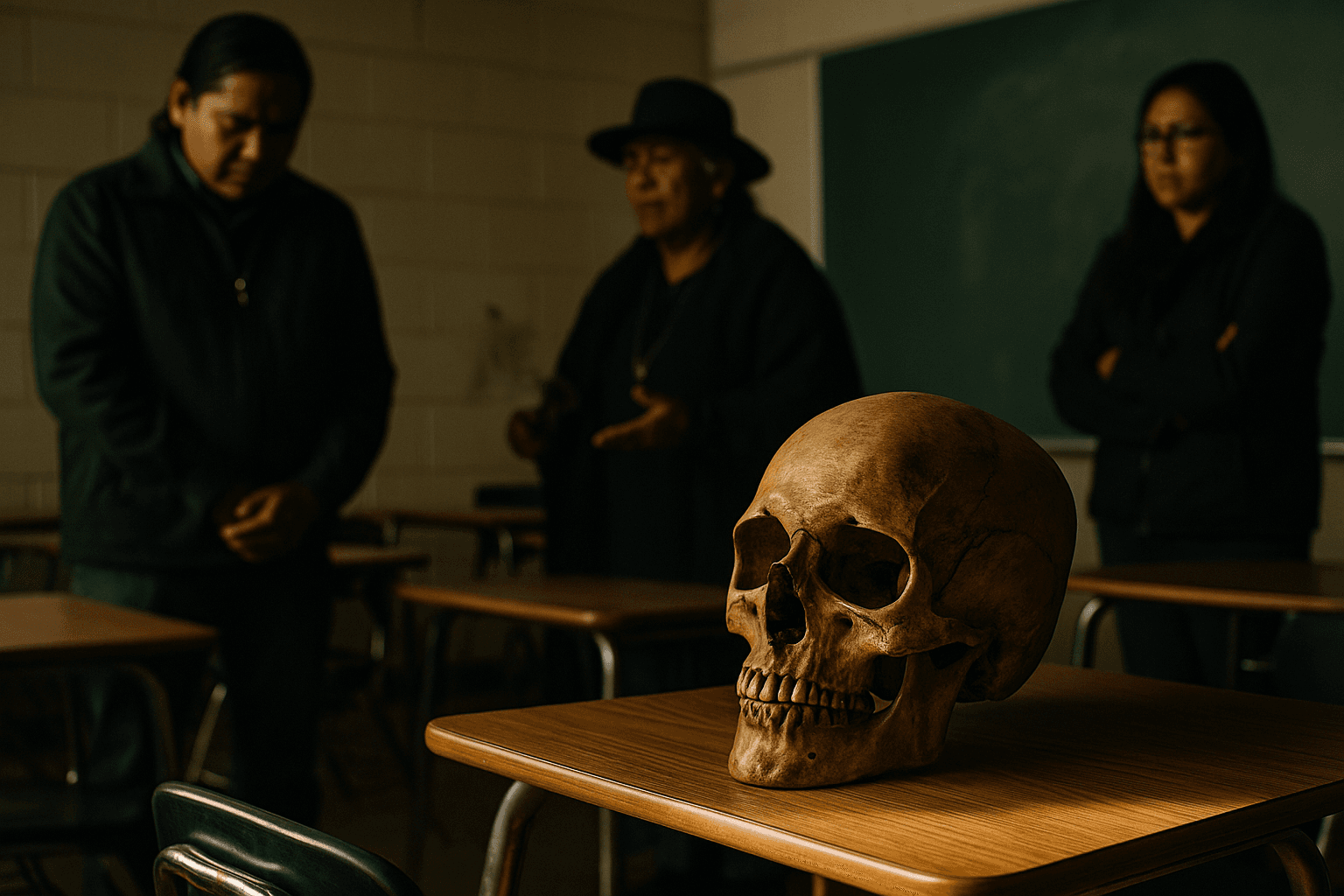
A human skull discovered in a Shiprock High School classroom on November 19 led to the teacher being removed, multiple traditional cleansing ceremonies, and a district review of cultural sensitivity and school policy. The episode has driven calls for mandatory cultural training, clearer rules on funerals in schools, and a formal response framework to prevent future harm to students and families.
A parent called Shiprock High School at 12:45 p.m. on November 19 to report a human skull in a classroom, prompting Principal Staci Gallaher to remove the teacher and confirm the allegation. The item was taken out of the building, and an internal investigation later determined the skull had been stored on campus for a couple of weeks. The district did not disclose the teacher’s name, but Superintendent Steve Carlson read an apology letter from the teacher expressing regret and a commitment to respect community cultures.
School and district leaders moved quickly to address community concerns with culturally appropriate responses. Elvin Keeswood, a heritage language teacher, recommended an immediate traditional cleansing. After consultation with the Intercultural and Community Outreach Department, a traditional practitioner performed a cleansing at 7:44 a.m. the following morning. A second cleansing was conducted on November 22, and an optional cleansing for students and staff was offered on December 1 before the school day. Nathan Brady, a Navajo instructional coach, told the board that about 85 percent of students entering the north doors participated, along with about 50 percent of staff. “We had a good turnout this morning, and students were well aware of what had happened, so it was like a an additional cleansing for them. It was sort of another step like a healing process for them to go back into the classroom,” he said. “We saw a lot of smiling faces..”
Community members and district staff framed the incident as a cultural and public safety concern. Berlinda Begay, a bilingual multicultural education coordinator, explained how Diné traditions treat death and cleansing. “The way we look at it is we respect that it's no longer here. When you associate with death you're supposed to balance that back out with using these herbs to balance yourself back out, to cleanse yourself, because a lot of that death is all around you,” she said. Grandmother and parent voices stressed that students who did not receive cleansing may have brought effects back to households and extended families.
The Intercultural and Community Outreach Department offered several recommendations to the school board, including a policy that does not permit funerals or funeral receptions in schools, incorporation of holistic services into grants accessible to all schools, formalizing cleansing protocols for culturally sensitive situations, mandatory culture education etiquette and protocols for staff, a review of field trip approvals for cultural appropriateness, and reestablishing a cultural response team. Board member Gary Montoya said the district now has “a very good model” that could guide other communities. The first reading of a drafted policy was scheduled for the next board meeting, and the district has not notified the New Mexico Public Education Department. The incident underscores the intersection of school policy, cultural respect, and community healing in San Juan County and may reshape training and operational rules across the district.