Hundreds rally at Houston City Hall after ICE death
A peaceful rally of about 200 gathered at Houston City Hall to protest the ICE killing of Renee Good. Residents pressed local leaders to resist federal enforcement practices and demand accountability.
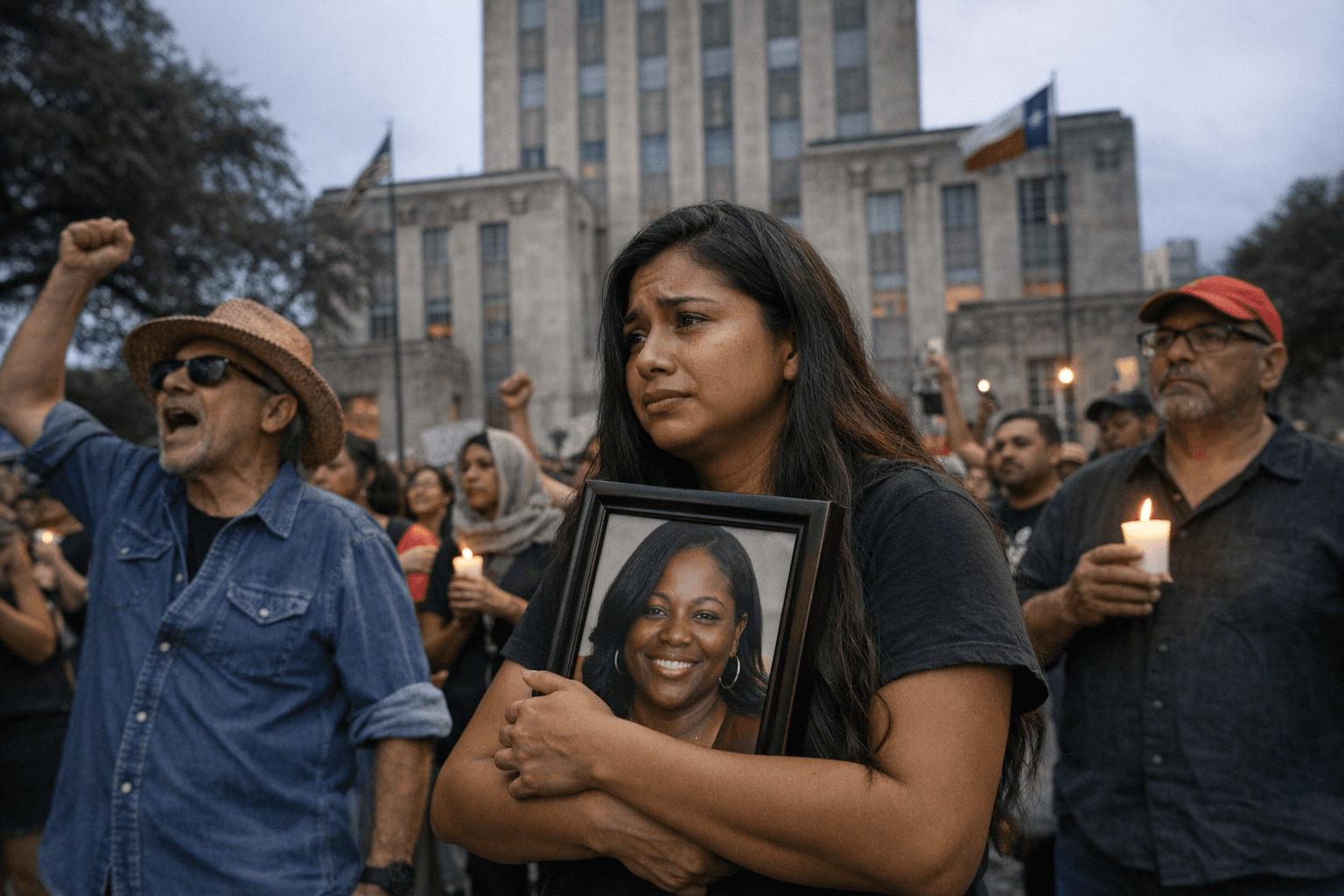
About two hundred people gathered at Houston City Hall on Jan. 10 for the third consecutive day of demonstrations responding to the ICE killing of Renee Good. The crowd moved through the plaza in a measured procession, using call-and-response remembrances and carrying signs calling for ICE accountability and asking local officials to resist federal enforcement practices that many here say endanger immigrant communities.
Organizers and attendees framed the gatherings as acts of solidarity and mourning, with grief and anger visible among the participants. The events were marked by a visible police presence; officers monitored the rally from the perimeter as the crowd marched and later dispersed. Despite the heightened security, demonstrations remained peaceful through the day.
The protests put a local spotlight on how Harris County and Houston respond to federal immigration enforcement. Activists pressed for clearer statements and actions from elected officials at the municipal and county levels, arguing that local policies and cooperation agreements can amplify or constrain federal enforcement on the ground. For many families in Harris County, where tight social networks and mixed-status households are common, the issue carries immediate consequences for daily life and community trust in institutions.
This week’s demonstrations come amid broader national scrutiny of ICE practices and deaths in custody, which have prompted debate about oversight, transparency, and liability. Locally, the rallies underscore the political salience of immigration policy as an issue that intersects public safety, civil rights, and public health. Community leaders say peaceful public protest is one tool to press for change, while the marked law enforcement presence illustrates the tension between maintaining order and allowing civic expression.
For business owners, neighborhood groups and schools near downtown, the demonstrations were a reminder that civic events can affect traffic, access to public buildings, and the tone of community conversation. For immigrant residents and service providers, the rallies reinforced longstanding concerns about safety and the chilling effects of aggressive federal enforcement on seeking medical care, education, and social services.
City and county officials now face practical choices about how they respond: whether to open formal inquiries, change cooperation policies, or strengthen oversight of detention and custody practices. The events may also influence upcoming council and commission agendas as constituents seek concrete steps to reduce harm and increase transparency.
The takeaway? Pay attention to what your local leaders say and do next, and if you care about these issues, show up to city council and county commission meetings or contact your representatives directly. Supporting neighbor-to-neighbor networks and trusted legal and social services can help communities stay safer while systems of accountability are debated.
Sources:
Know something we missed? Have a correction or additional information?
Submit a Tip