India to raise foreign ownership cap in defence firms to 74%
India plans to relax FDI rules for defence firms to attract strategic partners and technology, potentially raising the automatic-route cap to 74%.
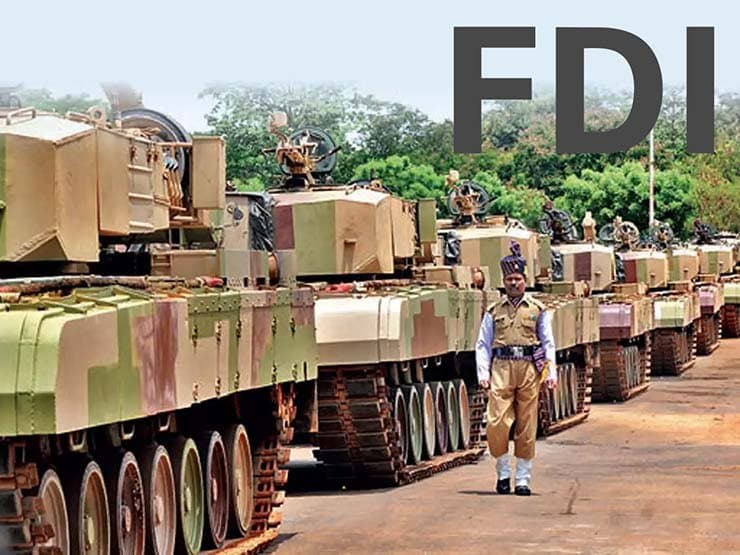
Two unnamed government sources said the Indian government is preparing to relax foreign direct investment rules for domestic defence companies in a bid to attract strategic partners, deepen technology transfer, and expand manufacturing and exports. The sources said changes could be enacted within the next couple of months, in what would be a notable liberalisation of a tightly regulated sector.
The principal change under consideration would lift the automatic-route cap on foreign ownership to 74 percent for defence companies that already hold licences. Multiple accounts describe a distinction between new licence applicants, for whom 74 percent automatic-route investment has in some contexts already been permitted, and existing licence-holders, which currently face a lower effective automatic-route cap reported as 49 percent. Investments above 74 percent have typically required government approval and, in certain cases, can be permitted up to 100 percent after scrutiny.
Officials are also said to be reviewing a condition that allows foreign investment beyond specified caps only if it "results in access to modern technology." That clause has been widely criticised by industry and experts as vague and unpredictable; officials considering its removal or revision aim to make the rules more transparent and predictable for potential foreign partners. In parallel, sources said the government may ease export-oriented manufacturing norms in the defence sector to encourage firms to build production lines in India for both domestic and overseas markets.
The policy push reflects strategic and industrial priorities. Government officials and industry analysts cite objectives including strengthening defence supply chains, accelerating indigenisation of key platforms and components, and boosting defence exports. Media accounts have linked the initiative to broader efforts to shore up domestic defence production following last year’s conflict with Pakistan, and to attract large global defence manufacturers and technology providers. Multinational firms already present or expanding in India include Saab, Lockheed Martin, Airbus and Boeing, among others, and officials hope clearer ownership rules will spur further investment from such companies.

Market and policy implications are significant but hinge on details that remain unsettled. Raising the automatic-route cap to 74 percent for existing licence-holders would allow majority foreign stakes without prior government approval, potentially speeding dealmaking and capital inflows. Greater foreign ownership could bring deeper technology transfers and integrated supply chains, supporting domestic manufacturing and exports. At the same time, officials must balance industrial openness with national-security protections; the specifics of any screening mechanisms, offset or localisation requirements, and transitional arrangements were not disclosed.
Trade and defence ministries did not respond to requests for comment. The timing, exact legal wording, and any accompanying safeguards will determine how quickly global defence firms move to take majority stakes or expand local production. If enacted as described by the sources, the package would mark a material step toward aligning India’s defence FDI regime with its broader industrial strategy to attract strategic partners while attempting to safeguard sensitive capabilities.
Sources:
Know something we missed? Have a correction or additional information?
Submit a Tip

