Invoices Tie Navajo Nation Offices to Farmington Contractor Work
Documents show the Office of the President and Vice President was billed $143,883.87 over a two year period for work by a Farmington based contractor, raising questions about oversight and use of funds that affect local taxpayers and community relations. The records break down construction and service charges and direct cash entries that may involve private homes and community events, prompting calls for clarity from tribal and county residents.

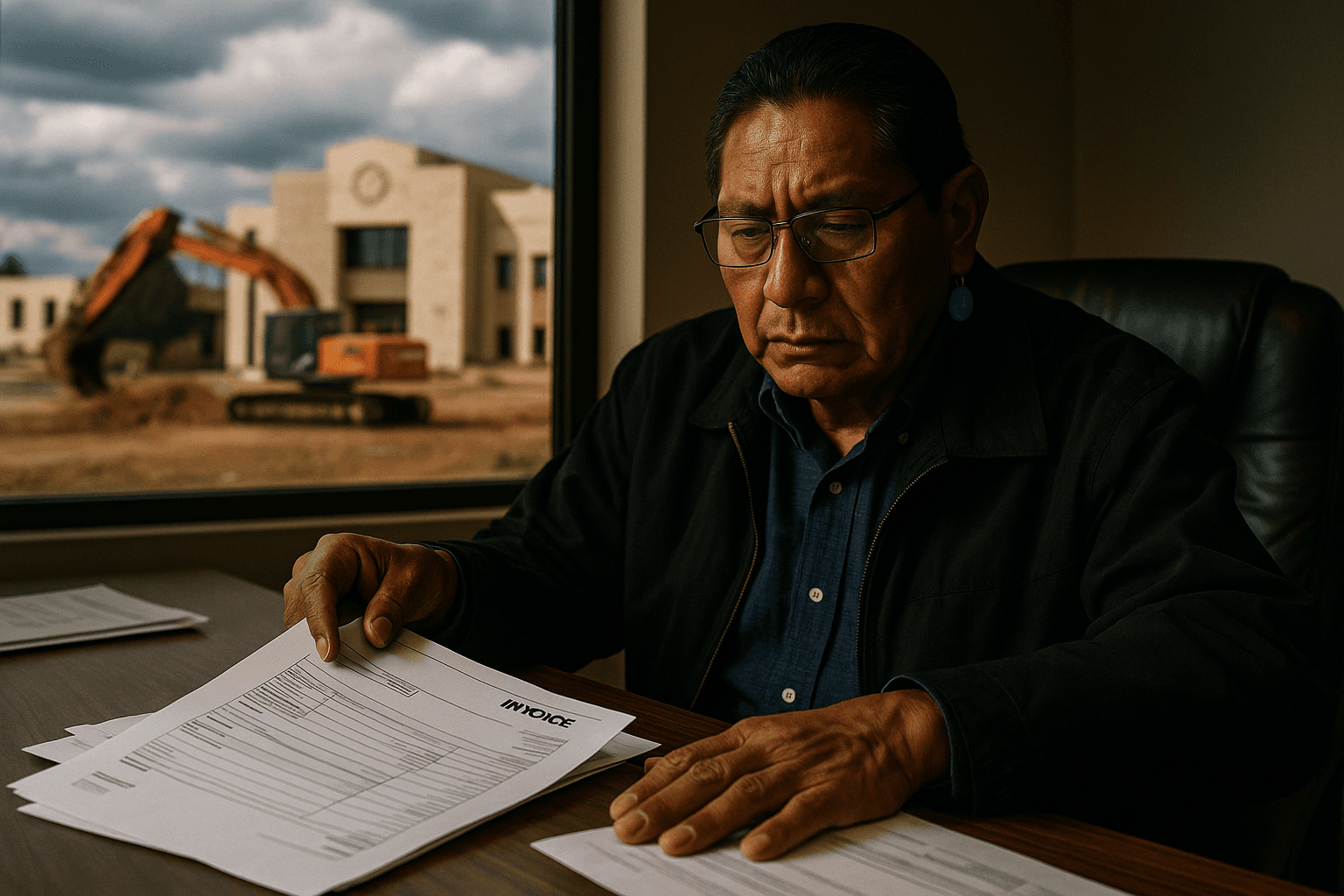
Documents surfaced December 4 show the Office of the President and Vice President was billed $143,883.87 over a two year period... according to invoices from Innovative Electric LLC. The invoices, dated February 2023 through December 2024, attribute $123,383.87 to construction and service work and $20,500 to entries described as cash loans. The vendor is Innovative Electric LLC, a Farmington based contractor that provided a range of services listed in the records.
The line items in the invoices include electrical repairs, security system installations, event power and temporary power setups, building inspections, home renovations and what are labeled as direct cash loans. Many of the service requests and every cash loan entry were routed through the former chief of staff, Patrick Sandoval, while some projects are identified as having been requested directly by President Buu Nygren, according to the documents. The invoices use a standardized billing format even when entries appear to concern private residences or community events, a detail that raises questions about appropriate accounting and the separation of official business from personal or community matters.
For San Juan County residents, the records matter because they link local contracting activity to tribal governance and to the stewardship of funds that affect day to day services and public trust. The Navajo Nation is a sovereign government with its own budgeting and oversight mechanisms, so accountability will primarily proceed through tribal channels including council committees, audits and whatever disclosure processes tribal law provides. At the same time the practical overlap between county residents, tribal citizens and local vendors means that transparency and clear procurement practices are important for maintaining confidence in public administration across the region.
Tribal leaders, county officials and community members who want clarity may seek the underlying invoices and ask elected representatives for explanation of procurement rules and cash loan practices. The documents make clear that questions about vendor relationships and expenditure oversight will need to be addressed if trust in public stewardship is to be preserved.