ISRO to Launch AST SpaceMobile BlueBird Block 2 on December 24
The Indian Space Research Organisation says it is ready to launch AST SpaceMobile’s next generation BlueBird Block 2 satellite on December 24, a commercial mission aimed at delivering direct cellular broadband to ordinary smartphones. The mission was shifted later in December to complete integration and testing, a timetable change that underscores growing demand for large scale space based connectivity.

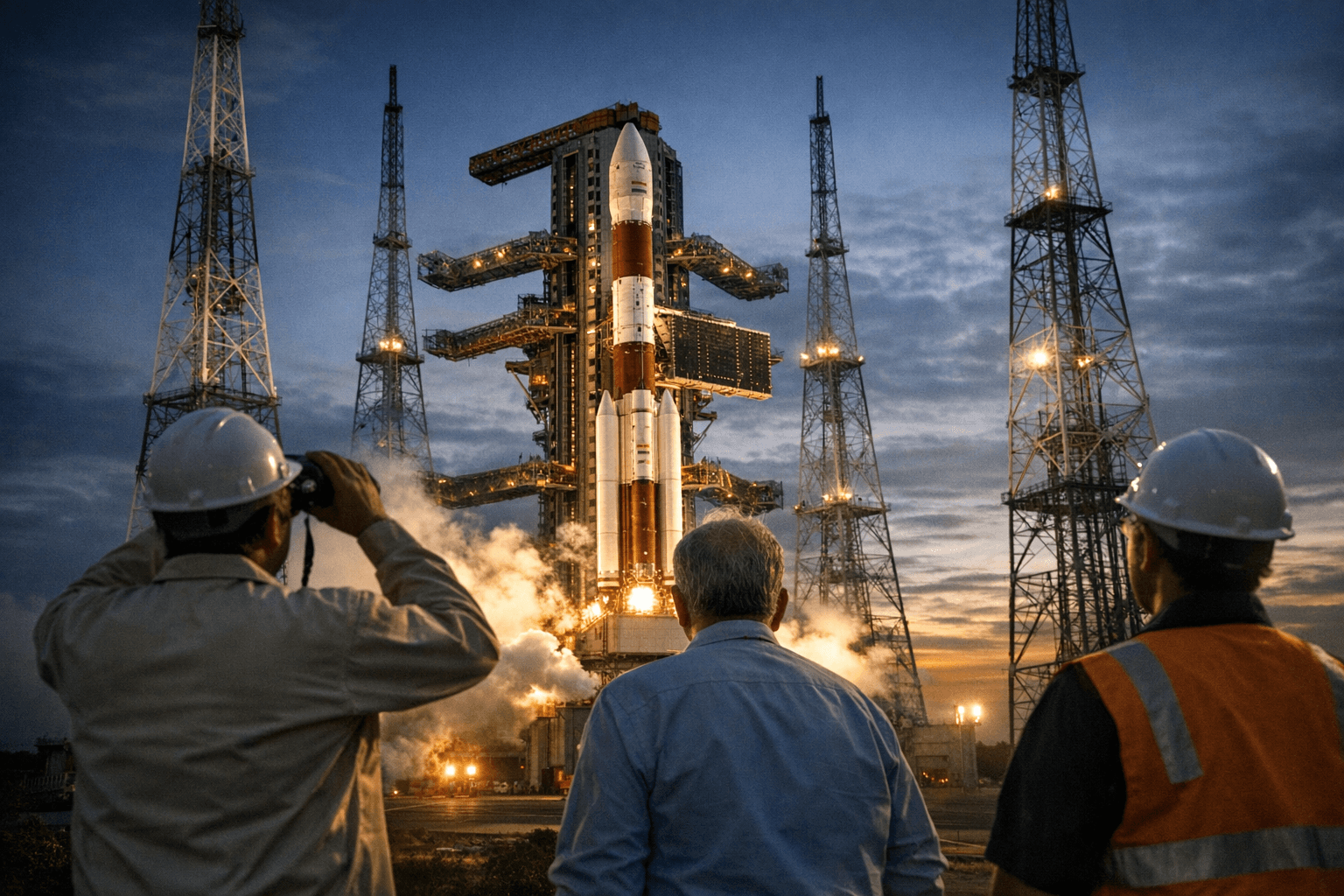
The Indian Space Research Organisation says it will launch AST SpaceMobile’s BlueBird Block 2 satellite aboard the LVM3 M6 from the Satish Dhawan Space Centre at Sriharikota on December 24, with the window reported at 08:54 India Standard Time. The flight, a dedicated commercial mission contracted through NewSpace India Limited, represents a high profile collaboration between ISRO’s commercial arm and the United States company building a space based cellular broadband network.
BlueBird Block 2, also referenced in some materials as BlueBird 6, is billed as a next generation communications platform designed to deliver 4G and 5G cellular broadband directly to standard handsets without specialized ground equipment. The spacecraft is large for low Earth orbit, with a mass reported at about 6,500 kilograms and a deployable phased array antenna totaling 223 square metres. AST SpaceMobile says the Block 2 design offers up to ten times the bandwidth of its first five BlueBird satellites, and will work to extend continuous coverage into remote and underserved areas including mountain, ocean and desert regions.
The launch follows a schedule adjustment from earlier December dates, a change ISRO attributed to final integration and testing work. The rescheduling illustrates the technical complexity of fitting a massive, deployable antenna into launch fairing constraints and verifying the spacecraft and payload before flight.
The LVM3 vehicle selected for the mission is ISRO’s heavy lifter. The three stage rocket uses two large solid strap on motors designated S200, a liquid core stage L110, and a cryogenic upper stage C25. ISRO lists the vehicle’s lift off mass at about 640 tonnes, a height of 43.5 metres, and a nominal payload capability of 4,200 kilograms to geosynchronous transfer orbit. The M6 mission will be the sixth operational flight of LVM3, following launches that included Chandrayaan 2, Chandrayaan 3 and multiple OneWeb flights. The agency completed the previous LVM3 flight, M5 CMS 03, on November 2, 2025.
AST SpaceMobile has been expanding its in orbit constellation since September 2024 when it launched five initial BlueBird satellites that the company says enabled persistent coverage across the United States and other markets. The company reports partnerships with more than 50 mobile network operators as it aims to weave space based capacity into terrestrial mobile networks. In a company statement provided in coverage, AST SpaceMobile said, "We are on a mission to eliminate the connectivity gaps faced by today’s nearly six billion mobile subscribers and bring broadband to the billions who remain unconnected."
The December 24 mission is being watched both for its commercial implications and its technological demonstration. If successful, the large phased array and the announced throughput gains could accelerate demand for space native solutions to rural and maritime connectivity challenges, and add pressure on regulators and operators to integrate satellite delivered spectrum and roaming arrangements with terrestrial networks. For ISRO and NSIL, the flight further solidifies India’s growing role in international commercial launches and large satellite deployments as the global space economy expands.
Sources:
Know something we missed? Have a correction or additional information?
Submit a Tip