La Paz County Faces Growing Groundwater Stress and Policy Choices
Groundwater supplies for households, ranches and irrigated agriculture in La Paz County are under increasing pressure as high-capacity pumping for hay and forage operations draws down local aquifers. Decisions by state agencies and local leaders on monitoring, leases and possible regulatory designations will shape costs to residents, farm viability and environmental health in the years ahead.

Much of La Paz County depends on groundwater for domestic wells, irrigation and livestock, and several discrete alluvial basins such as the Ranegras Plain host locally important aquifers. In parts of the county irrigated hay and forage production has expanded, and in some years large-scale operations, including corporate or out-of-state investors, have leased state trust lands or acquired private parcels to cultivate water-intensive crops. Those patterns have contributed to declines in static water levels that are already being felt by households and small farms.
State institutions hold the primary policy levers. Arizona’s Department of Water Resources can evaluate basins for additional regulation when depletion reaches concerning levels, including designating Active Management Areas or Rural Management Areas and imposing measures that require meters, reporting and limits on new high-capacity wells. The State Land Department’s lease terms, renewals and enforcement practices directly influence local land use and water demand by determining which parcels are available for irrigated agriculture and under what conditions.
For La Paz County residents the consequences are immediate and tangible. Household wells may see lower yields or require deepening, imposing large costs on families outside municipal service. Local ranches and small farms rely on private wells and face the choice between adapting operations and absorbing rising water costs. Economically, restrictions on additional irrigation or limits on well development can affect farm profitability and jobs in the short term, while unchecked depletion risks undermining the long-term viability of regional agriculture. Environmentally, dropping groundwater levels can reduce flows to desert springs, damage riparian habitat and change wildlife access to water.
Local engagement will determine how tradeoffs are managed. Advisory councils and stakeholder processes that accompany regulatory consideration provide a venue for local members to influence mitigation and assistance measures. County officials - including the Board of Supervisors and planning staff - can use local ordinances and public meetings to shape responses and support community resilience.
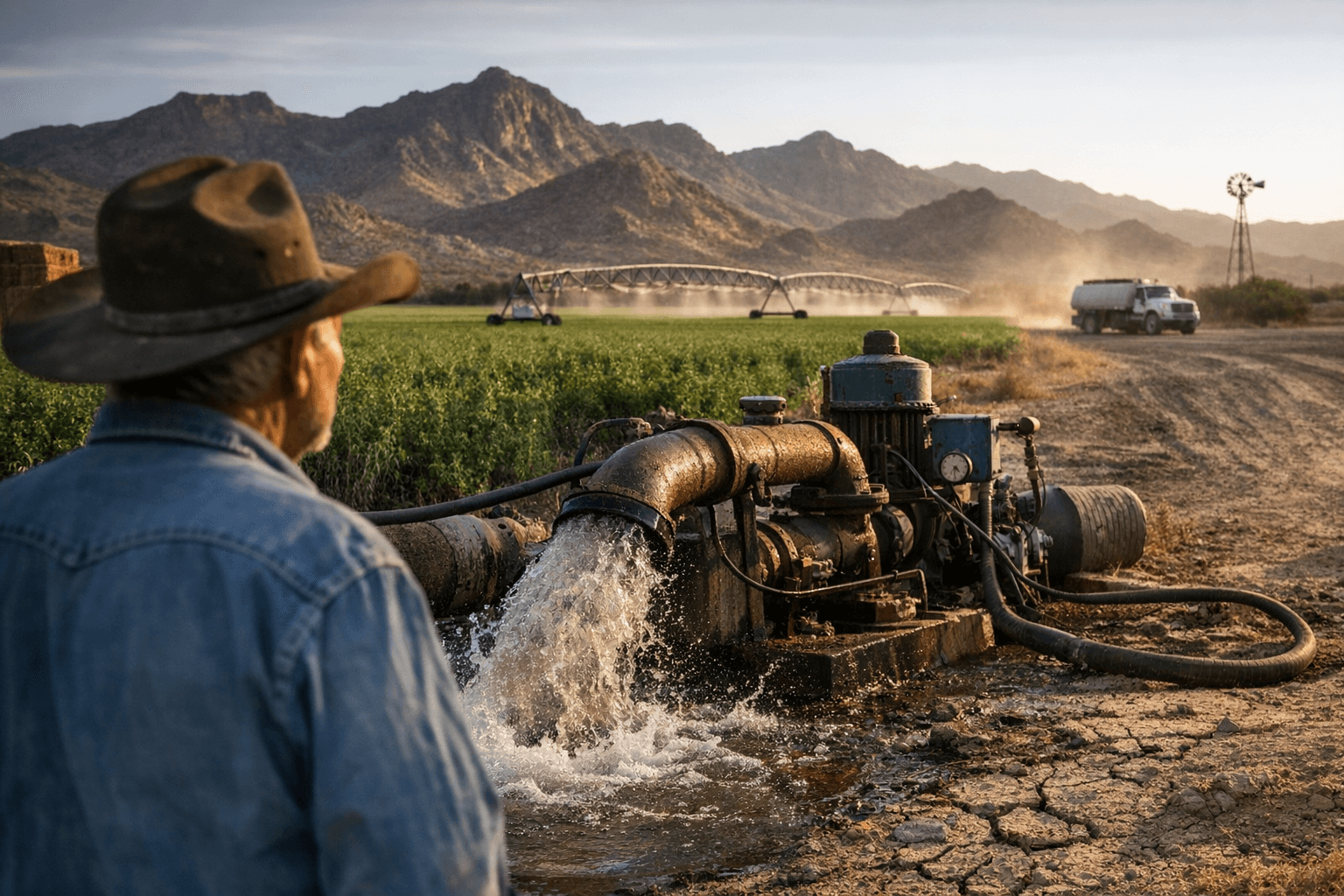
Practical steps for residents include participating in public meetings, joining local advisory processes, and using well-measurement programs and ADWR monitoring tools to document trends. Conservation and adaptation measures such as more efficient irrigation, shifting to less water-intensive crops where feasible, and applying for grants to install water-saving technology can reduce pressure on shared aquifers.
Authoritative, up-to-date information is available from the Arizona Department of Water Resources on technical reports, proposed designations and public comment deadlines; the State Land Department on lease maps and terms for trust lands; and La Paz County offices on local meeting schedules. Groundwater is a shared, long-term asset, and policy choices about monitoring, regulation and lease management will determine the county’s economic and environmental health for decades.
Know something we missed? Have a correction or additional information?
Submit a Tip