Lando Norris Wins First World Championship, McLaren Complete Dominant Double
Lando Norris secured his first Formula One World Championship at the season closing Abu Dhabi Grand Prix, finishing third to edge Max Verstappen by two points. McLaren completed a rare drivers and constructors double, a seismic shift in the sport that signals new commercial opportunities and a more open era for Formula One.

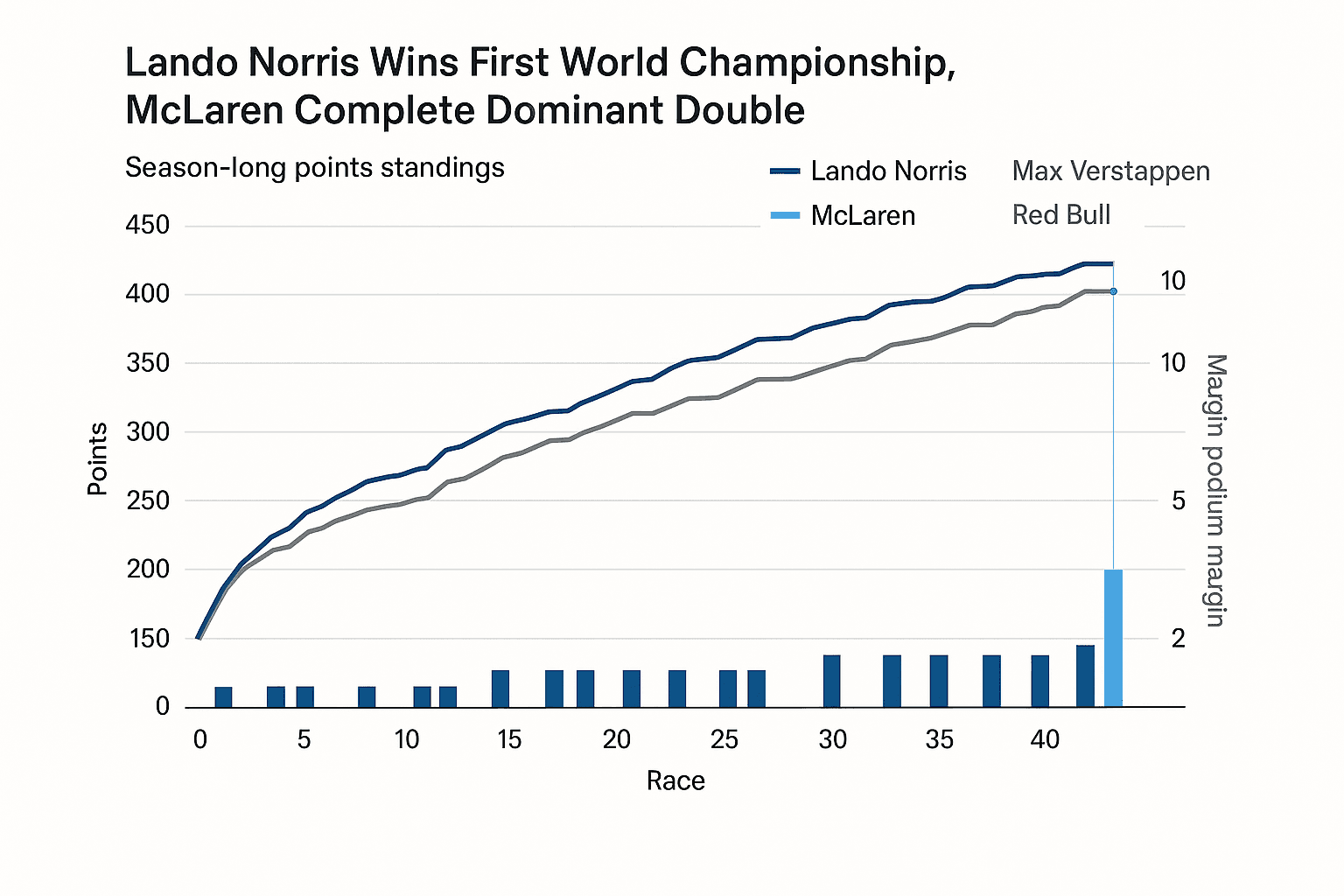
Lando Norris sealed the 2025 Formula One World Championship with a third place finish at the Abu Dhabi Grand Prix on December 7, closing the season on 423 points to Max Verstappen’s 421. Verstappen won the race at Yas Marina, while Norris’s team mate Oscar Piastri finished second on the day and ended the championship in third. The result also delivered McLaren the constructors title, completing a sweeping campaign for the team.
Norris’s final podium was the culmination of a season defined by consistency, team execution, and a resilience that proved decisive in a tightly contested title fight. Over the course of the year he converted pace into points under pressure, and McLaren’s operational performance matched their drivers with pit stops, strategy calls and development reliability that outpaced rivals. The narrow two point margin underscored how every decision across the calendar mattered, and how small on track incidents and penalties influenced the final tally as Reuters detailed key on track moments and late penalties that affected positions.
For Verstappen the result marked the end of a multi year reign at the very top of the sport. His victory in Abu Dhabi served as a reminder of his race craft, but the championship came down to the season long arc rather than a single grand prix. Piastri’s strong second place in the finale confirmed McLaren’s depth, and the one two finish on the podium spoke to a team that has rebuilt itself into an elite outfit capable of sustained performance.
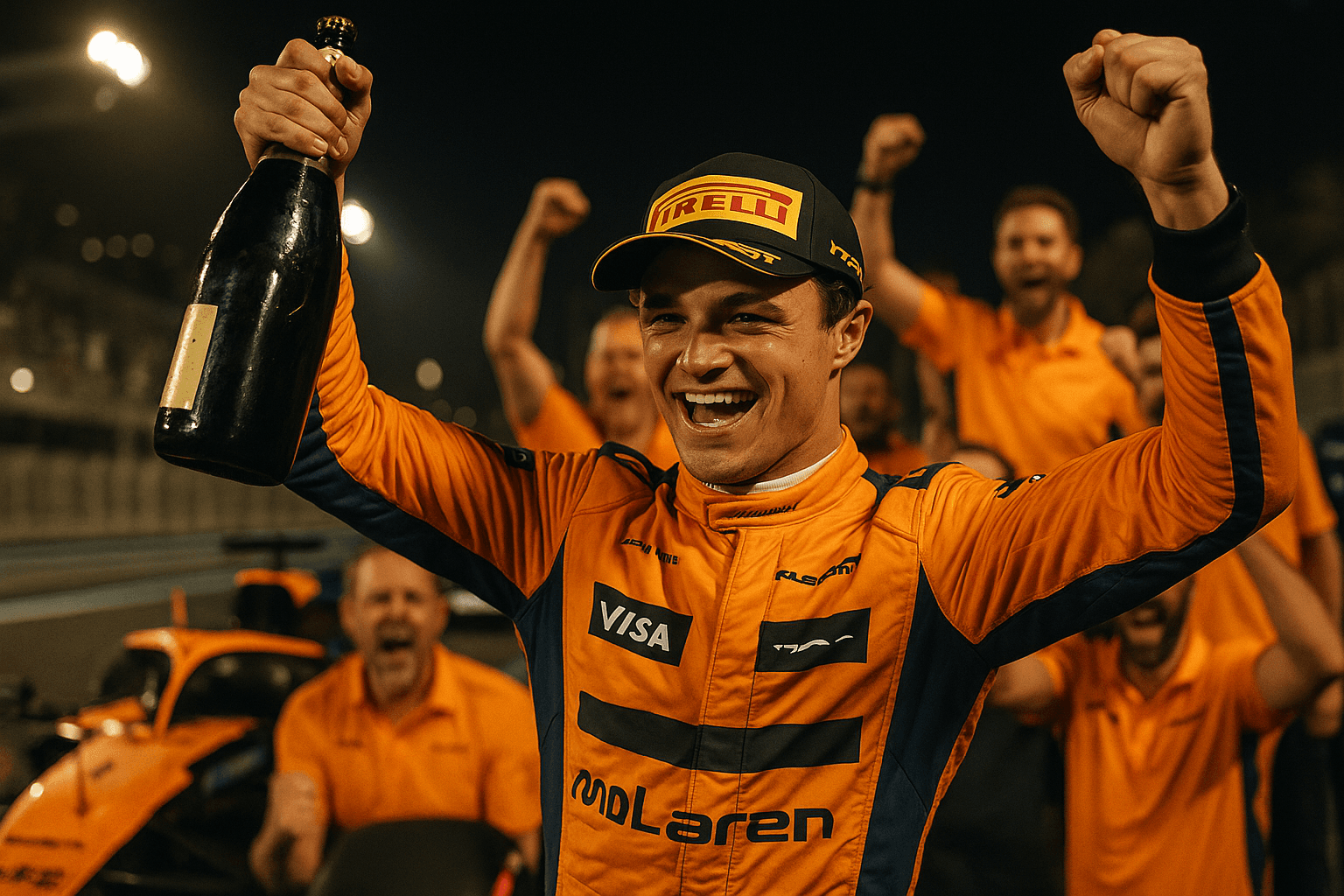
The immediate business implications are significant for McLaren. Winning both major titles enhances the team’s bargaining position with sponsors, strengthens its appeal to commercial partners and should translate into greater revenue from prize money and marketing opportunities. The title doubles as validation for the team’s investment in engineering and talent, and positions McLaren to attract further investment and to negotiate more lucrative deals as Formula One continues its global commercial expansion.
Culturally the shift matters beyond the paddock. Norris has become a focal point for a new generation of fans drawn to his on track exuberance and off track personality. His championship arrives at a moment when Formula One is trying to broaden its demographic reach and deepen engagement in markets that prize compelling rivalries and narrative arcs. A tightened title race that ends with a new champion may boost television audiences, social media attention and grassroots interest in motorsport.
There are also broader social implications regarding the sport’s image and accessibility. McLaren’s resurgence highlights the potential for teams outside the previous dominant circle to mount credible title challenges, which can encourage new investment in driver development programs and greater geographic diversity among aspiring racers. As the season closes, the focus will shift quickly to how teams respond in the off season, and how Formula One’s evolving commercial landscape adapts to a more competitive field.