Living history brings 1860s medicine to Helena’s downtown history center
A reenactment showcased Montana’s first surgeon and period medical tools, connecting Helena residents to gold-rush-era care and local heritage.
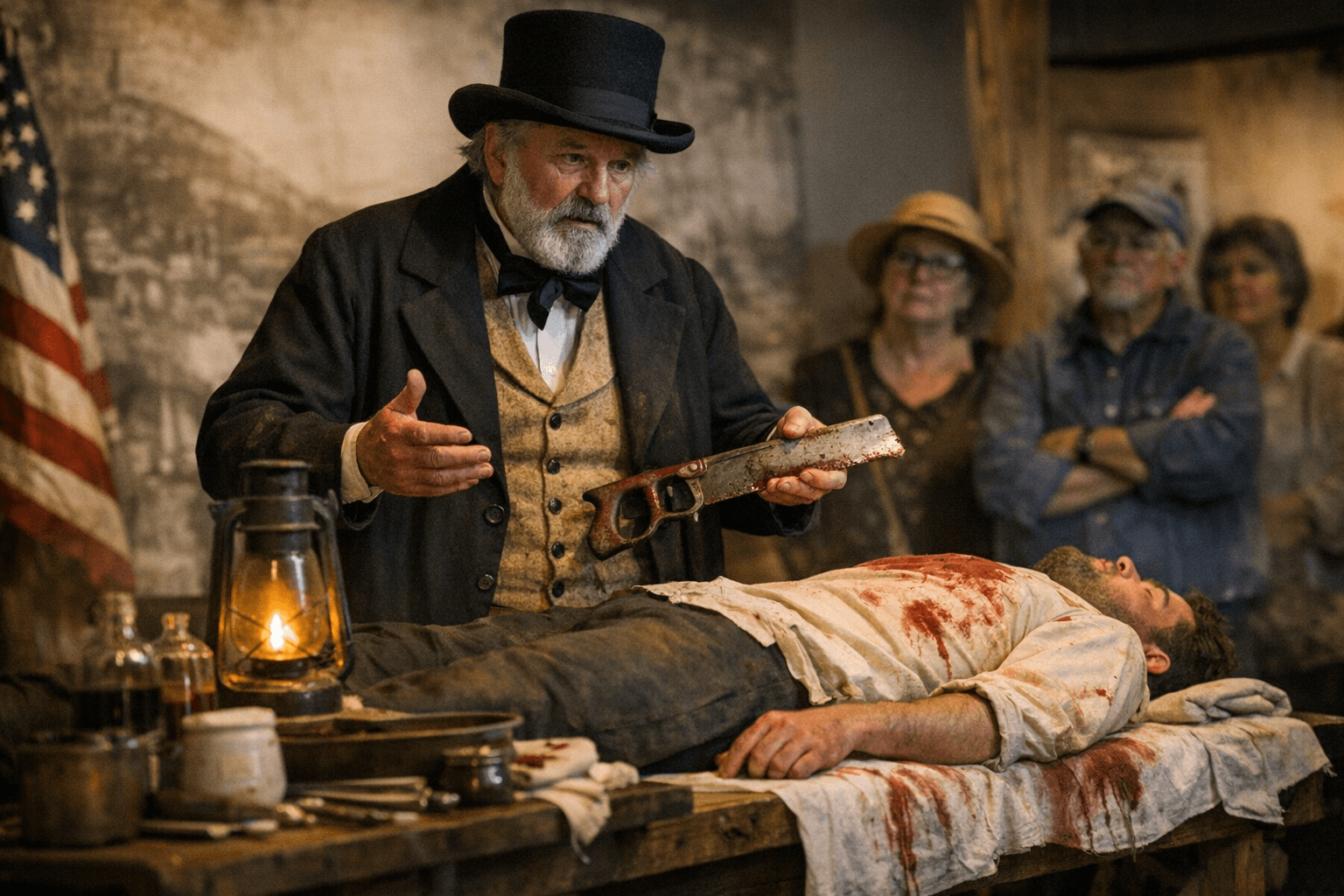
On Jan. 13 the Lewis and Clark County Historical Society hosted a living-history lecture at the LCCHS History Center in downtown Helena that brought 1860s frontier medicine into sharp focus. Reenactor John Barrows portrayed Dr. Jerome Glick, identified as Montana’s first surgeon, and walked attendees through medical experiences from the gold-rush era, including the famed 1863 operation on Henry Plummer’s arm.
The event combined narrative history with hands-on demonstrations. Barrows used historic photos and period medical instruments to illustrate surgical practice in territorial Montana and invited audience volunteers to participate in staged procedures and demonstrations. The result was an immersive session that translated archival material into a tactile experience for residents and visitors.
The lecture sits within the Historical Society’s monthly programing designed to deepen local knowledge of Helena’s early civic and medical institutions. Bringing artifacts and images out of storage for public display helps the Society meet educational goals and sustain community interest in preservation. For local small businesses and downtown foot traffic, programming at the History Center provides regular reasons for residents and tourists to visit the core of Helena, reinforcing the cultural role of heritage venues in the local economy.
Beyond atmosphere and education, events like the Glick portrayal highlight longer term shifts in how communities interpret public health history. The contrast between 1860s surgical tools and modern standards prompts conversation about medical regulation, professional training, and how frontier communities adapted to crises during rapid population growth. Those conversations can inform local policy debates about funding for museum conservation, historic site maintenance, and tourism promotion.
For the Historical Society, pairing reenactment with visual artifacts strengthens fundraising and volunteer recruitment by showing donors and volunteers the tangible value of preserved collections. For residents, the program offers a concrete connection to stories that shaped Lewis and Clark County during the gold rush era and underpins the county’s identity as a place with deep 19th century roots.
Our two cents? If you missed the Jan. 13 presentation, consider visiting the LCCHS History Center to see the photos and instruments on display and watch for future monthly lectures; supporting local history through attendance, membership, or volunteering keeps these stories alive for the next generation.
Sources:
Know something we missed? Have a correction or additional information?
Submit a Tip