Local Philanthropy Strengthens Food Safety Net in Vinton County
Local partnerships and charitable giving have bolstered programs addressing food insecurity in Vinton County, supporting student meal initiatives, food pantries and community meat donation drives. These efforts reduce immediate hunger while highlighting the need for sustained funding and coordinated policy to protect public health and promote equity in Appalachian communities.
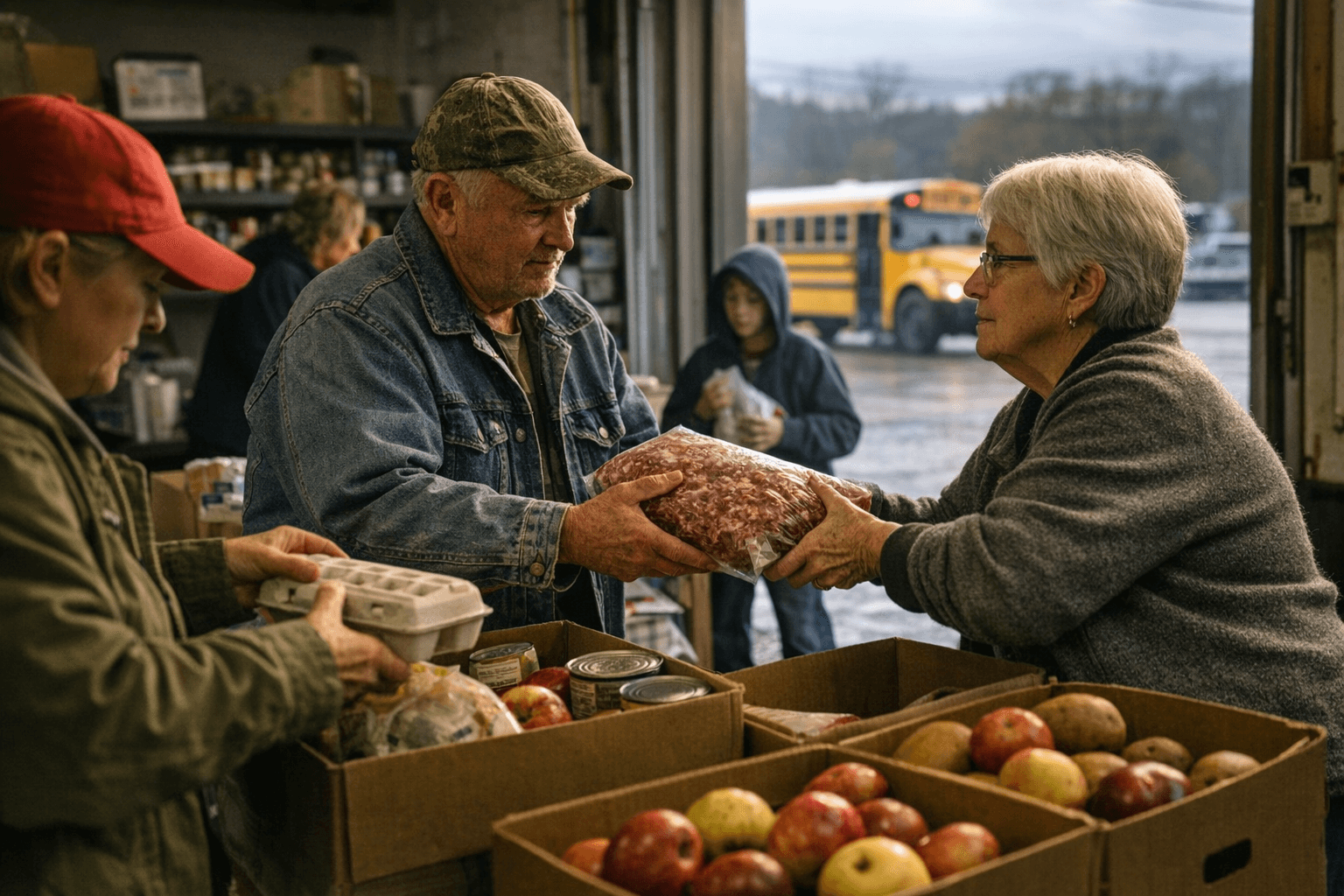
Earlier this month, an op-ed from the Foundation for Appalachian Ohio outlined how local charitable giving and partnerships have supported practical, locally led responses to food insecurity in Vinton County. Key efforts named include the Vinton County Community Fund’s backing of Project Backpack, county “Fair to Family” and Fill the Freezer-style livestock donation efforts for local food pantries, and grant-funded supports that keep pantry operations and related meal programs running.
Project Backpack provides nonperishable food for students to take home on weekends and school breaks, filling critical gaps when school meals are not available. For families living on tight budgets, that supplemental supply can mean fewer skipped meals and steadier nutrition for children. The county’s Fair to Family and Fill the Freezer efforts channel livestock donations and processed meat into local pantries, increasing access to protein and expanding the kinds of food available beyond canned goods and shelf-stable items.
Grant funding has helped cover the operational needs of pantries and community meal programs, enabling regular distribution, volunteer coordination and the logistics of accepting and storing larger donations. The Foundation for Appalachian Ohio highlighted these program results and regional metrics to demonstrate the reach of locally driven initiatives.
The public health implications are significant. Consistent access to nutritious food reduces risks of chronic disease, supports child development and improves mental health outcomes. In rural Appalachian communities such as Vinton County, where poverty and limited service capacity intersect, community philanthropy has proven an essential stopgap. Yet charity alone cannot address the structural drivers of food insecurity. Long-term stability will depend on sustained partnerships among local funders, nonprofit organizations, schools, healthcare providers and governmental programs.
Sustaining gains in food security also requires attention to equity. Programs that target students and households in greatest need help reduce disparities, but persistent underfunding of rural infrastructure—transportation, storage and workforce capacity—undermines those efforts. Policy choices at the county and state level that expand eligibility for nutrition programs, invest in food distribution systems and support local food producers can amplify the impact of philanthropic dollars.
For Vinton County residents, the recent attention to these programs is both a reminder of community resilience and a call to action. Continued charitable giving, strategic grantmaking and policy advocacy can convert short-term relief into durable improvements in health and economic stability for Appalachian families.
Sources:
Know something we missed? Have a correction or additional information?
Submit a Tip