Lone Salmon Sighting in Maxwelton Creek Sparks Local Interest
A lone adult salmon was seen swimming upstream in Maxwelton Creek on Dec. 7, the first confirmed adult sighting in the stream since 2005. The encounter has renewed calls for more monitoring and habitat study in a watershed that supports school salmon releases but lacks recent data on returning adults and smolts.
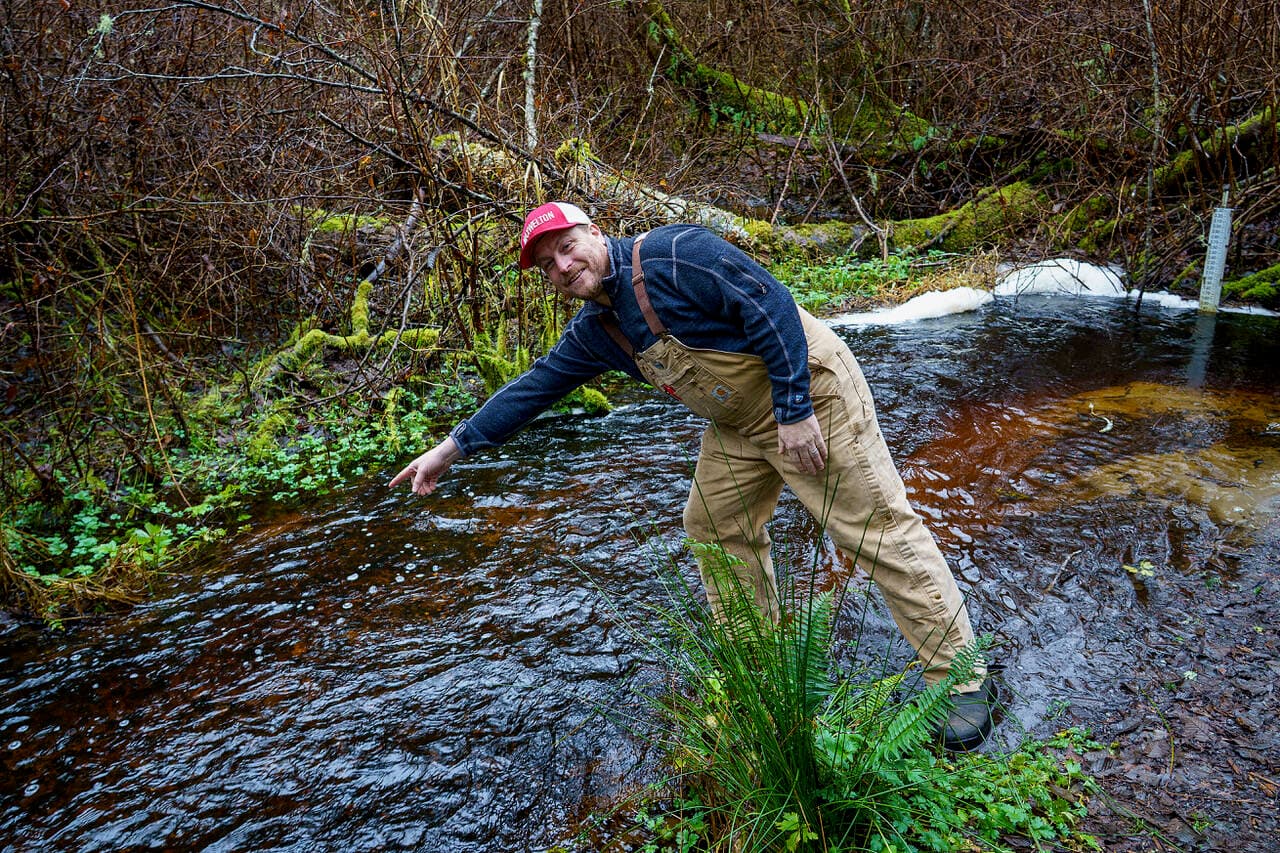
A resident sighting of a single adult salmon in Maxwelton Creek has drawn attention to the creek’s ecological status and the gaps in long-term monitoring. Emily Ruef and Paul Grubb, neighbors at Cascadia Meadows at the Little Brown Church, heard splashing and recorded a cell phone video of the fish while walking at the Rene Neff Maxwelton Outdoor Classroom on Dec. 7.
“It was wild,” Grubb said. “We were both really surprised to see a big old salmon in the creek.” The video is posted on the Whidbey Watershed Stewards homepage and was shared with classroom volunteers and watershed partners. Whidbey Watershed Stewards says the sighting marks the first time a returning adult salmon has been witnessed in Maxwelton Creek since 2005, though it acknowledged some fish may have gone unseen.
The sighting is a public reminder of the creek’s mixed status as salmon habitat. Whidbey Watershed Stewards staff test stream conditions annually and report that turbidity, dissolved oxygen and pH meet criteria for salmon-bearing streams. The creek’s distinctive “Pepsi-Cola” color results from tannins from peat bogs along its route to Useless Bay. Robust frog and macroinvertebrate populations also suggest resilient ecosystem elements.
At the same time, long-term monitoring has waned. Regular smolt monitoring ceased in 2015. Annual counts from 2000 through 2015 recorded numbers ranging from the tens to the low hundreds of coho, a steep decline from historical reports of abundant runs. Those data gaps mean managers and residents cannot say how many adult salmon now return, or where they may be spawning within the watershed.
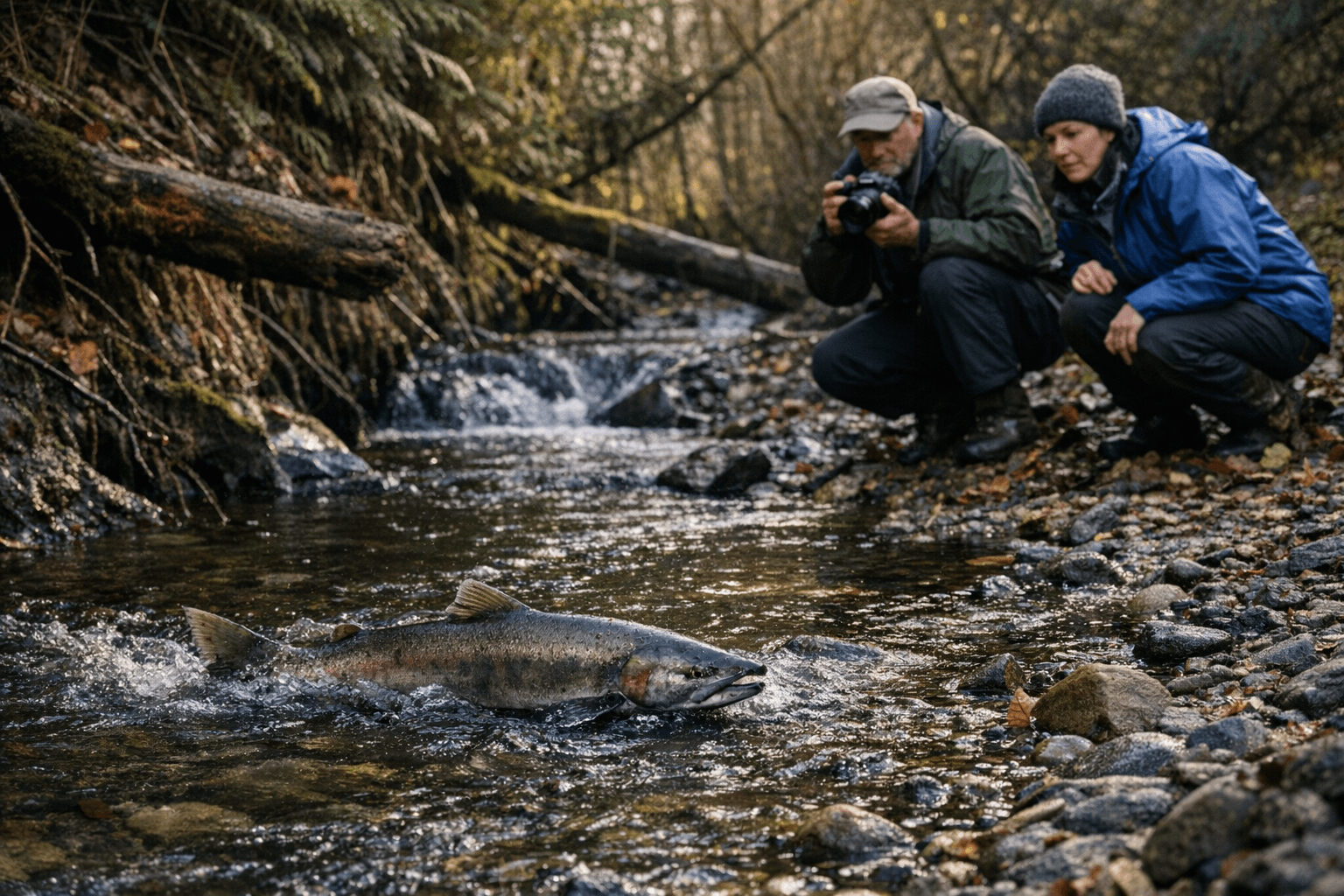
The sighting resonated with local education programs that have kept a piece of salmon stewardship alive. Each March, third graders from South Whidbey Elementary School release coho fry into Maxwelton Creek after raising them in a classroom aquarium. “The kids and I have been releasing salmon fry into the Maxwelton Creek for the last 11 years,” teacher Lori O’Brien said. “Even though spawning salmon haven’t been seen I have held out hope that they have been there all along, perhaps in a remote section of the creek.”
Island County Public Health Director Shawn Morris said Maxwelton water quality is currently “good” based on samples taken between October and December 2025. Local advocates have proposed installing a 24/7 camera at the tidegate, modeled on the Ballard Locks viewing room, to document fish passage and provide a public window on returning salmon. Others urged caution. “One fish does not a salmon run make,” one local said, calling for measured expectations while celebrating a hopeful sign.
The sighting spotlights practical choices for county and nonprofit partners: whether to restart smolt monitoring, how to fund continuous observation at the tidegate, and which habitat restorations would most improve spawning conditions. For Island County residents, the event underscores how community science, school programs and targeted monitoring intersect with management decisions that will determine whether Maxwelton Creek supports a sustained return of salmon in the coming years.
Sources:
Know something we missed? Have a correction or additional information?
Submit a Tip