Los Alamos residents rally to oppose ICE operations
A peaceful protest drew roughly 130 people to Ashley Pond Park and Trinity Drive opposing ICE operations in Los Alamos. The turnout matters for public health, trust, and local policy.
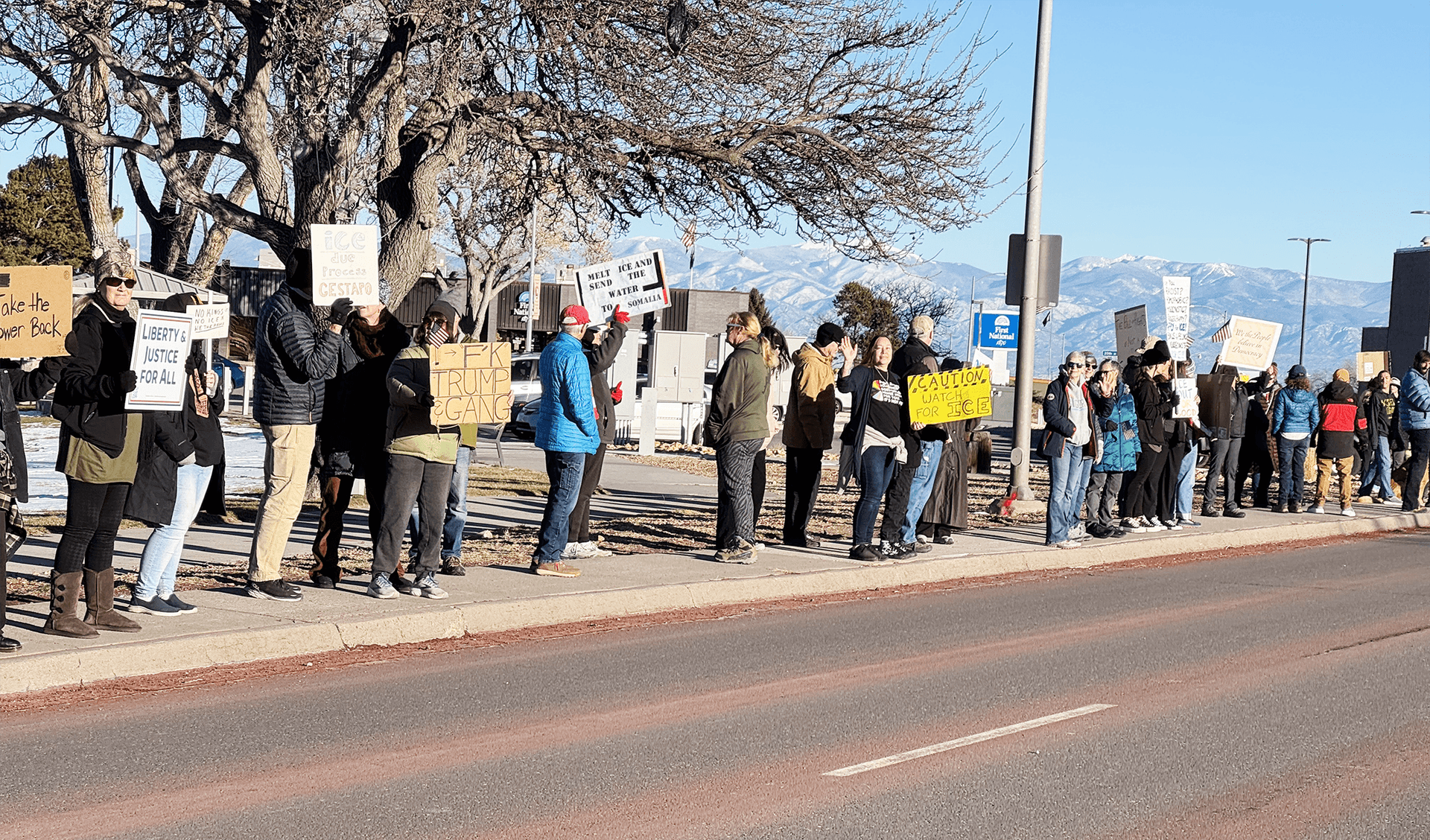
Roughly 130 people gathered at Ashley Pond Park on January 11 and marched along Trinity Drive in a peaceful demonstration organized around the message of keeping U.S. Immigration and Customs Enforcement operations out of Los Alamos. Photographs from the event show community members carrying signs and banners and exercising their right to assemble in a visible display of concern.
The turnout is notable in a county shaped by a small population, deep institutional ties and a strong sense of local identity. Public demonstrations of this scale in Los Alamos register beyond protest politics; they signal anxiety and solidarity in parts of the community that may feel vulnerable to federal enforcement actions. Those concerns have direct public health implications - particularly for immigrant families and mixed status households who may avoid seeking medical care, enrolling in social services or participating in school and public health programs if they fear exposure to enforcement activity.
Health care providers and county officials in Los Alamos should see the gathering as a call to re-examine how local policy and communication protect access to care. When people worry that seeking testing, vaccinations or treatment could trigger encounters with immigration authorities, preventive care and routine public health measures suffer. That erosion of trust can raise the risk of outbreaks, delay chronic disease management and increase stress-related mental health needs across communities.
The march also underscored the role of public spaces like Ashley Pond Park and corridors such as Trinity Drive as venues for civic expression. For many residents these places function as common ground where public health, social equity and civic life intersect. Visible demonstrations can pressure municipal leaders to clarify enforcement boundaries, articulate protections for patients and translate community concerns into policy responses that prioritize safety and health.

Local healthcare systems and community organizations can act without waiting for higher-level decisions. Practical steps include clear multilingual messaging about confidentiality and patient rights, outreach to immigrant-serving organizations and ensuring that clinics and schools reiterate that health services remain available and safe. Such measures help preserve trust between providers and the people they serve.
The demonstration has reaffirmed that Los Alamos residents are paying attention to how federal enforcement conversations play out locally. The takeaway? If you or your neighbors are worried about access to care or about enforcement presence, speak up at county meetings, contact your clinic and support local groups doing outreach. Community pressure and straightforward communication can reduce fear, protect public health and keep local services open to everyone.
Sources:
Know something we missed? Have a correction or additional information?
Submit a Tip